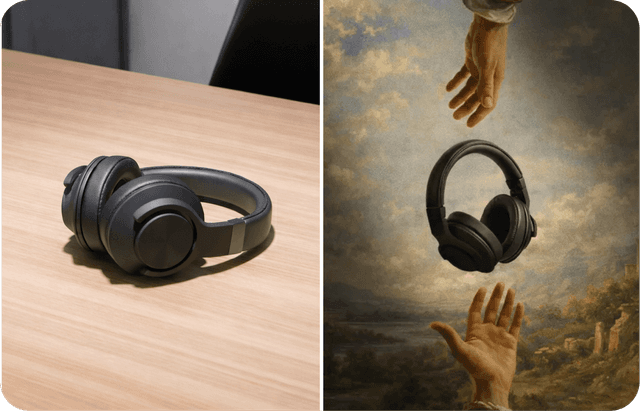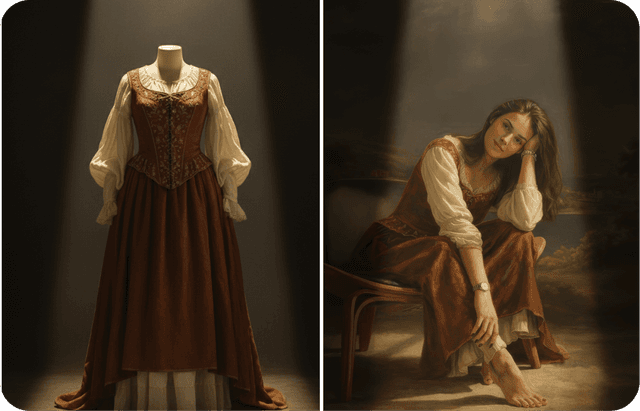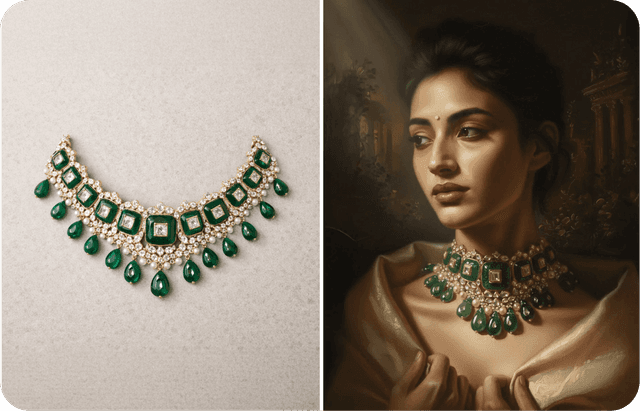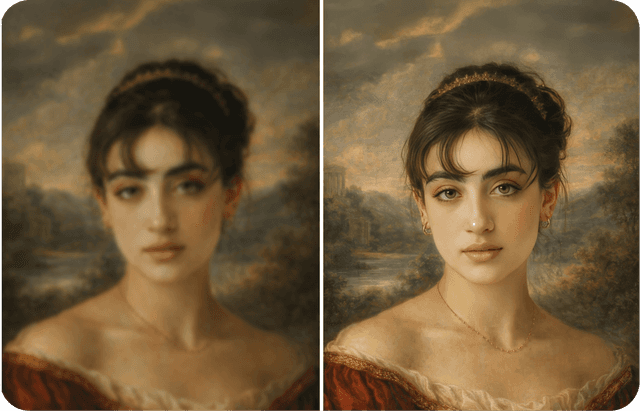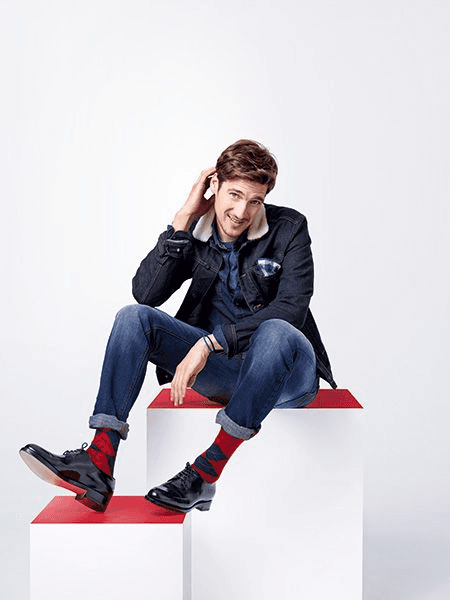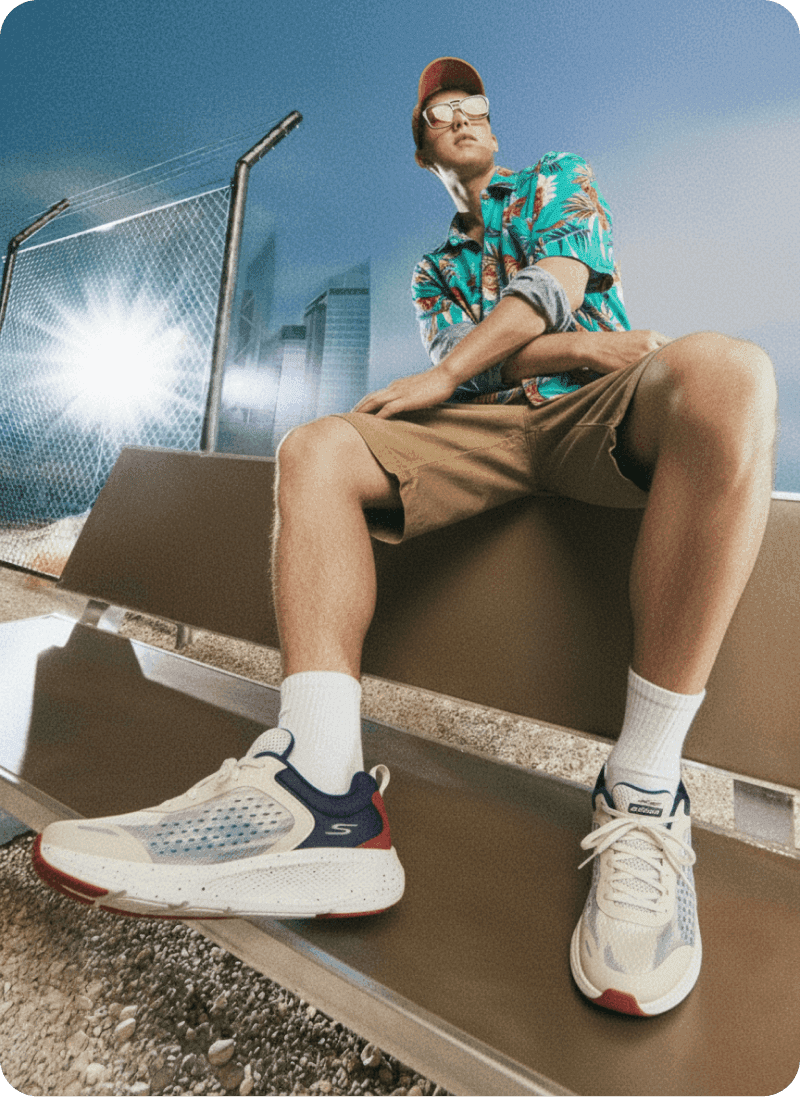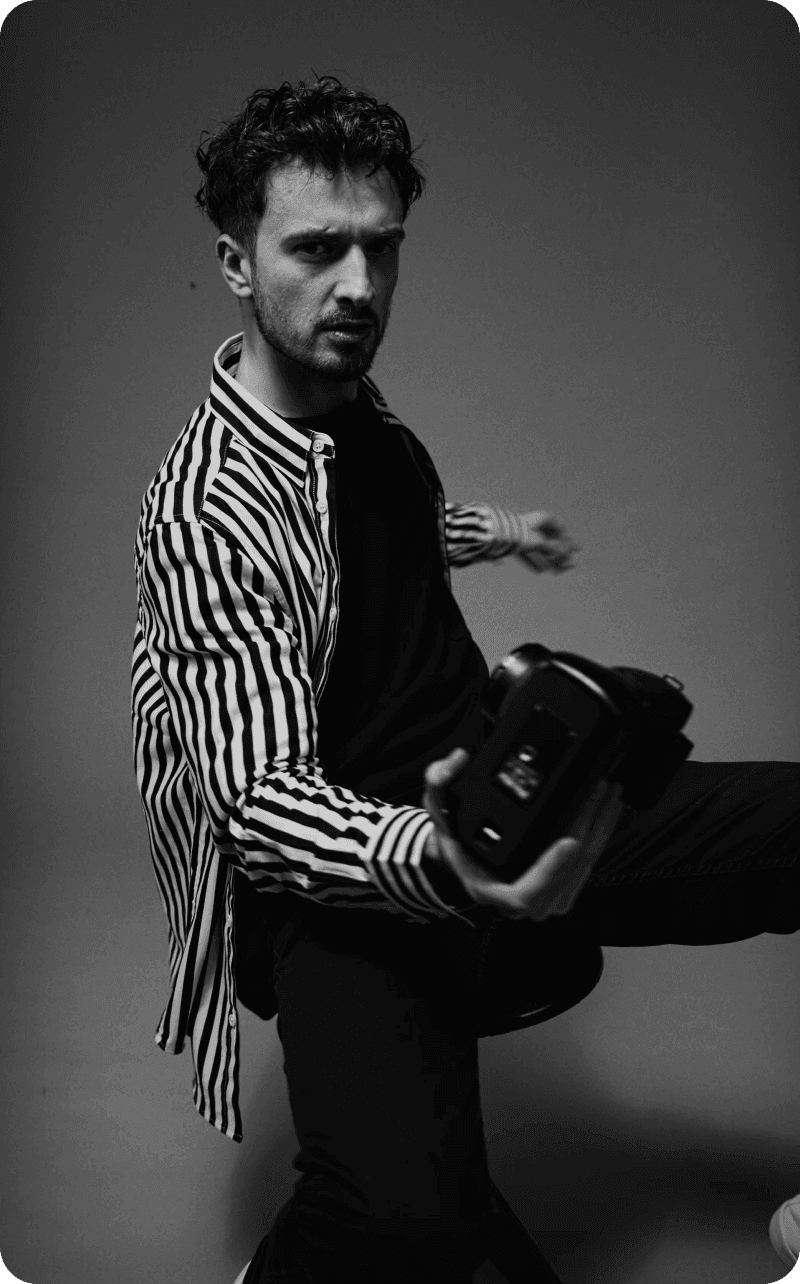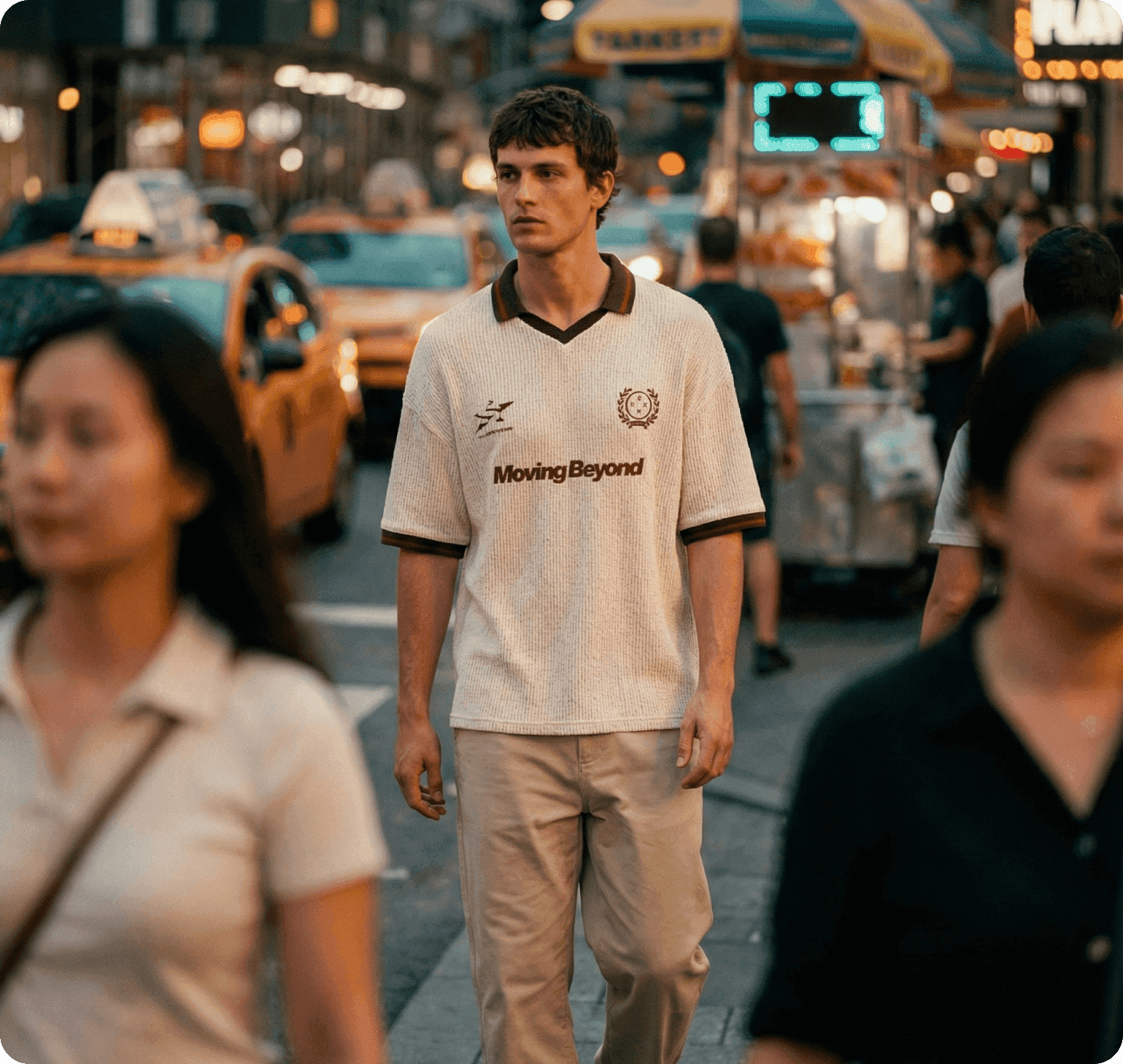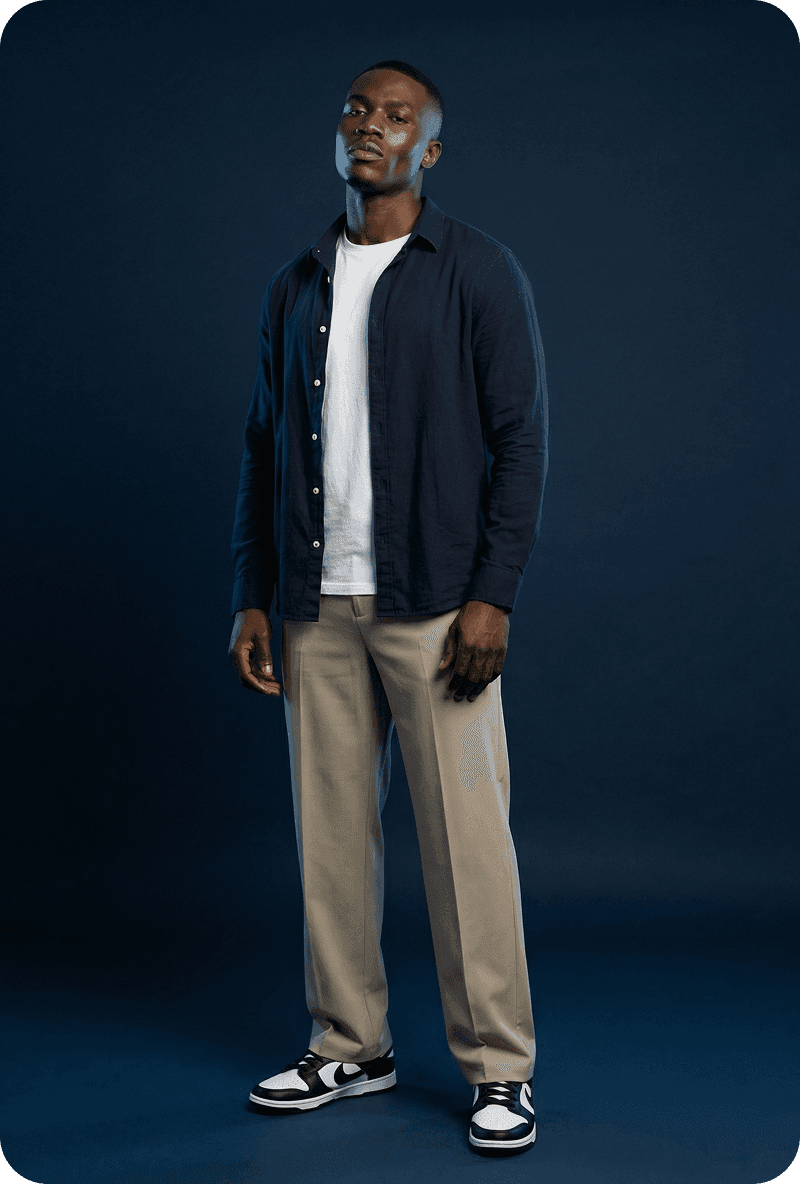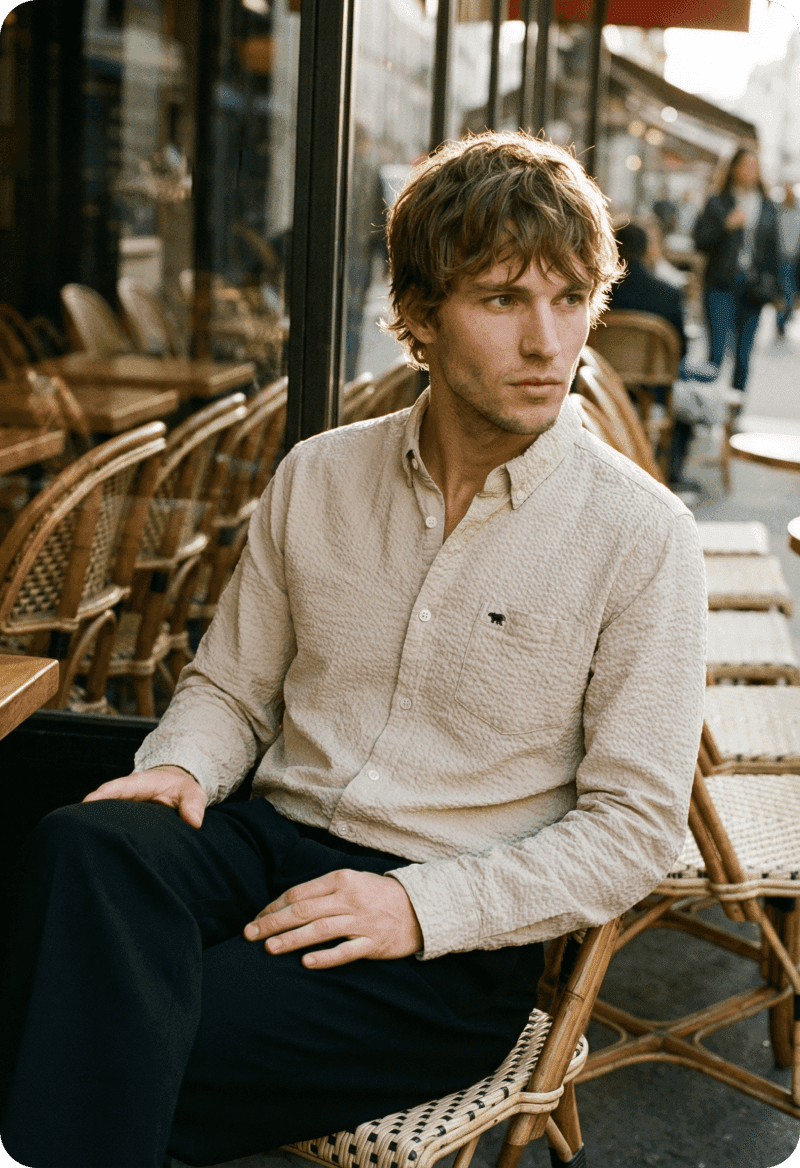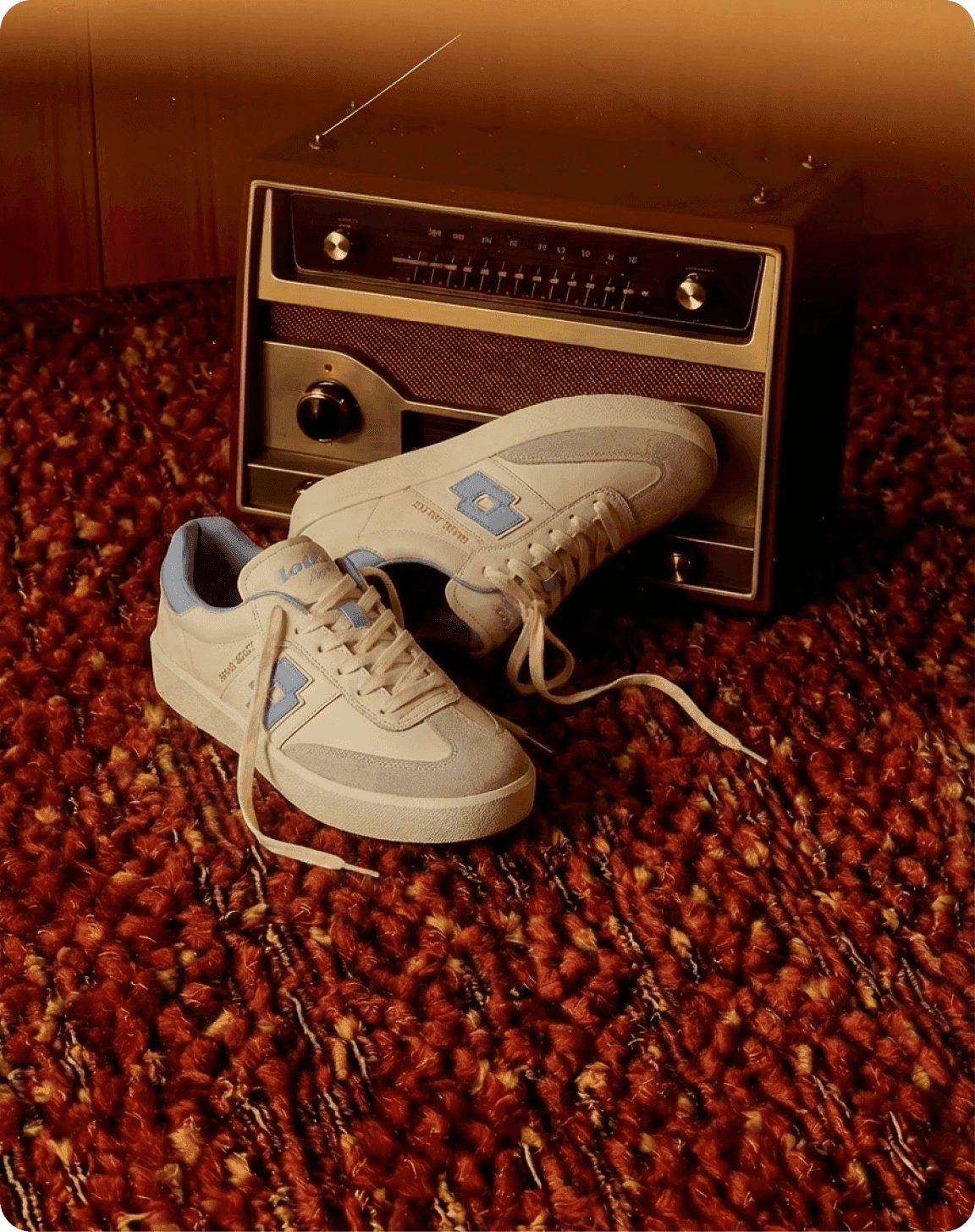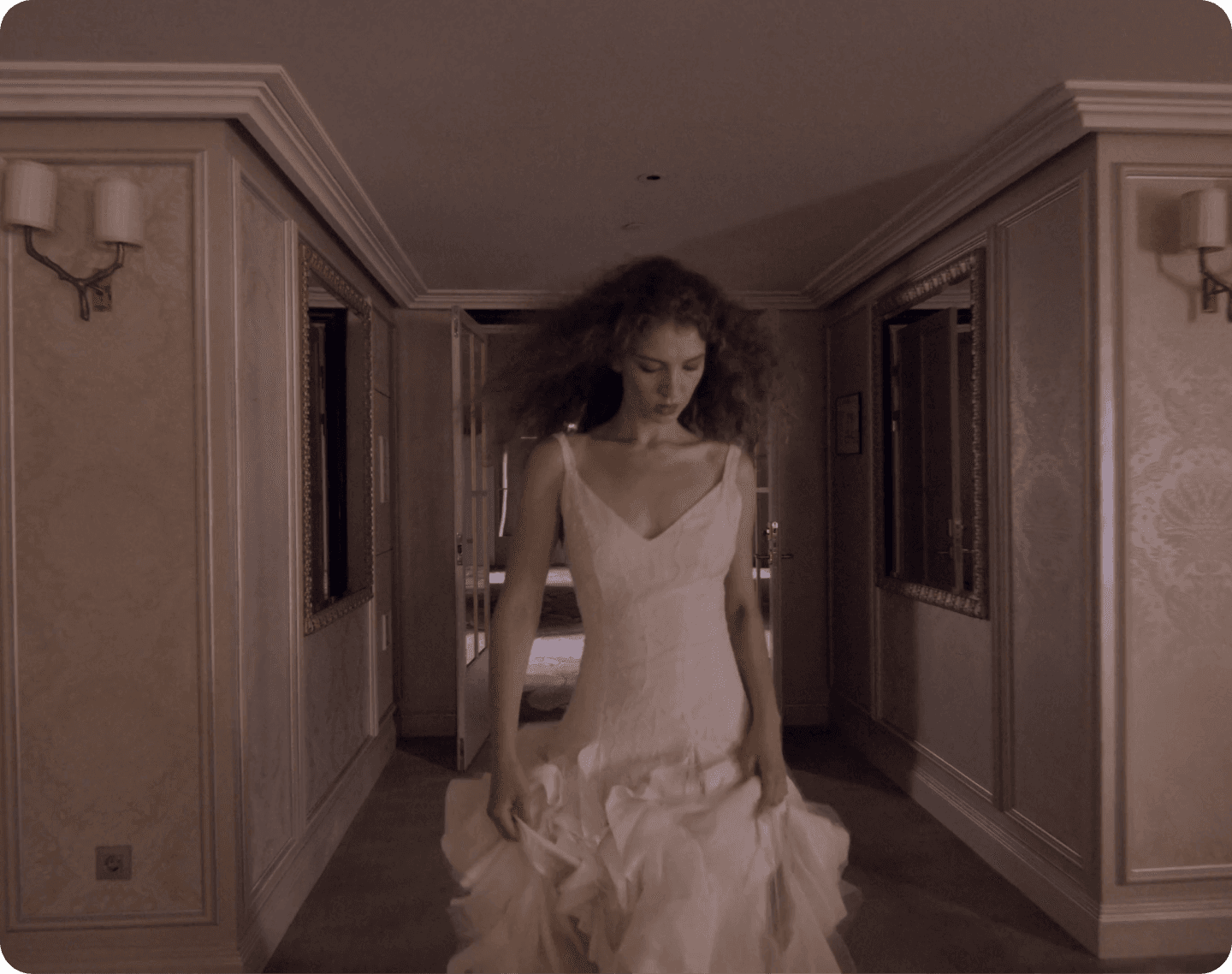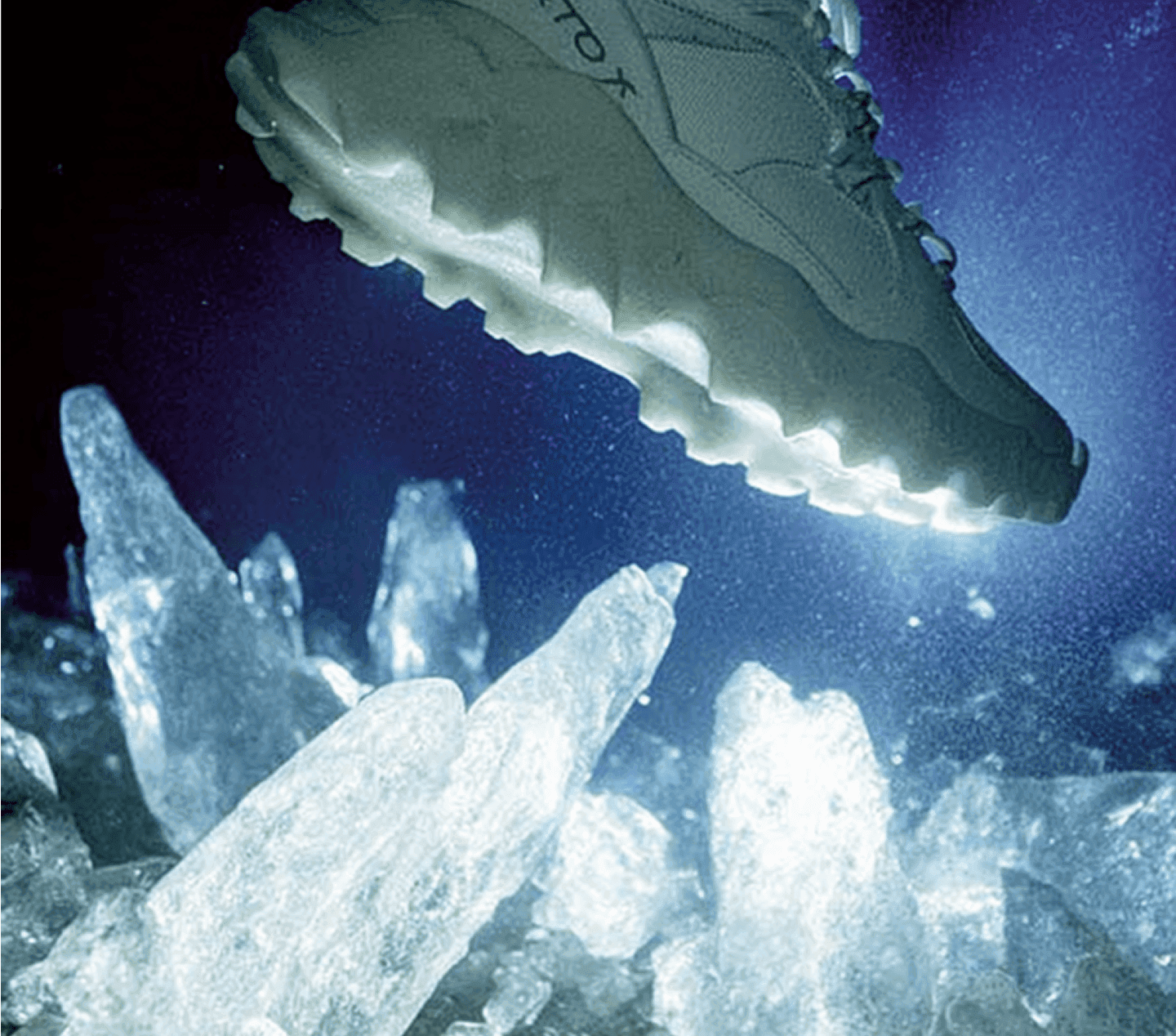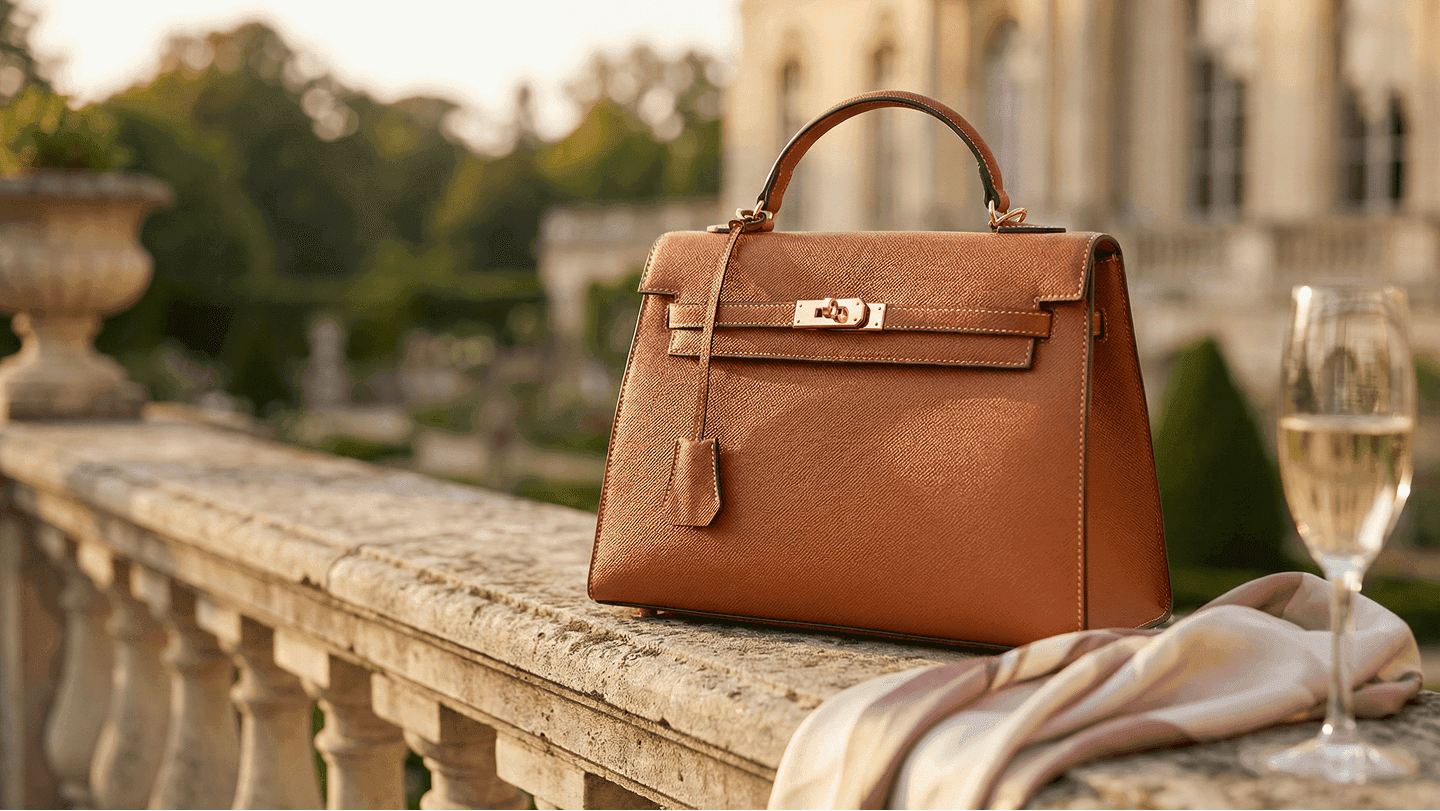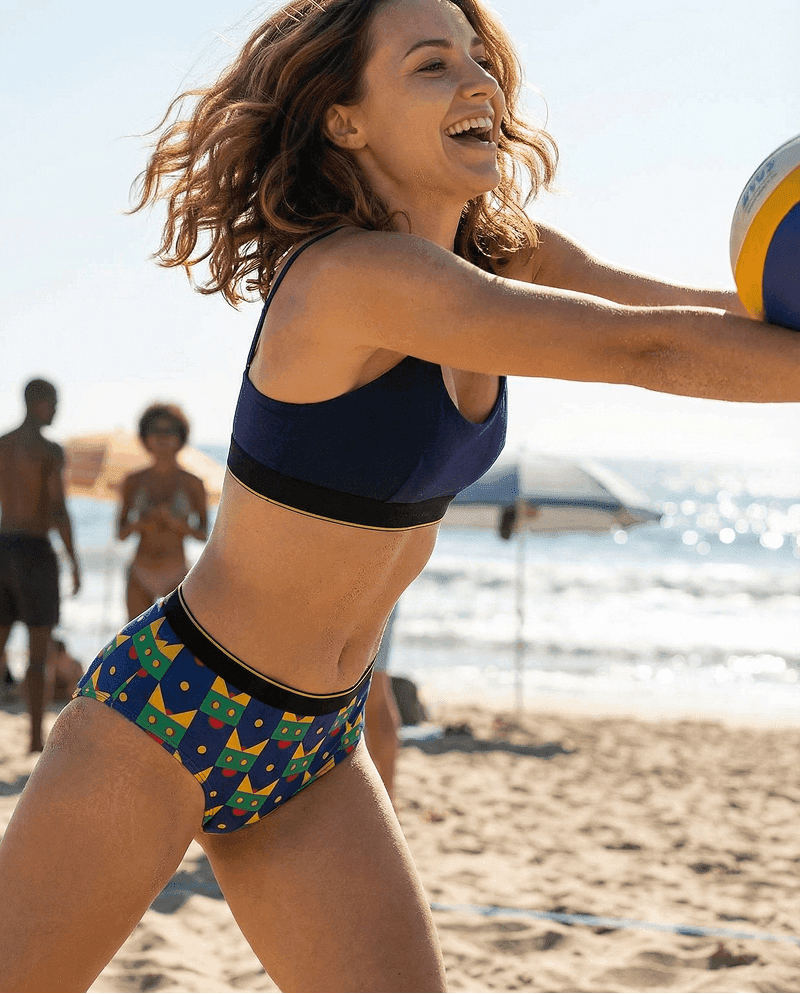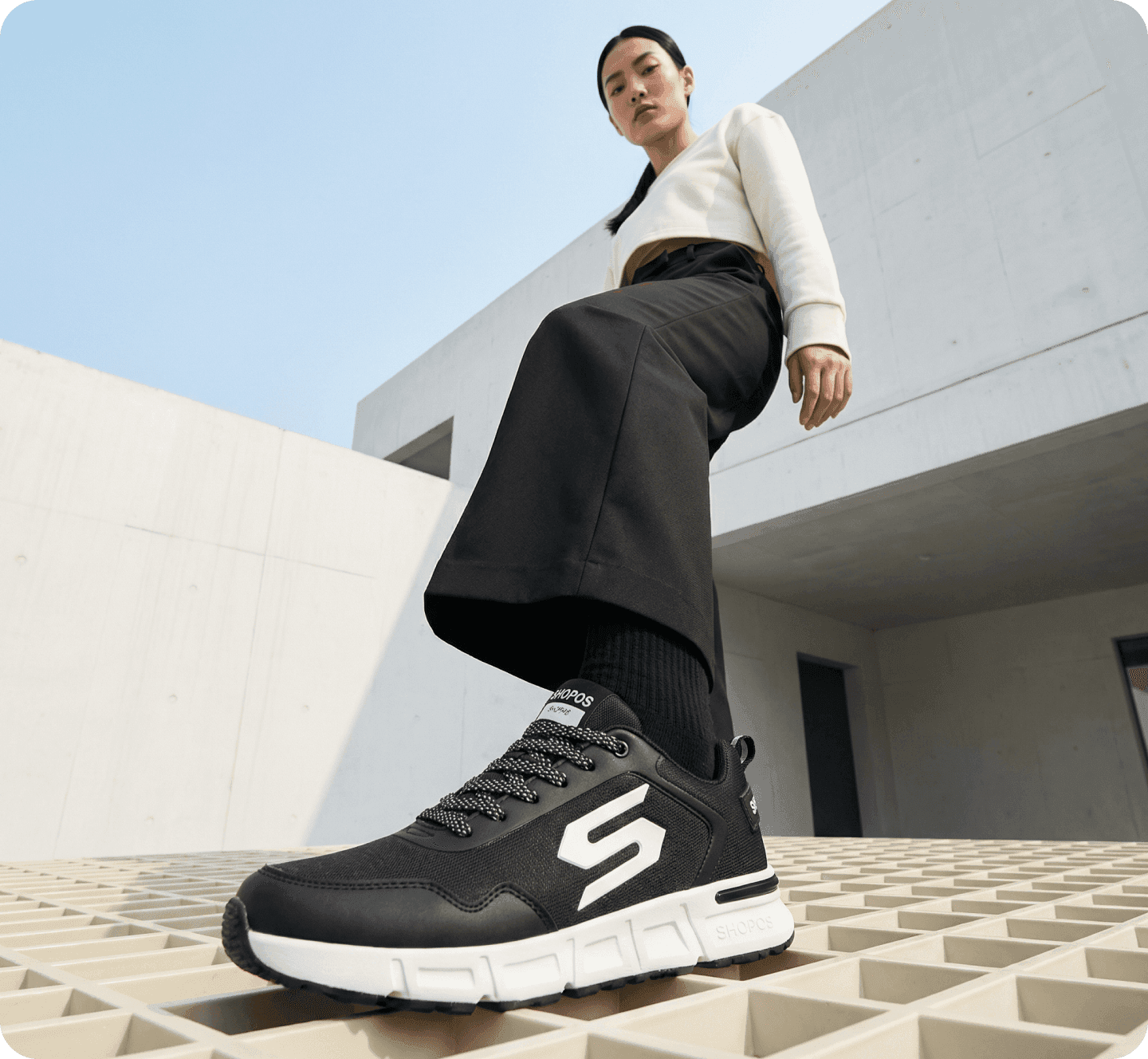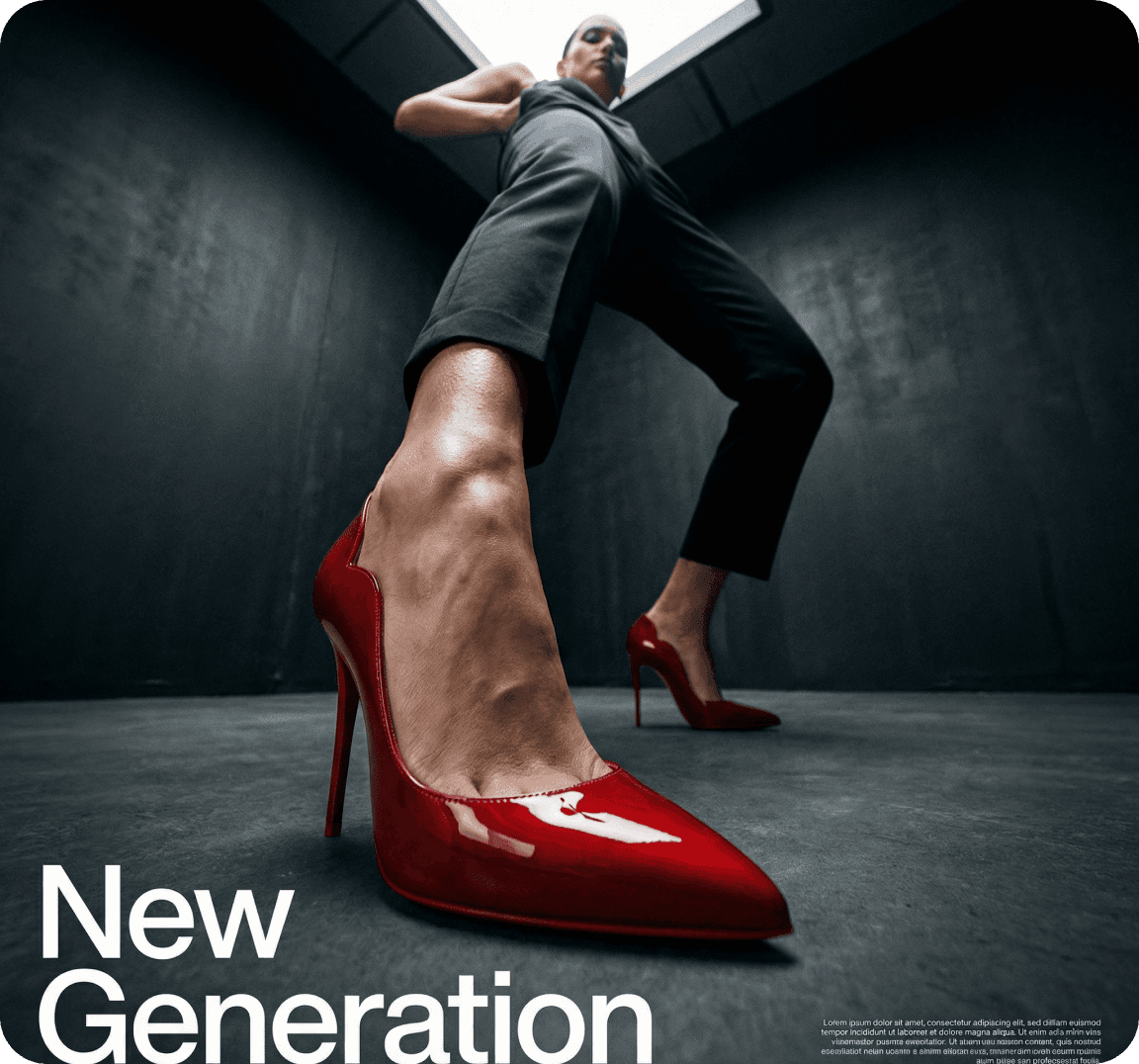
Let’s start with the honest version: traditional photography at its best is still stunning. The right photographer, the right light, a skilled model, a thoughtful art director, and you get images that AI generation hasn’t fully replicated for high-end editorial work. There’s a reason brands like Bottega Veneta and Hermès still build campaigns entirely around traditional photography.

So this isn’t an argument that photoshoots are dead or that AI images are always better. They’re not.

The question is more specific: for the 90% of your catalog that isn’t a hero editorial image, for the 200 new SKUs you’re launching this quarter, for the Meta ad creative you need to test across 15 product variations this month, for the marketplace listings that need on-model imagery you’ve never been able to afford, for the seasonal refresh that would otherwise take eight weeks to produce, what’s the right production model?

That’s where the math changes completely.

The Real Costs of Traditional Photoshoots

Most ecommerce teams undercount their photoshoot costs because expenses are distributed across multiple line items and often involve opportunity costs that don’t show up in a budget.

The direct costs are the obvious ones: studio rental ($200-800 per day), photographer fees ($500-2,000 per day), model fees ($300-800 per day), stylist ($200-600 per day), hair and makeup ($200-500 per day), retouching ($15-50 per image), and product logistics (packing, shipping, receiving samples for the shoot).

For a mid-market brand doing a 200-SKU shoot across two days with one model and a standard studio setup, that’s somewhere between $15,000 and $40,000 per shoot cycle. Before retouching.

At $50 per finished image and 3 images per SKU, a 200-SKU catalog run costs $30,000 just for basic ecommerce imagery. No lifestyle variations. No ad creative formats. No video. Just the product images.

The indirect costs are less discussed but often larger:

Lead time. Studio availability, model scheduling, sample production timelines, and post-production turnaround mean most brands are looking at 3-6 weeks from “product ready” to “content live.” Every week a product is in the system but not live with quality imagery is a week of missed sales velocity.

Coordination overhead. Scheduling a photoshoot requires synchronizing samples, studio, photographer, model, stylist, and art director. When a sample doesn’t arrive in time, or a model cancels, or the studio is double-booked, the shoot either runs short or gets postponed. The project management load for a large catalog shoot is substantial.

Reshoot costs. Color variants, sizing updates, seasonal packaging changes, or product updates require reshoots. Every time a product detail changes and the existing imagery needs to be updated, you’re paying shoot costs again for the affected SKUs.

The coverage gap. Most brands can’t afford to shoot their entire catalog. They shoot hero products, bestsellers, new arrivals. The long tail of the catalog, often 50-70% of SKUs, either has no on-model imagery, outdated imagery, or imagery that predates the current visual identity. These products underperform because their content doesn’t match the brand’s current standards.

According to Shopify merchant data, on-model images convert 30-60% better than flat-lay images for apparel. For a brand where 60% of the catalog has no on-model imagery, that conversion gap is leaving real revenue on the table.

What Photoshoots Produce (and Don’t)

A well-executed photoshoot produces a specific thing: a set of high-quality images per product, taken in a controlled environment, reviewed and retouched, ready for publishing.

What it doesn’t produce, and can’t easily produce without significant additional cost:

Format variations. A photoshoot produces your images. Reformatting those images for different channels (website, Instagram, Amazon, Meta ads in multiple placements, email) requires additional post-production work. Different crops, different aspect ratios, different color profile optimizations. At scale, this adds up.

Video. A photoshoot produces stills. If you need product video for Meta catalog campaigns, Reels, YouTube Shopping, or product page video players, that’s a separate production process: a videographer, additional shoot time, video editing. Meta’s own data shows video catalog ads drive 20-50% higher click-through rates than static images. But very few brands can afford to produce video for their entire catalog through traditional production.

Volume of creative variations. For paid advertising, testing creative variations is the difference between a campaign that improves and one that plateaus. Testing 20 creative variations per product category means producing 20 distinct images. A photoshoot that generates 3-5 images per product doesn’t give you the raw material for meaningful creative testing.

Copy and descriptions. A photoshoot produces images. Product descriptions, ad copy, marketplace listing content, email copy, and SEO metadata all require a separate workflow, usually a copywriter or a separate AI tool run.

Performance data feedback. After a photoshoot produces images and those images go live, the photoshoot has no awareness of what happens next. Which images drove conversion? Which product angles performed best in ads? Which model style resonated with which customer segment? That data exists in your analytics systems. The connection between creative decisions and performance outcomes requires manual analysis.

Where AI-Native Content Fits

ShopOS approaches content production not as a replacement for photography but as a fundamentally different model for the 90% of content that doesn’t need editorial-grade production.

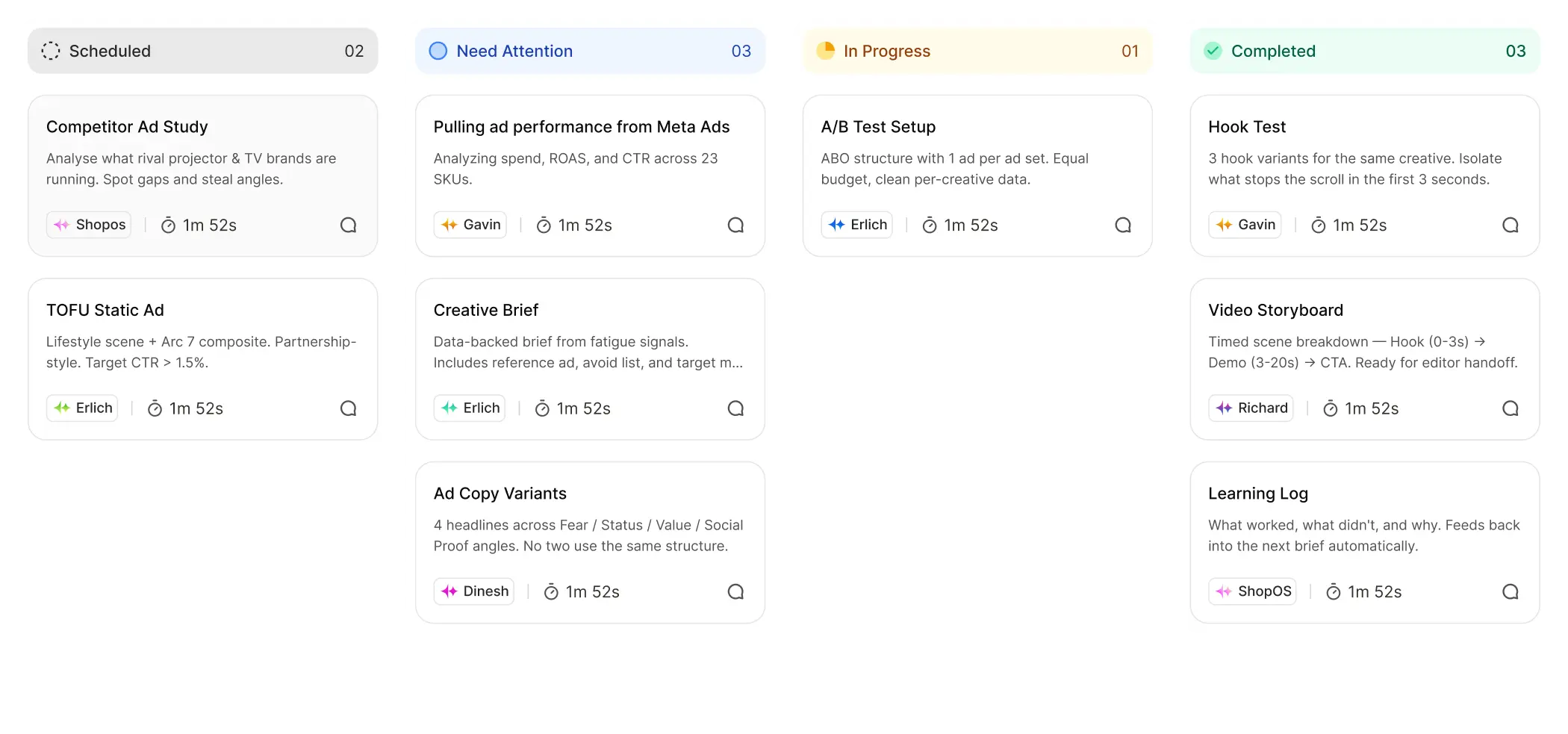
Brand Memory is where this starts. Your brand’s visual identity is stored once: your model specifications, approved lifestyle scene settings, color grading preferences, styling rules, seasonal contexts. Every generation pulls from this automatically. The consistency that a photoshoot tries to achieve through careful art direction and a consistent creative team, Brand Memory achieves structurally. The 200th SKU in a batch looks like it belongs to the same brand as the first because the same parameters are applied to both.

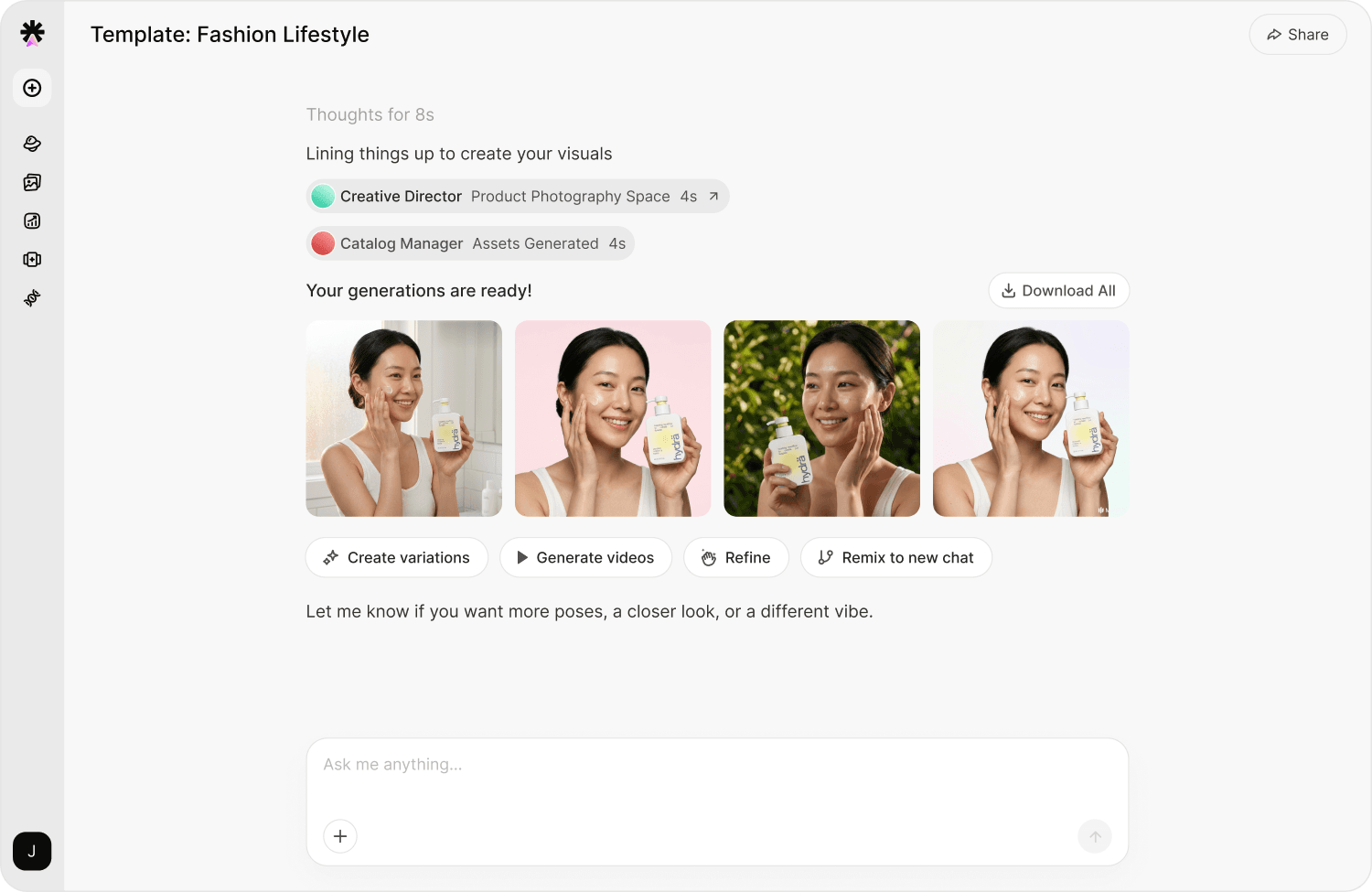
Batch generation addresses the scale problem directly. Upload your SKUs, configure your output types, run. ShopOS generates on-model imagery, lifestyle backgrounds, and multi-format exports across your entire SKU list simultaneously. 200 products with four asset types each isn’t 800 individual generations. It’s one batch run with a review step.

For a fashion brand launching a collection every six weeks, this changes the content calendar fundamentally. Instead of planning a photoshoot six weeks in advance and hoping the timing works, you can generate content within days of having product data ready.

Multi-format output closes the format variation gap. One batch run produces your website images, your Instagram crops, your Meta ad placements (1:1, 4:5, 9:16), your Amazon marketplace images, and your email assets. The reformatting step is built into the generation workflow, not added afterward.

Batch video generation handles the video gap. From the same product inputs, ShopOS generates motion video: product rotation, on-model motion, lifestyle context video, dynamic text overlay ads. Every SKU in your catalog can have video creative because the cost per SKU is radically lower than traditional video production.

A traditional video shoot for 200 SKUs costs somewhere between $15,000 and $50,000 and takes weeks. AI-native batch video generation for 200 SKUs costs a fraction and completes in hours. At that cost structure, running video for your entire catalog becomes standard practice rather than an occasional luxury.

Loops is the piece that traditional photoshoots can never offer: a feedback loop between creative production and performance data.

When you generate creative through ShopOS and deploy it on Meta or Google, Loops tracks what happens. CTR, ROAS, conversion rate, add-to-cart rate, all by creative variant. That data feeds back into the system. Your next batch of creative is informed by what the previous batch taught you.

After three months of Loops running on a brand’s catalog, the system has developed patterns like: on-model images with full-body shots convert 28% better than waist-up shots for your dresses, but waist-up outperforms for your knitwear category. Warm orange tones in lifestyle backgrounds drive 19% higher CTR during the fall months. Question-format ad headlines outperform statement headlines by 22% for your price point.

A photoshoot is stateless. ShopOS is continuously learning. By month twelve, the creative intelligence accumulated in your commerce context graph represents something no photography operation can replicate: a rich, brand-specific pattern library built from real performance data.

Refine handles quality at scale without the bottleneck of manual retouching. When a generated image needs a specific fix (the product logo placement is off, the model’s left hand is slightly unnatural, the fabric texture needs more detail), you pin the issue in the image, describe the edit, and ShopOS processes the regional correction. The rest of the image is preserved. This is faster than full regeneration and more precise than sending it back to a retoucher.

The Coverage Equation

Here’s the practical math that changes how most brands think about this:

If traditional photography costs $50 per finished image and you need 5 images per SKU, your per-SKU content cost is $250.

If AI-native generation costs $5-10 per finished image with batch processing, your per-SKU cost drops to $25-50.

At $250 per SKU, a 2000-SKU catalog costs $500,000 to photograph comprehensively. That number is why most brands only photograph 20% of their catalog well and leave the rest with flat-lays or outdated imagery.

At $50 per SKU, a 2000-SKU catalog costs $100,000 to cover comprehensively, with multiple image types per product. Suddenly, 100% catalog coverage is financially viable.

The products that previously had no on-model imagery get on-model imagery. The products that had one image get five format variations. The products that had no video get video. Every product in your catalog gets the full content treatment, and the conversion improvement compounds across your whole SKU base.

Where Traditional Photography Still Wins

This deserves honesty. There are specific use cases where traditional photography should remain in the production model.

Hero editorial content. Homepage banners, seasonal campaign hero images, lookbook spreads for press distribution, high-end brand films. Content where artistic direction, emotional resonance, and production value are the product. A $50K campaign shoot that anchors a season’s marketing is a different investment category from catalog imagery.

Complex construction and craftsmanship. Heavily embellished garments with intricate beading, handcrafted jewelry with complex metalwork, highly structured tailoring where precise edge lines and construction details matter at high resolution. These categories push the limits of current AI generation, particularly at very high zoom levels.

Video requiring natural human performance. A campaign video with a model expressing genuine emotion, interacting with other people, or performing physical activities that require real coordination. AI video has improved dramatically but authentic human performance in complex scenes is still best captured traditionally.

First run of a new brand identity. When a brand is establishing its visual language for the first time, an initial traditional photoshoot to create reference imagery is valuable. Those reference images can then inform Brand Memory in ShopOS, creating the foundation from which AI-native content is generated going forward.

The hybrid model that most established brands are moving toward: traditional photography for 10-15% of content (hero editorial, campaign anchors, complex craftsmanship), AI-native generation for 85-90% of content (catalog coverage, ad creative, marketplace listings, format variations, video). This approach cuts total content production costs by 60-70% while maintaining premium quality where it genuinely matters.

The Speed Advantage and What It Enables

The speed difference between traditional photoshoots and AI-native generation changes more than just cost. It changes what’s operationally possible.

With a photoshoot model, you batch products for shoots planned weeks in advance. New product drops, restocks, seasonal items, and trend-responsive additions all compete for limited shoot capacity. Products that aren’t ready in time for the scheduled shoot either launch without quality imagery or wait for the next cycle.

With AI-native generation, the constraint between “product data ready” and “content live” collapses from weeks to days. A team can generate content for a new product drop on Monday and have it live with full creative coverage by Wednesday. Trend responsiveness that was logistically impossible with traditional production becomes a standard capability.

For fast-fashion brands and trend-driven categories, this speed advantage is significant. The brand that can put a trend-relevant product live with full creative coverage in 72 hours captures demand that a brand with a 3-week photoshoot lead time misses entirely.

Starting the Transition

For brands considering this shift, a parallel testing approach reduces risk and builds confidence in the quality.

Weeks 1-2: Select 20-30 products currently lacking on-model imagery. Generate AI-native content through ShopOS for those products. Run both AI-generated and existing imagery where both exist, measure conversion differences.

Weeks 3-4: Review performance data. For most brands, products with AI-generated on-model imagery convert 15-30% better than products with flat-lay-only images. This establishes the business case.

Month 2: Route all new product launches through AI-native generation. Traditional photoshoots focus on hero editorial content only. Start Loops running on ad creative.

Month 3-4: Backfill existing catalog. Prioritize by traffic volume and conversion opportunity.

Month 4+: Full AI-native operation for catalog content. Commerce context graph accumulates performance data. Creative outputs improve each cycle.

The brands that started this transition 12 months ago now have rich performance data across their entire catalogs. They know what drives conversion by product category, by channel, by season, by audience segment. That knowledge compounds. The gap between them and brands still managing photoshoot-led content operations grows each month.

Start your AI-native commerce content operation with ShopOS. Build the context graph your brand will be running on in 12 months.