
Thoughts·May 15, 2026
Not forever. Just stop shipping slop right now. Here is ...

Not forever. Just stop shipping slop right now.
Here is what most brand teams do today.
They open ChatGPT. They type, “write a product description for our new hoodie.” They paste the output into Shopify. They swap “elevate” for “upgrade.” They add an emoji. Then they ship it.
The next morning, they checked Klaviyo. The open rate is flat. Click rate is down. DMs stay quiet.
This is where most brands misunderstand AI. The problem is not AI content creation. The problem is weak AI brand management.
AI without brand memory writes like everyone else. AI without customer context creates safe, smooth, forgettable copy. AI without writing rules produces content that sounds polished but feels empty.
The problem has a name. It is called slop.
Slop is what happens when AI writes with zero memory of who the brand is, what the customer cares about, and what the product actually solves.
ShopOS helps ecommerce brands fix this by turning AI writing into a structured brand system. Instead of prompting from scratch every time, brands can store their brand memory, customer behavior, product context, voice rules, and writing skills inside ShopOS. That is how AI starts sounding like your brand instead of a random chatbot.
Slop is content that sounds like every other brand on the internet.
You have seen it everywhere.
Technically correct. Completely forgettable.
Your customers have seen this language ten thousand times. Their brain has already marked it as AI. They scroll past before the first sentence finishes.
Here is the real cost. Low-effort content signals a low-effort brand. Low-effort brands lose sales, not always because the product is bad, but because the writing feels like nobody is home.
This is why AI brand management matters.
A brand does not need more random AI outputs. It needs a system that teaches AI what the brand sounds like, how customers think, which words to avoid, and what every piece of content must achieve.
That system is where ShopOS becomes useful.
ShopOS helps brands move from one-off prompting to ecommerce content automation. It gives teams a way to build a reusable ecommerce content pipeline where every product description, email, ad, SMS, and microcopy asset follows the same brand logic.
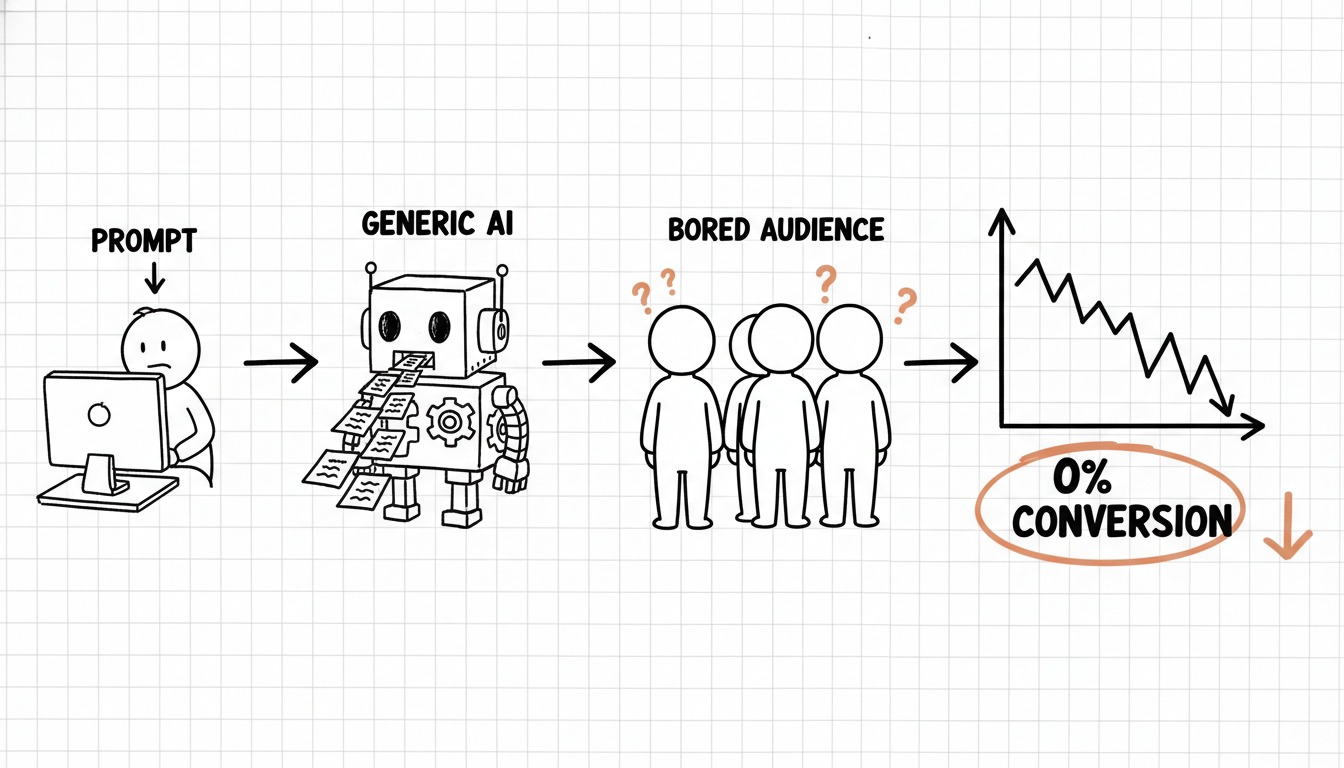
Customers can feel generic writing almost instantly.
The sentences are too smooth. The structure is too predictable. The same hook, three benefits, and call to action appear again and again. The energy feels wrong because there is no real point of view behind the words.
That creates a quiet kind of distrust.
The customer may not think, “This brand is fake.” The reaction is softer, but still damaging. They think, “This brand does not really get me.”
That quiet distrust affects retention, replies, clicks, and repeat purchases.
Your best human writer knows things a raw AI model does not. She knows your customer buys with her eyes first and reads the copy only to confirm what she already feels. She knows “buttery soft” may work, but “cloud-like comfort” may make people roll their eyes. She knows how to handle a price objection without sounding defensive.
That knowledge has to be given to the model.
Generic prompts cannot do that alone. Better AI brand management can.
When a platform like ShopOS stores brand voice, product details, audience behavior, and objection handling, AI gets a real source of truth. That is when generative ai content creation becomes useful for ecommerce teams instead of becoming another rewrite task.
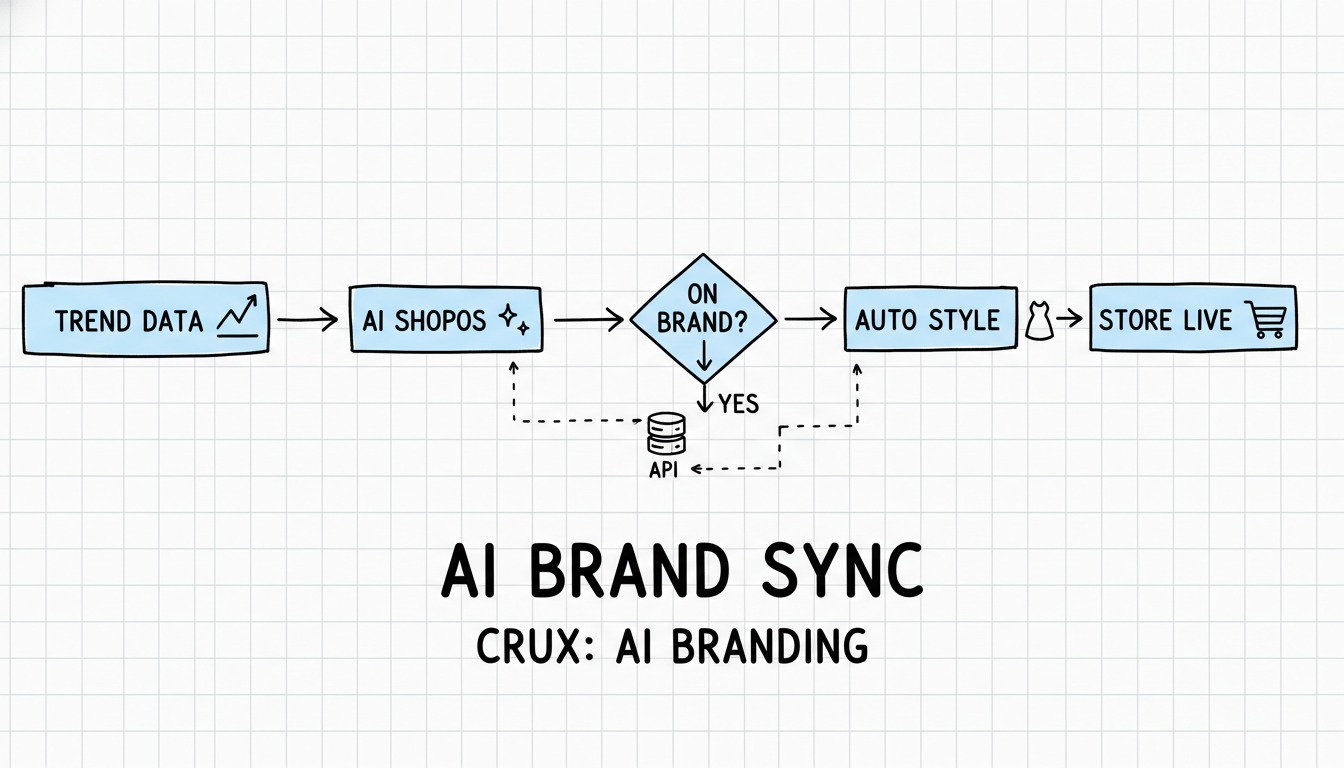
ShopOS connects AI writing with real brand context.
Instead of treating AI as a one-time copy generator, ShopOS works like a brand operating system for ecommerce teams. It helps you train ai with your voice by storing your brand identity, audience behavior, product context, writing rules, objection handling, approved examples, and banned phrases.
That means your AI does not start from zero every time.
It already knows what your brand sounds like. It knows what words to avoid. It knows what matters to your customer. It knows how your team writes subject lines, product descriptions, checkout messages, ads, and support replies.
This is the difference between basic AI writing and real AI brand management.
A normal AI prompt may produce a usable paragraph once in a while. ShopOS helps brands create a repeatable ecommerce content pipeline that improves with every update.
Brand memory in ShopOS is a persistent context layer. Think of it as onboarding your best new writer once and keeping that knowledge active across every content task.
Every agent in ShopOS can pull from it. Product descriptions, emails, ads, SMS, help replies, landing page content, and microcopy can all follow the same source of truth.
Open your ShopOS dashboard. Select Brand Memory. You will see four sections.
Write this like you are briefing a freelancer on day one.
Weak version:
“We are a sustainable skincare brand.”
Better version:
“We make refillable skincare for people who keep their bottles on the bathroom counter because they look good. We are design-first, refill-obsessed, and allergic to pseudoscience.”
This gives the AI something real to work with. It tells the model what the brand believes, how it behaves, and how it should sound.
Do not paste SKUs and expect great copy.
Explain the job each product does.
Better version:
“Our cleanser is for people who wear SPF every day. It removes sunscreen in one wash, with no double cleanse. Our moisturizer has to work under makeup at 7am.”
This turns a product catalog into useful creative direction. It also makes the ai product description generator inside your workflow more useful because it has context beyond product features.
Demographics create slop. Behaviors create good copy.
Weak version:
“Women 25 to 35, fashion-forward.”
Better version:
“She has four tabs open. She has already decided from the photos. The copy needs to confirm the fabric weight, the fit on hips, and whether it will pill after three washes. She hates hype. She loves specifics.”
This is how to make AI understand your brand at a deeper level. You feed it behavior, hesitation, buying triggers, and emotional context.
Add three to five lines your brand has actually shipped.
Use real copy, not aspirational copy.
The more specific you are, the better the output becomes. Vague inputs produce vague outputs every time.
After saving your brand memory, test it. Ask ShopOS to write a product description, email subject line, or ad caption. You should notice that it stops asking basic questions. That is the point.
Brand memory should also evolve. Revisit it after every major launch. Add what you learned. Strong AI brand management compounds over time.
Most brand tone of voice guidelines fail because they are filled with vague words.
“We are friendly but professional.”
“We sound casual but premium.”
“We are witty but warm.”
An AI cannot execute a vibe. It needs rules.
Open Brand Memory > Voice in ShopOS. Work through these four prompts.
Paste ten pieces of copy you are proud of. Use what you actually shipped.
Examples:
This gives the model anchors. It learns your rhythm, sentence length, punctuation, and level of detail.
This is your banned list. It is the fastest way to reduce generic AI language.
Start with words like:
In ShopOS, add them to the banned words field. The model will rewrite around them automatically.
This single step can dramatically improve generative ai content creation because it removes the phrases that make AI content sound like everyone else.
Write three real replies in your tone.
Price:
“It costs more because we use refillable glass and pay for refills to ship back free. Most people break even on the third refill.”
Returns:
“Try it for 30 days. If your skin hates it, we refund you. [Start return]”
Shipping:
“Orders ship next day from Utah. You will get tracking in about an hour. [Track your order]”
Notice the microcopy rules here. Be clear, concise, and useful. Use active voice. Add context. Keep the tone calm.
Pick three brands outside your category whose writing you respect. Do not choose competitors. Choose anchors.
Example:
“Patagonia for directness. Glossier for conversational product copy. Apple for short, scannable feature naming.”
Once this is in, test again. Ask ShopOS to write a product description. Read it out loud. Ask one question: does this sound like us?
If the answer is no, the gap tells you what to add.
This is the step most teams skip. It is also one of the highest-leverage parts of AI brand management.
A skill file is not a prompt. It is a standard operating procedure for writing. It tells the AI what to pull, what order to think in, and what to check before shipping.
Open Skill Library in ShopOS. Select Create Skill. Name it something specific:
“Product description writer v1.”
Use this template.
Write product descriptions that turn browsers into buyers for refillable skincare.
Upload the file. Tag it to your Product Description agent and your Email agent.
Now every time your team hits generate, ShopOS runs this process. It becomes consistent, auditable, and improvable.
Build more skills over time. Avoid one giant file. Create small, specific files instead.
Version them. When you find a better hook structure, ship v2. Your whole team improves instantly.
When this system is set up, something shifts.
You stop rewriting every output. Your team stops debating whether AI is ruining the brand. Your junior marketer starts producing a copy that sounds closer to your senior writer on her best day.
You also get a bonus. You are forced to articulate things that were previously only in your head.
That articulation is valuable with or without AI. It makes onboarding faster. It makes agency briefs tighter. It keeps your brand consistent as you scale from three products to thirty.
Brands that win with AI are not the ones with the best prompts. They are the ones that build the best context.
Brand memory, voice rules, and skill files turn ShopOS into more than a content tool. They turn it into an AI brand management system for ecommerce teams that need better output, faster execution, and fewer rewrites.
If you write “our audience is Gen Z,” the model will write for every Gen Z user on the planet. Write behaviors, objections, buying triggers, and product-use moments instead.
2. Your Voice Guide Is Only Vibes
Add banned words. Add real sentences. Add objection replies. Vibes do not create repeatable writing.
3. You Use One Skill File for Everything
Split by task. A product description is not an ad. An email is not a checkout error message. Different jobs need different skills.
4. You Never Read the Copy Out Loud
AI copy hides in silence. Read it. If you stumble, your customer will too.
5. You Set It Once and Forget It
Your brand evolves. Update Brand Memory monthly. Ship v2 of your skill files. Treat AI content automation for ecommerce like a product system, not a one-time setup.
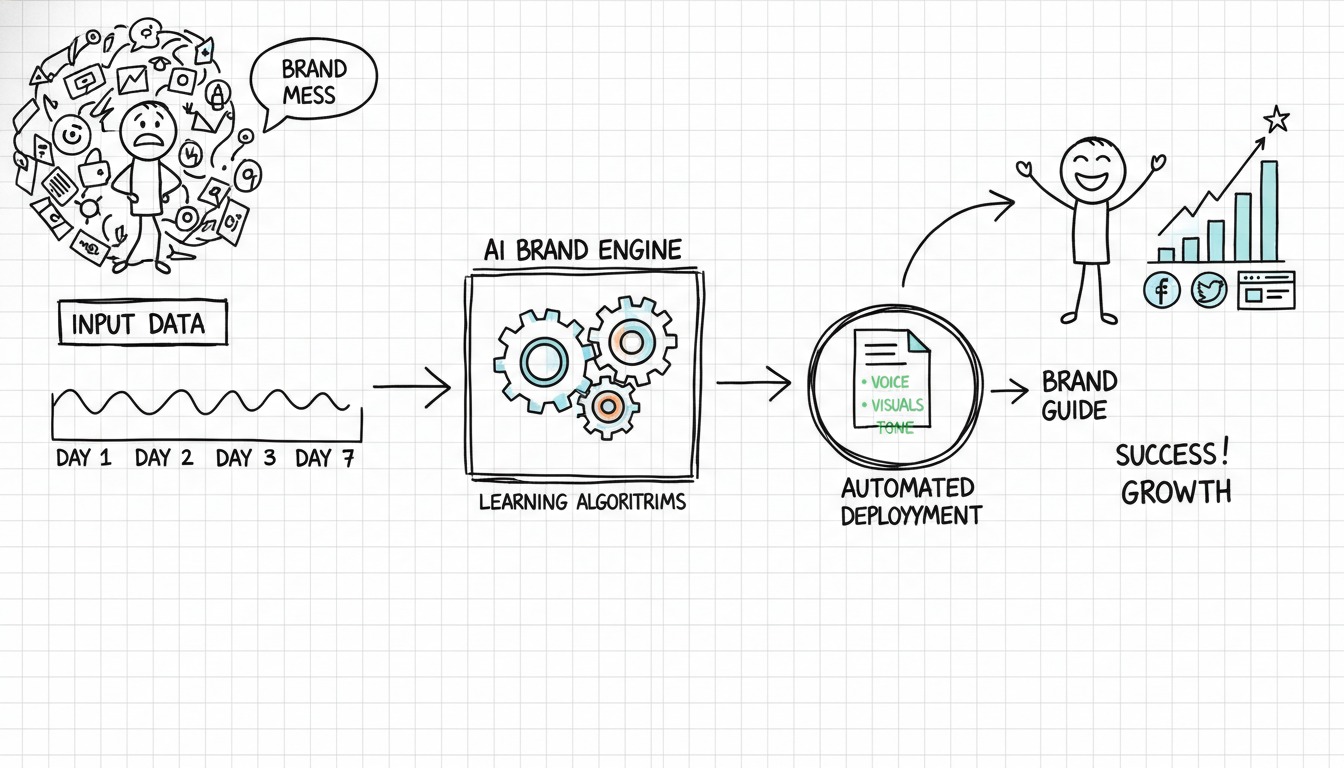
Roll Out AI Brand Management in Seven Days
Day One and Two: Fill Brand Memory
Block 90 minutes. Bring your best writer and your head of CX. Pull real phrases from reviews, support tickets, product pages, ad comments, and sales notes.
Day Three: Build the Voice Guide
Paste ten real winners. List 25 banned words. Write three objection replies. Add your brand tone of voice guidelines inside ShopOS.
Day Four: Write Three Skill Files
Start with product descriptions, email welcome flow, and Meta ad primary text.
Day Five: Test the System
Generate 20 pieces across your catalog. Read them out loud as a team. Note where the output fails. That failure is data.
Day Six: Refine the Rules
Update banned words. Tighten instructions. Add missing audience context. Ship v2.
Day Seven: Document Your Microcopy Framework
Create a one-page document in ShopOS with your standard phrases.
Examples:
Use consistent wording everywhere. If the button says “Next” on step one, avoid using “Continue” on step two unless there is a clear difference. Inconsistency creates hesitation.
Use “your” for things the product creates for the user. Examples: “Your order details.” “Your refill schedule.”
Use “my” for sensitive, personal ownership. Examples: “My payment methods.” “My prescriptions.”
“Elevate your skincare routine with our innovative cleanser, designed for the modern consumer seeking a seamless experience. Crafted with world-class ingredients, it delivers unparalleled results.”
What the customer hears: nothing.
“Removes SPF in one wash. No eye sting, no tight skin. Refill arrives before you run out, and you will not pay for shipping back.”
The first sentence answers “so what.” The second sentence adds proof. The third handles the objection about refills. All sentences are short. All are active.
This is how an ai product description generator becomes useful. The tool needs brand memory, audience behavior, objection handling, and rules for what good output looks like.
“Unlock your best skin yet”
“Your refill ships Tuesday. No action needed.”
Clear. Useful. Specific. Calm.
Do not place social proof only on your homepage hero and call it done. Put proof where hesitation appears.
Above your email capture:
“Join over 15,000 people who refill with us.”
At checkout:
“1-click checkout. Takes about 30 seconds.”
On error states, use constructive feedback.
Weak version:
“You cannot view this document.”
Better version:
“You cannot view this document because you are not assigned. Request access and you will get it in under five minutes. [Request access]”
Good ecommerce writing reduces confusion. Strong AI content automation for ecommerce should do the same across every touchpoint.
Contextual wording beats generic wording.
Inside ShopOS, a brand can test different copy variants and feed the winning patterns back into its skill files. That is how the system improves over time.
For example, three button options may perform very differently:
The third option may win because it answers the customer’s exact intent. It uses familiar words. It gives context. It starts with a verb.
Test your own buttons, subject lines, product descriptions, SMS copy, and ad hooks. Keep what wins. Add it to your skill file as a rule for next time.
That is the compounding value of AI brand management. The system remembers what performs, and your team stops repeating the same work manually.
AI will not replace your taste. It will scale your taste.
Be conversational, but avoid trying too hard. Use humor carefully. A birthday email that says “Happy birthday. You look terrible today” only works if that is truly your brand. Most of the time, simple delight works better.
Pair the right visual with the right words.
A truck icon with: “Free delivery by Thursday.”
A checkmark with: “File successfully uploaded.”
Build for translation too. “New!” fits in English. In French, “Nouveau !” is longer and may break buttons. Add a rule to your skill file: “Keep button copy under 18 characters.”
Spell out numbers up to nine in body copy. Use numerals after 10. It makes scanning easier.
People skim. Help them save energy.
You do not need more random AI prompts. You need a stronger system.
Open Brand Memory in ShopOS. Fill the four sections with real sentences. Add your voice guide. Paste your best copy. Add banned words. Upload your first skill file and name it v1.
Then generate one product description. Read it out loud.
If it sounds like you, your system is already working.
If it does not, that is useful too. You now know what context is missing. Add it. Ship v2.
The brands that win next year will not be the ones publishing the most AI content. They will be the ones creating more specific content, faster, with fewer rewrites.
Stop prompting from scratch. Start building memory with ShopOS.
Your customers will feel the difference in the first sentence.
The problem is not using AI.
The problem is publishing copy that could belong to any brand.
Give AI your real voice, customer context, product truth, banned language, and writing rules before asking it to create.
Make Your AI Sound Like Your Brand Book a Demo.
AI brand management is the process of giving AI systems a clear understanding of your brand identity, tone, customer behavior, product context, approved copy, banned phrases, and writing rules. It helps AI create content that sounds like the actual brand instead of producing generic copy.
ShopOS helps ecommerce brands store brand memory, voice rules, product context, customer insights, and writing skill files in one place. This helps teams create product descriptions, emails, ads, SMS copy, and microcopy with more consistency and fewer rewrites.
Ecommerce content automation is the use of AI and structured workflows to create product descriptions, emails, ads, landing page copy, SMS messages, and microcopy faster. It works best when the AI has access to brand memory, tone rules, product context, and customer insights.
Brands can train AI with there voice by adding real brand examples, approved phrases, banned words, objection-handling replies, audience behavior, product details, and formatting rules into a persistent system like ShopOS.
Brand tone of voice guidelines for AI should include approved sentence examples, banned words, objection-handling replies, preferred punctuation, reading level, CTA style, microcopy patterns, formatting rules, and examples of copy the brand wants to avoid.
An ai product description generator can create brand-specific content when it has access to brand memory, product details, customer behavior, writing rules, and objection-handling context. Without those inputs, it usually creates generic descriptions that sound like many other brands.
An ecommerce content pipeline is the structured process a brand uses to create, review, improve, and publish content across product pages, emails, ads, SMS, and landing pages. With ShopOS, this pipeline can include brand memory, AI agents, skill files, tone rules, and testing feedback.
To make AI understand your brand, give it real examples, customer insights, product context, tone rules, banned words, approved phrases, objection-handling responses, and writing processes. ShopOS helps organize this information so AI can reuse it across ecommerce content workflows.
Generative ai content creation alone is rarely enough for ecommerce brands. It becomes useful when paired with AI brand management, brand memory, customer context, content workflows, and testing data. The system behind the AI matters as much as the output.

