

Video ads outperform static images. Everyone knows this. The problem is production.
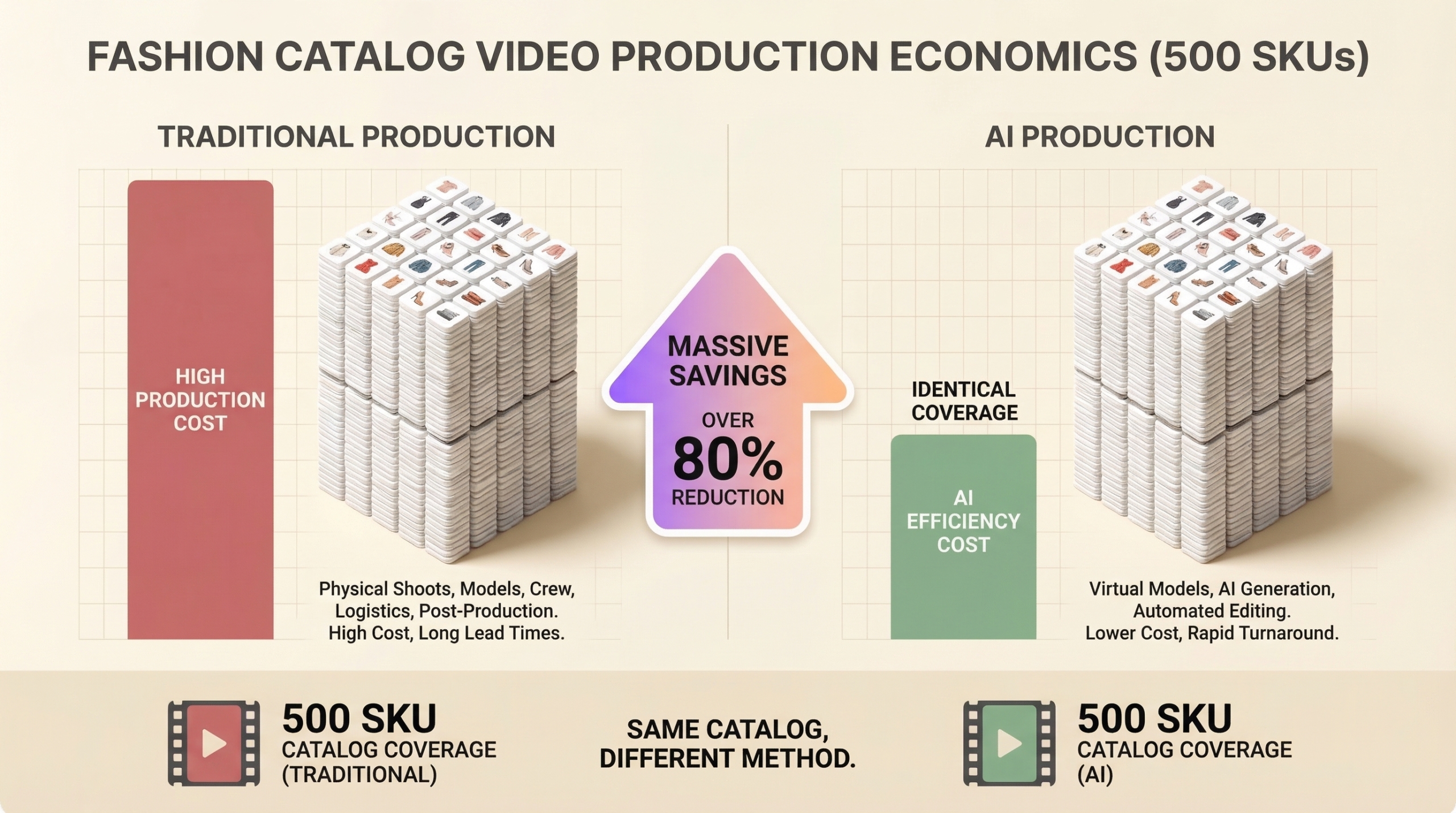
A single polished product video costs $500 to $2,000 to produce. For a fashion brand with 500 SKUs, that math breaks fast.
Most brands do one of two things. They produce video for their top 20 SKUs and ignore the rest. Or they skip video entirely and leave conversion rate on the table.
Neither works.
The brands scaling aggressively in 2026 found a third path: AI video catalog production. They generate professional product videos for every SKU at a fraction of the traditional cost.
This is how that works in practice.
Why Video Catalog Ads Work
Before the process, understand why this matters.
Meta’s catalog ads deliver product-specific content to shoppers based on their browsing behavior. A shopper who viewed a red dress gets served ads featuring that exact dress.
Static catalog ads use a product image. They work. Video catalog ads use motion, which captures attention 3x more effectively in a feed.
The challenge: Meta’s catalog system requires a unique video asset per SKU. For a brand with 200 products, that means 200 individual videos. Traditional production makes that impossible. AI video generation makes it routine.
The Traditional Video Production Process
Here’s what fashion brands dealt with before AI.
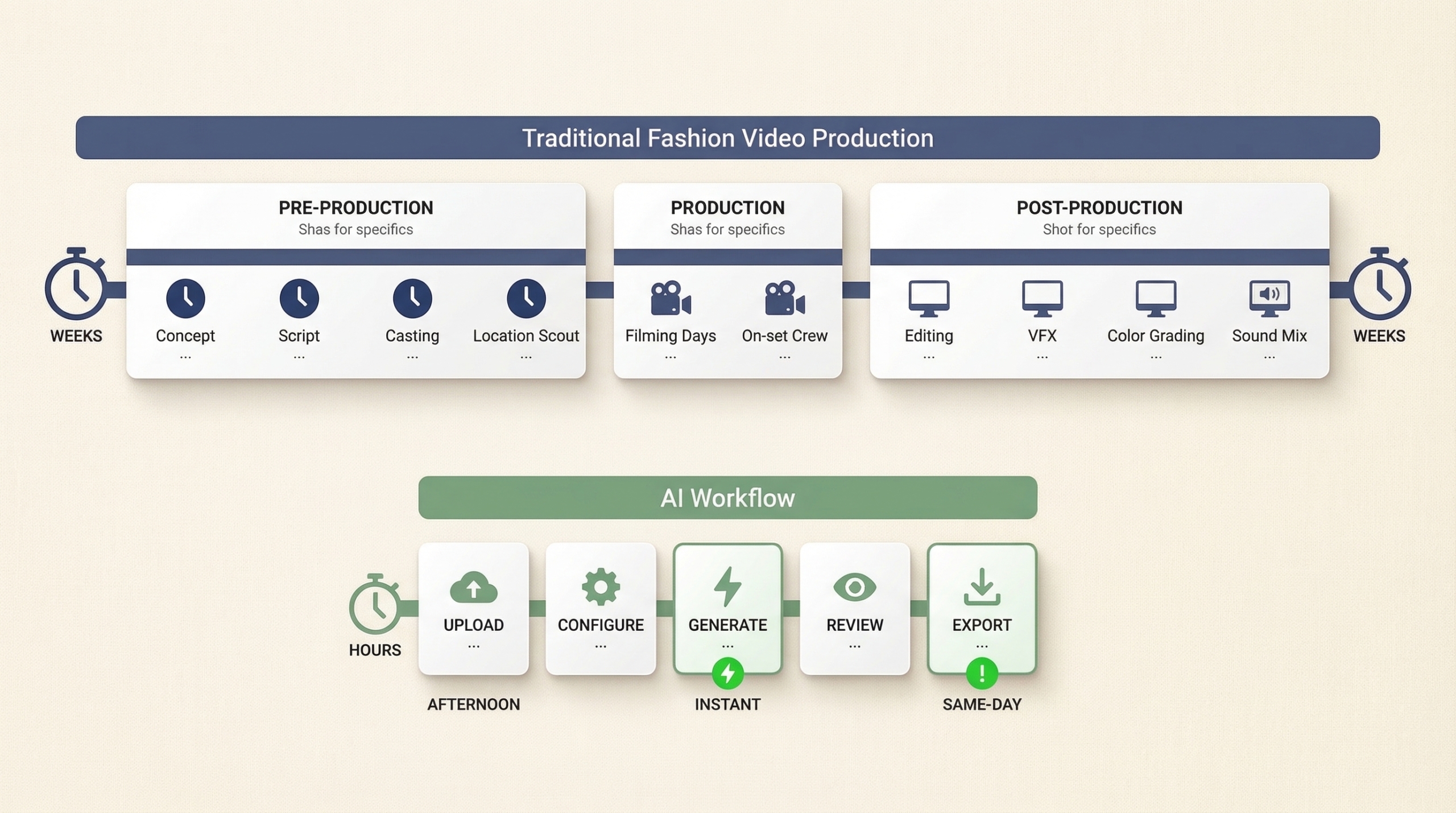
| Phase | Activities | Timeline |
| Pre-production | Creative brief per product, model booking, location/studio booking, styling coordination, shot list creation | 2–3 weeks |
| Production | Setup and lighting, model direction, multiple takes per angle, behind-the-scenes coordination | 1–2 days per SKU |
| Post-production | Footage review and selection, color grading, music and sound design, caption and CTA overlay, format exports (1:1, 4:5, 9:16) | 1–2 weeks |
Total time per SKU: 4–6 weeks.
Total cost per SKU: $800–$2,000.
For 100 new SKUs per season, that’s $80,000 to $200,000 in video production. Most brands simply can’t sustain it.
The AI Video Production Process
Step 1: Upload product images. (15 minutes) Feed the system your existing product photography. The AI uses existing assets as the foundation. No new shoot required.
Step 2: Define motion and style. (10 minutes) Select the motion profile: subtle fabric movement, zoom reveal, lifestyle overlay, or dynamic product showcase. The system applies consistent style rules pulled from your brand memory.
Step 3: Generate at scale. (Automated) The AI generates video variations for every SKU simultaneously. 200 products don’t take 200x the time. They process in parallel.
Step 4: Review and approve. (30–60 minutes) A human reviews flagged outputs. High-confidence generations auto-approve. Edge cases route to a review queue.
Step 5: Export to catalog. (Automated) Videos export in every required format. They feed directly into your Meta product catalog with correct SKU mapping.
Total time for 100 SKUs: 2–3 hours (human time).
Total cost per SKU: $15–$50.
That’s a 90% cost reduction. And the output is ready for Meta catalog ads the same day.
Real Numbers: What the Shift Looks Like
Representative breakdown based on brands using AI video catalog production:
| Metric | Traditional | AI-Generated |
| Cost per video | $800–$2,000 | $15–$50 |
| Time per SKU | 4–6 weeks | Same day |
| SKUs covered | 20 (top sellers) | Full catalog |
| Formats per video | 2–3 | 5–6 |
| Seasonal refresh | Annual | Weekly |
The cost reduction compounds across seasons. A brand refreshing its catalog quarterly used to spend $400,000 annually on video production. With AI, that drops to $40,000 and covers 10x more SKUs.
How Meta Catalog Video Ads Perform
The performance data on video vs. static catalog ads is consistent:
| Metric | Video vs. Static |
| CTR | 20–30% higher |
| View-through attribution | Measurable increase |
| Retargeting efficiency | Improves when viewers watched product video before the ad |
The reason is straightforward. Video shows how fabric moves, how a garment fits on a body, how color appears in natural light. Static images can’t communicate these details.
For fashion specifically, these details drive purchase confidence. Purchase confidence reduces returns.
What Makes AI Video Work for Fashion
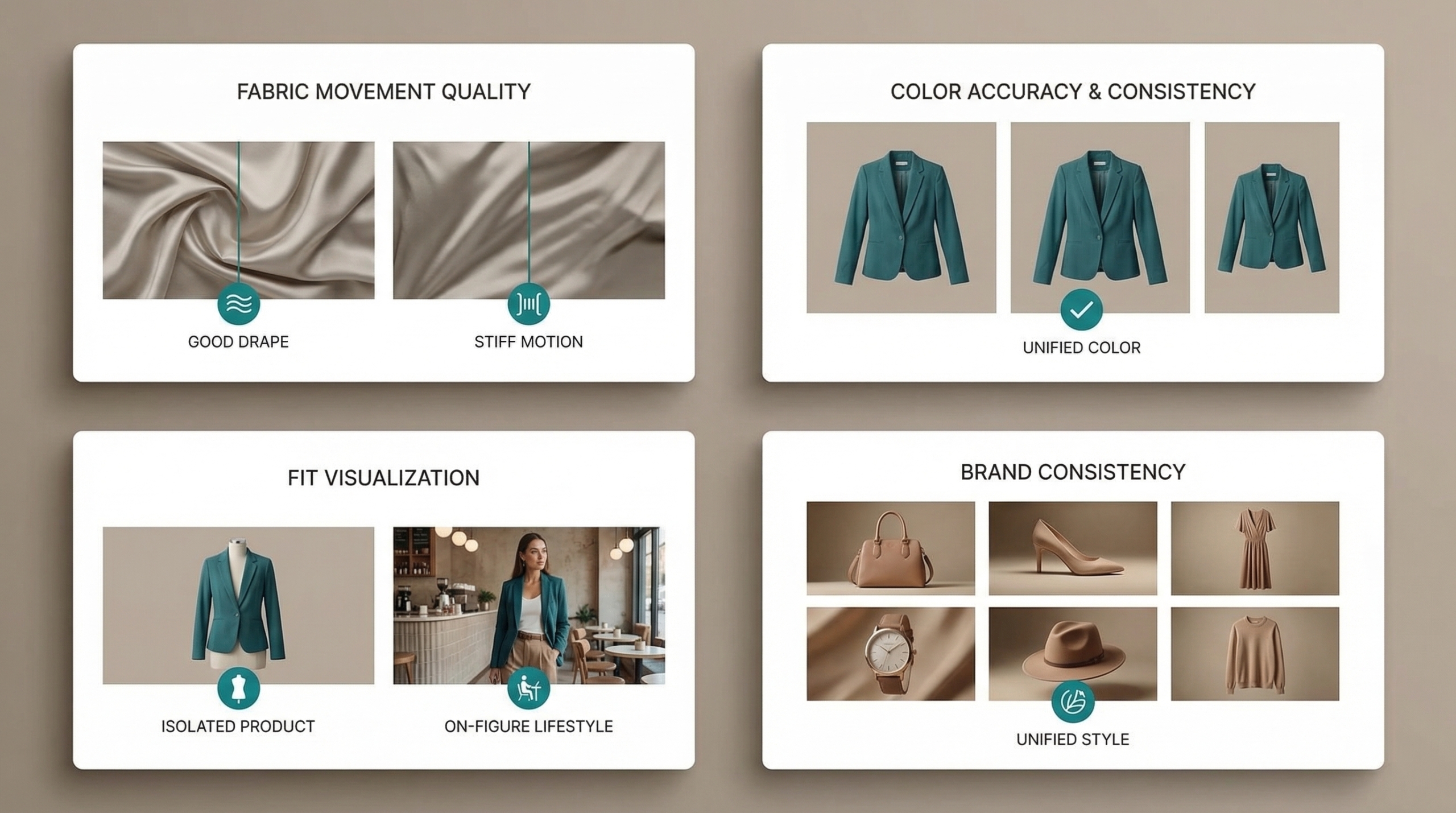
Fashion has specific visual requirements that AI must handle correctly.
Fabric movement. Knits, silks, and lightweight fabrics move differently. AI motion generation must apply physics-appropriate movement per material type. Applying silk movement to a denim jacket looks wrong immediately.
Color accuracy. Fashion customers are sensitive to color mismatch. A navy that photographs as black loses trust. AI color correction must maintain accurate hues across formats and screen sizes.
Fit visualization. Showing how a garment fits matters more than showing the garment in isolation. AI lifestyle overlays add contextual fit cues without requiring a model shoot for every SKU.
Brand consistency. All 200 videos need to look like they came from the same brand. AI trained on brand guidelines maintains visual consistency across the entire catalog.
Building Your AI Video Catalog Pipeline
Phase 1: Asset Foundation
Organize your product photography. AI video generation starts from your existing images. Better input images produce better video output.
Checklist for asset readiness:
- [ ] Clean product shots on neutral background (minimum 1 per SKU)
- [ ] Lifestyle images where available
- [ ] Consistent lighting across catalog
- [ ] High resolution (2000px minimum)
Phase 2: Brand Training
Define your video style rules:
- Motion intensity (subtle to dynamic)
- Music and sound preferences
- CTA placement and copy
- Color treatment and grading
The AI learns these rules and applies them consistently across every generation.
Phase 3: Catalog Integration
Connect your product catalog to the AI system:
- SKU mapping (links each video to the correct product)
- Attribute tagging (category, color, season, price tier)
- Performance data connection (tracks which videos convert)
Phase 4: Generation and QA
Run your first batch:
- Generate all SKUs
- Review auto-flagged outputs
- Approve and push to Meta catalog
- Monitor early performance data
Phase 5: Continuous Improvement
The system learns from performance:
- Videos with high CTR train the next generation
- Low-performing patterns get deprioritized
- Seasonal adjustments propagate across catalog automatically
Common Objections Addressed
| Objection | Reality |
| “AI video looks fake” | Early AI video had obvious artifacts. Current generation AI video for product catalog purposes is indistinguishable from traditional production in a social feed context. The comparison that matters: how it performs against a static image, not against a $50,000 brand film. |
| “We need model shots” | AI lifestyle integration adds model context without requiring a model shoot for every SKU. Generate once with a brand-approved model look, apply across catalog. |
| “Our brand quality standards are high” | That’s why the review queue exists. Set your confidence threshold. High-scoring outputs auto-approve. Anything below your quality floor routes to human review. You control quality without reviewing every single output. |
| “Meta has specific video requirements” | AI export pipelines handle format compliance automatically. 1:1 for feed, 4:5 for feed, 9:16 for Reels and Stories. Each format generates from the same source asset. |
Scaling New SKU Launches
The biggest advantage of AI video catalogs is speed-to-market for new products.
Traditional process: New SKU launches 6 weeks after photography.
AI process: New SKU launches same day as product photography upload.
For fast-moving fashion categories, this matters. Trend windows are short. The brand that gets video assets live on day one captures demand before competitors.
The Economics of Full-Catalog Video Coverage
Most fashion brands currently cover 10–20% of their catalog with video. They prioritize bestsellers and seasonal hero products.
With AI, full-catalog coverage is financially viable. And full-catalog coverage changes the performance dynamics entirely.
When every product in your Meta catalog has a video asset:
- Retargeting campaigns serve video to every viewer regardless of which product they browsed
- Dynamic ads perform better because the video format is consistently applied
- Long-tail products get proper representation and convert traffic that would otherwise bounce
| Coverage Strategy | SKUs With Video | Cost | Result |
| Traditional (top sellers only) | 50 of 500 (10%) | $50,000 | 90% of catalog runs static-only ads |
| AI (full catalog) | 500 of 500 (100%) | $15,000 | Every retargeting ad serves video |
The math makes full-catalog coverage a strategic differentiator, not a luxury.
Measuring Success
Track these metrics to evaluate your AI video catalog performance.
Production metrics
- Cost per video produced
- Time from new SKU to live video
- Percentage of catalog covered with video
Performance metrics
- CTR: video catalog vs. static catalog ads
- ROAS: video-enabled SKUs vs. non-video SKUs
- Return rate: for SKUs with vs. without video
Learning metrics
- Quality scores improving over time
- Reduction in manual review rate
- Performance improvement across successive generations
The Shift
Video catalog ads work. The evidence is consistent across platforms and categories.
The barrier was always production economics. Generating a quality video for every SKU in a large catalog was financially impossible with traditional production.
AI video generation removes that barrier. The cost drops by 90%. The timeline compresses from weeks to hours. The system gets better with every generation cycle.
The fashion brands scaling aggressively in 2026 aren’t spending more on video production. They’re generating more, spending less, and letting performance data drive the next iteration.
From expensive and static to affordable and continuously improving.
ShopOS automates video catalog production for fashion brands. Generate videos for your entire catalog, feed them to Meta, and let performance data improve every generation.
[Start generating your video catalog →]