



 ChatGPT
 Perplexity
 Claude
 Gemini
 Grok
Grok
A founder told us recently that she had been hoping to skip the awkward phase. Wait for the tools to mature. Let the team figure it out. Then plug in once it was obvious.
That posture made sense two years ago. It is expensive now.
Every week a brand delays building an AI strategy, its competitors learn faster. The brands winning with AI powered brand management are not always the ones with the biggest technology stack. They are the ones with a CEO who opened the tools, ran a prompt, disliked the first output, fixed the brief, tested again, and shipped something real.
That experience, the edit, the friction, the judgment call, becomes the strategy.
For many ecommerce teams, AI for DTC brands is not just another software decision. Buying Shopify was a software decision. AI is closer to hiring. A CEO is deciding what the brand allows AI to do, how much the team checks the work, and where human taste remains non-negotiable.
Those are not IT questions. They are brand leadership questions.
The Mistake Brands Make When They Hand AI to the Team Too Early
Most brands make the same mistake when they begin using AI. They hand it to the team.
“Run some experiments. Come back with results.”
The team runs the experiments. The results look fine in a slide. Then someone ships an email that technically says the right thing but sounds like a different brand. Or a product image goes live with lighting that does not match the visual language. Or a campaign brief written by AI gets approved without anyone checking if it fits the season’s direction.
By the time the feedback loop closes, the damage is already public.
The real issue is that brand judgment is tacit. Your team understands the brand through proximity to the founder, creative director, customers, and past decisions. AI understands the brand only through what it has been told.
When there is no system prompt, no brand bible, no voice memory, no visual rules, and no red lines, AI defaults to average. Average is everywhere. Average makes your brand look interchangeable.
Before delegating AI, CEOs need to define the operating rules of AI brand management. The team can move faster only when it knows what “right” looks like.
The better approach is simple: define the voice before writing prompts, document visual rules before generating assets, add human checkpoints before publishing, and treat AI like a coworker that needs training before it earns trust.
What Your Brand Voice Should Tell AI Before It Creates Anything
Brand voice cannot be reduced to soft adjectives in a deck. “Confident, warm, modern” describes almost every DTC brand founded in the last six years. AI needs sharper direction.
It needs to know how your brand speaks when it sells, apologizes, educates, launches, celebrates, and responds to customers. This matters when using AI for ecommerce brands because content moves across email, product pages, ads, landing pages, social captions, and customer support.
A useful brand voice brief should answer questions like:
- Do you use contractions or formal phrasing?
- Do you speak in first person or second person?
- How long is the average sentence in your campaign copy?
- Which words should never appear in brand content?
- What does your brand say that competitors would never say?
- Does your brand explain, provoke, reassure, entertain, or stay restrained?
For teams exploring AI for fashion brands, these details are critical because tone often carries the brand as much as the product. Mango-style copy can be short, declarative, and editorial. Glossier-style beauty copy often feels conversational and personal. The Row uses restraint as voice. Muji uses functional clarity. Haus balances intelligence and warmth.
AI can learn these patterns only when the brand gives it examples and rules.
That is why AI powered brand management should start with a living voice system. It should include winning copy examples, rejected examples, banned words, rhythm notes, campaign references, product positioning, customer language, and founder-level preferences.
Without that, AI may write quickly, but speed only helps when the output still feels like the brand.
How to Decide What Your AI Coworker Is Allowed to Do
The best way to think about AI is as a new hire who is extremely fast, extremely capable, and still missing judgment.
Some new hires get broad authority quickly. Others stay on a short leash until they understand the culture. AI works the same way. The question is not only what AI can do. The better question is what role it is being hired for.
For ecommerce, fashion, beauty, and DTC brands, AI usually plays five roles.
| AI Coworker Role | What It Can Do | Risk Level | Human Check Needed |
| The brief writer | Turns seasonal direction into structured creative briefs. | Low | Review for strategy and campaign fit. |
| The copy assistant | Drafts product descriptions, subject lines, captions, ads, and landing page copy. | Medium | Edit for tone, rhythm, and brand feel. |
| The visual director | Creates moodboards, visual references, background ideas, and hero shot directions. | High | Creative director approval is essential. |
| The analyst | Reviews sales data, customer reviews, return reasons, and campaign patterns. | Low | Check business interpretation before acting. |
| The customer-facing agent | Supports chat, email replies, post-purchase flows, and customer service. | Very high | Supervised testing before going live. |
This is where AI brand management becomes useful. The brand can define what each AI role is allowed to draft, what needs approval, what can be automated, and what should stay human.
The use of AI in fashion industry workflows now includes product descriptions, trend research, campaign planning, merchandising insights, influencer shortlisting, and social content. For teams using AI for beauty brands, the strongest use cases include ingredient explainers, FAQ content, routine recommendations, educational pages, and PDP copy. For furniture and home brands, AI can support variant copy, room styling briefs, and customer review analysis.
The strongest brands do not ask AI to replace judgment. They use AI to reduce repetitive work so teams can spend more time on taste, positioning, and creative calls.
Why Testing AI Output Matters Before It Reaches Customers
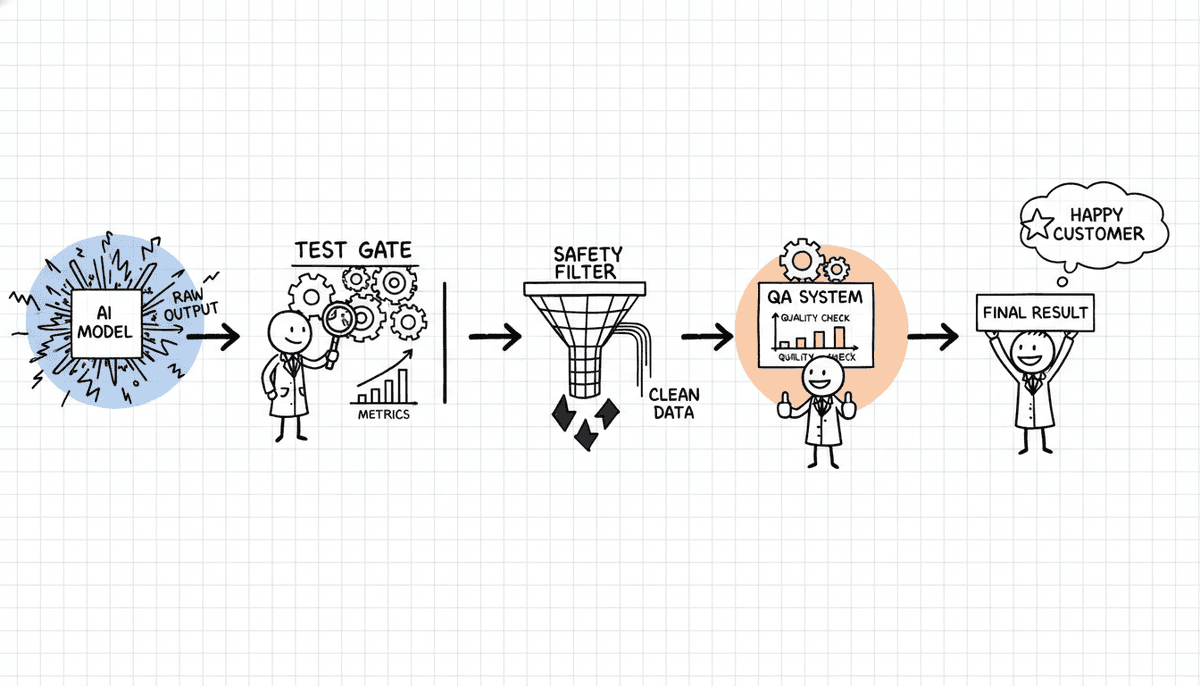
Most brands test AI outputs the same way they test internal documents. Someone reads it, it looks fine, and it ships.
That is proofreading. It is not testing.
Real testing means checking whether AI output stays consistent, specific, useful, and on-brand across repeated use. AI powered brand management needs a testing layer before the work goes live.
For email subject lines, test AI-generated options against human-written options. Many brands find AI creates more variety and stronger first-pass hooks, while humans improve taste and brand feel. The best workflow is usually hybrid. AI drafts ten options. A human chooses, edits, and sharpens the final version.
For product descriptions, test AI copy on weaker PDPs first. Choose pages with low conversion or thin content. Check if the AI-assisted copy improves clarity, search relevance, and conversion. When it works, expand gradually.
For visuals, avoid launching AI-generated images in major hero placements first. Start with secondary assets like stories, email banners, blog headers, moodboards, and internal concept boards. Build a library of approved and rejected examples.
For customer service, run AI responses alongside human responses before going live. Log the cases where answers differ. Those differences reveal gaps in training, tone, policy, product information, and escalation rules.
For social captions, test on lower-risk posts or secondary formats. Track engagement, saves, comments, and brand feel. The data will reveal where AI helps and where human instincts still win.
Testing turns AI from a creative gamble into a repeatable operating system.
What On-Brand Means in Pixels, Not Just Words
This is where AI for beauty brands, AI for fashion brands, and broader ecommerce teams often break first.
Visual identity is not only a style guide PDF. It is a collection of choices made over years. Casting choices. Skin texture standards. Product shadow treatment. Color grading presets. Prop rules. Lighting direction. Set materials. Cropping style. Aspect ratios. White space. Background choices.
Most of these details live in the heads of creative directors, photographers, brand managers, and founders. AI does not know them unless they are documented.
For AI-assisted visual work to meet brand standards, the team needs three assets: a reference library, explicit visual briefs, and a creative calibration file.
A reference library should avoid vague labels like “on-brand.” Instead, explain why the image works. For example: cool-toned lighting, mid-30s model, minimal props, raw materials, no smiling, soft shadow, no text overlay.
A visual brief should guide AI the way a photographer would be briefed. The more specific the direction, the less the AI improvises.
AI technology in fashion is especially useful for moodboarding, color story development, background testing, styling inspiration, and campaign direction. AI can support premium creative teams, but it needs strong human direction to protect taste.
For beauty brands, AI can support product renders, flat lays, ingredient visuals, and educational content. For food and beverage, AI can create strong first-pass ingredient flat lays and overhead hero concepts. For home goods, AI can support room scene generation when styling briefs are specific.
The stronger the visual memory, the better the AI output.
Where AI Helps Ecommerce Brands and Where It Can Hurt
Most brand leaders ask, “What can AI do?”
The more important question is, “What should we protect from AI?”
AI reliably helps with scale. Hundreds of SKUs, multiple markets, dozens of creative versions, and frequent campaigns all demand volume. AI can reduce the cost of content production without slowing the team.
AI also helps with research. It can summarize competitor patterns, customer reviews, trend signals, influencer landscapes, return reasons, and product feedback faster than manual analysis.
AI helps with first drafts. Briefs, descriptions, emails, press notes, captions, and FAQ pages become easier to begin. First drafts often consume the most time, and AI compresses that cost.
AI also helps with testing infrastructure. It can structure A/B tests, summarize performance, identify patterns, and organize customer feedback.
| Where AI Helps | Where Human Judgment Still Wins |
| Product description drafts | Final tone, nuance, and brand rhythm |
| Customer review analysis | Deciding what insights matter commercially |
| Campaign idea expansion | Choosing the idea with cultural timing and taste |
| Visual moodboards | Approving what truly fits the brand world |
| FAQ and educational content | Checking accuracy, trust, and customer sensitivity |
| A/B test structure | Interpreting results through brand and business context |
But AI can hurt the brand when it is left unchecked.
It can weaken cultural specificity. AI understands fashion broadly, but it may not understand a skate community, rave audience, craft heritage, regional language, or niche customer mindset unless that context is built into the prompt.
It can damage brand restraint. AI tends to fill space. Minimalist brands need strong rules that tell AI to say less.
It can flatten humor. Brand humor is difficult to teach with a few prompts. It needs examples, rejections, timing, and human review.
It can create average campaign ideas. AI can support ideation, but culturally sharp, unexpected, and brand-specific ideas still need human judgment.
It can weaken relationship copy. VIP notes, founder messages, loyal customer communication, and apology emails should stay deeply human. Customers can feel when warmth becomes automated.
Strong AI brand management protects the parts of the brand where trust, emotion, taste, and loyalty are highest. It also gives teams a clear system for deciding what AI can create, what humans must review, and what should remain founder-led.
The Three AI Brand Management Decisions Only CEOs Can Make
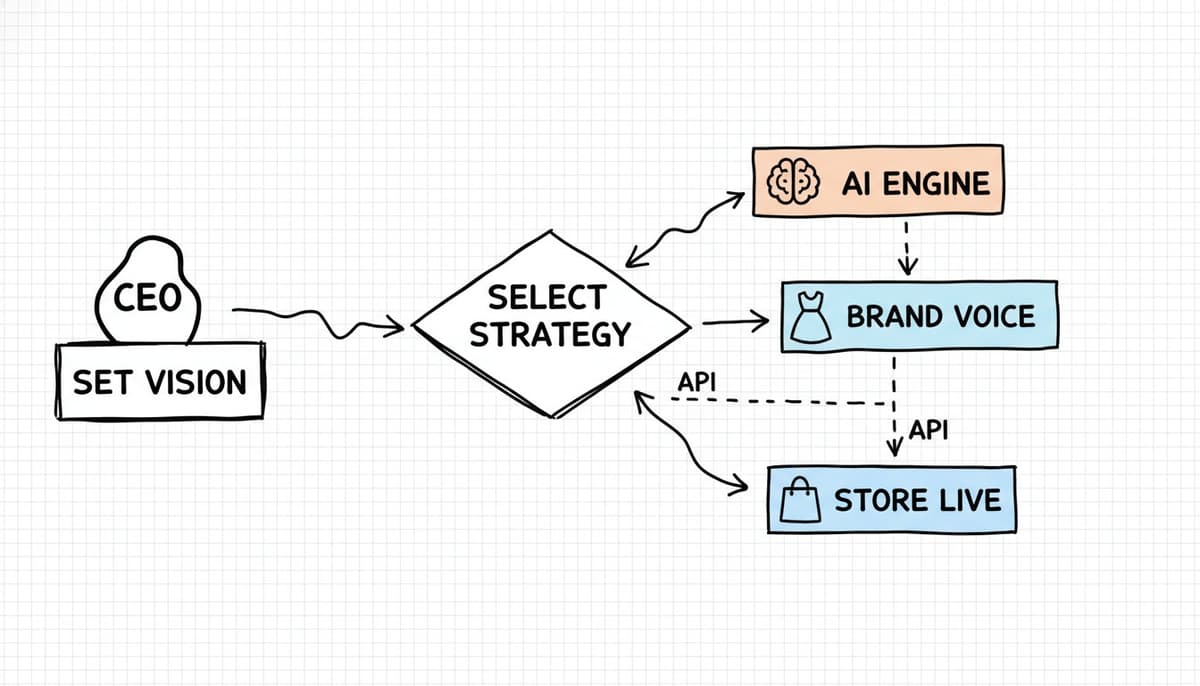
This is where the CEO’s role becomes essential.
Your team can run prompts. They can test outputs. They can compare tools. They can build workflows. But three decisions need founder or CEO-level clarity.
First, how much brand risk are you willing to accept?
Low risk tolerance means more human checkpoints, slower approval, and stronger protection. Higher risk tolerance means faster testing, more creative volume, and more exposure. There is no universal right answer. The team needs your answer.
Second, what human-feeling work are you comfortable automating?
Customer service AI that sounds personal. Product recommendations that feel curated. AI-powered shopping support. Automated post-purchase messaging. These can improve customer experience, but only if leadership is comfortable with the brand speaking through AI.
Third, who owns brand integrity when AI is in the loop?
This must be clear. One person needs authority to reject AI outputs that miss the brand. That person should own the voice rules, visual rules, prompt standards, approval process, and escalation guidelines.
These decisions set the rules for brand risk, automation comfort, approval flow, and the learning loop. Once they are clear, AI becomes much easier to manage across teams.
Once these three decisions are clear, tools become easier to choose. Workflows become easier to design. Teams move faster because they know the boundaries.
That is the real value of AI powered brand management. It makes AI usable without making the brand generic.
How ShopOS Helps Brands Build AI Workflows With Brand Memory
ShopOS is built for ecommerce brands that need AI to understand brand context before producing content, campaigns, product stories, and creative workflows.
Most generic AI tools start blank every time. The brand has to explain the same details again and again. Voice. Product positioning. Campaign direction. Visual preferences. Customer segments. Past winners. Banned phrases. Approved examples. Rejected examples.
ShopOS solves this through brand memory.
| ShopOS Feature | How It Helps Brands |
| Brand memory | Stores voice, visual direction, product context, and campaign preferences. |
| Product context | Helps AI understand what the brand sells and how products are positioned. |
| Creative workflow support | Connects copy, visuals, campaigns, and performance learnings. |
| Guardrails and approval preferences | Helps teams control what AI can create and what needs review. |
| Repeatable brand standards | Makes future AI output more consistent across channels. |
When teams use AI for ecommerce brands, this matters because the work is never one isolated prompt. One campaign can involve product page copy, ad variations, email hooks, social captions, visual ideas, customer segments, and performance learnings. If each output starts without context, the brand becomes inconsistent.
With ShopOS, teams can create a stronger AI brand management system by giving AI the context it needs to work like a trained brand operator. That includes brand voice, visual direction, product data, campaign goals, customer intelligence, and approval preferences.
For AI for DTC brands, this creates a practical advantage. Teams can move faster without losing the taste and consistency that made the brand recognizable in the first place.
For teams using AI for fashion brands and AI for beauty brands, ShopOS can support workflows where brand voice, product storytelling, seasonal direction, and visual consistency need to stay connected across channels.
Instead of asking AI to create in isolation, ShopOS helps brands build AI workflows around memory, context, approvals, and repeatable brand standards.
That is how AI powered brand management becomes useful in the real world. It connects speed with brand control.
Final Summary
AI powered brand management is not about replacing creative teams. It is about giving AI enough brand context to work responsibly inside the business.
For CEOs of fashion, beauty, and DTC brands, the real question is not whether AI can create content. It can. The real question is whether AI can create content that sounds like the brand, looks like the brand, respects the customer, and supports the business without lowering creative standards.
That requires brand memory, clear rules, testing, visual references, human approval, and leadership clarity.
ShopOS helps ecommerce teams bring those pieces together, so AI can support brand work with context instead of guessing every time.
The brands that win with AI will not be the ones using the most tools. They will be the ones that teach AI what the brand means before asking it to create.
Before Your Team Scales AI, Set the Rules
Decide what AI can create, what needs human approval, and what should never leave brand leadership.
Then give the system the memory and context to follow those rules consistently.
See How ShopOS Gives AI Brand Guardrails. Book a Demo now.
FAQs
What is AI powered brand management?
AI powered brand management is the use of AI to support brand voice, visual identity, content creation, campaign workflows, customer experience, and performance analysis while keeping human approval and brand standards in place. It helps teams move faster without making the brand sound or look generic.
How can AI help ecommerce brands?
AI for ecommerce brands can help with product descriptions, email subject lines, social captions, ad variations, customer review analysis, PDP optimization, visual concepts, customer support, product recommendations, and campaign testing. The strongest results happen when AI works with brand memory and clear approval rules.
How is artificial intelligence used in ecommerce websites?
Artificial intelligence is used in ecommerce websites for product recommendations, personalized shopping experiences, chat support, search improvement, product description generation, customer segmentation, visual search, review analysis, and marketing automation. For fashion, beauty, and DTC brands, it can also support brand voice, creative workflows, and AI brand management.
Why is AI brand management important for DTC brands?
AI for DTC brands is important because DTC brands rely heavily on voice, trust, storytelling, visuals, and customer relationships. When AI creates content without brand context, the output can become generic. AI brand management gives teams rules, memory, testing, and approval systems to keep content consistent.
How is AI used in the fashion industry?
The use of AI in fashion industry workflows includes trend research, product copy, moodboards, campaign ideation, merchandising insights, customer segmentation, inventory planning, visual concepts, influencer shortlisting, and email marketing. AI for fashion brands works best when visual direction and brand voice are clearly documented.
What should CEOs decide before using AI for brand work?
CEOs should decide how much brand risk they are willing to accept, which customer-facing experiences can be automated, who owns brand integrity, which outputs need approval, and what parts of the brand should remain human-led.
Why connect AI workflows with ShopOS?
ShopOS helps ecommerce brands build AI workflows with brand memory, product context, campaign direction, customer intelligence, and creative guardrails. This makes AI more useful for brand management because outputs can stay connected to how the brand actually sounds, looks, and sells.


