
 ChatGPT
 Perplexity
 Claude
 Gemini
 Grok
Grok
Most DTC founders looking at a traffic drop do the same thing: check rankings, audit backlinks, wonder if the last Google update hit them. Some hire an SEO agency. Some redesign their blog. Some do nothing and hope it bounces back.
Here’s the uncomfortable truth: your SEO isn’t broken. The channel is changing underneath you.
What’s Actually Happening
Google is no longer where a growing share of shoppers start their purchase journey. Over the last 18 months, a parallel discovery layer has quietly scaled — and it’s eating the exact queries your SEO strategy was built to win.
Shoppers are asking AI what to buy.
“What’s the best magnesium supplement for sleep?” “Sustainable sneaker brands worth trying?” “A good moisturizer for sensitive skin under $40?” These aren’t queries people are typing into Google anymore. They’re going into ChatGPT, Perplexity, and Google’s own AI Overviews — and getting a direct answer back, with a short list of brands, no link-clicking required.
The traffic you’re losing didn’t evaporate. It moved.
The Numbers Behind the Shift
This isn’t speculation about where things are headed. It’s already happening at scale:
- Perplexity now handles over 230 million queries per day, and its user base has grown by more than 10x since 2023.
- ChatGPT launched ChatGPT Shopping — a feature that directly recommends products, with brand names, in response to purchase-intent queries.
- Google AI Overviews now appear in roughly 45% of all Google searches, often placing a summary answer above the organic results. Studies show they reduce clicks to websites by up to 58%.
That last stat is the one that should stop you cold. Nearly half of all Google searches now show an AI answer first. On many of those queries, your ranked result never gets seen — let alone clicked.
The traditional model was: rank on page one, get traffic. That model assumed the searcher would click through to your site. AI Overviews and AI assistants break that assumption entirely.
How the DTC Purchase Journey Has Changed
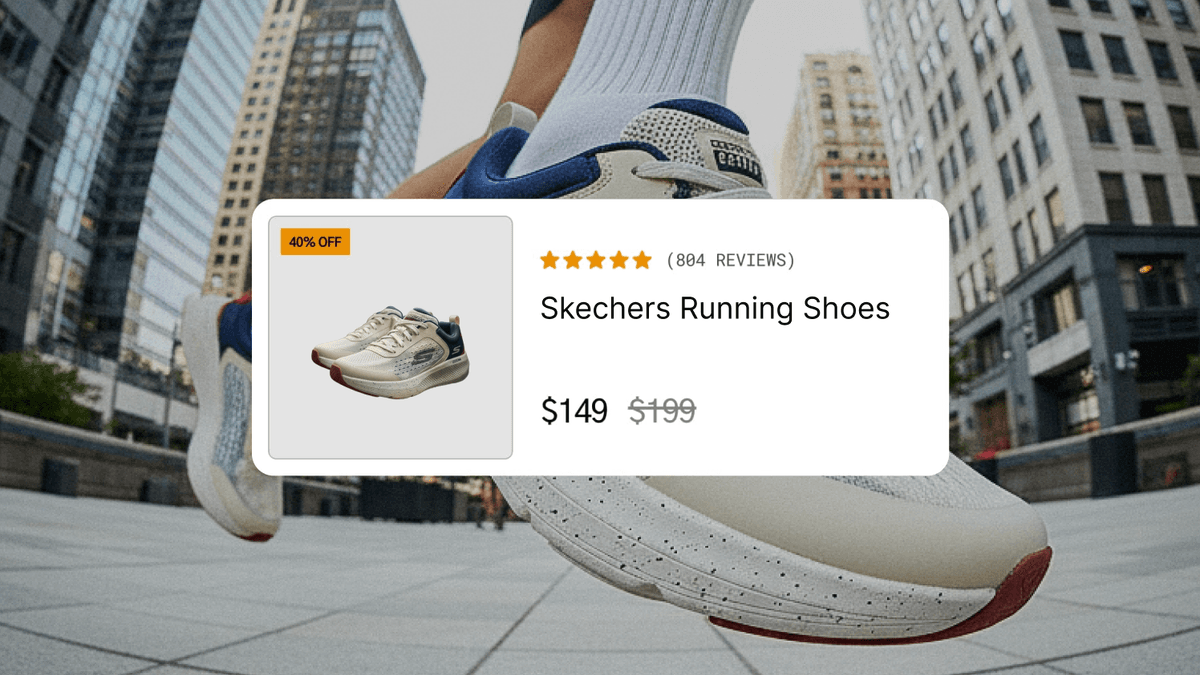
Six months ago, a shopper searching for a new skincare product would:
- Google “best moisturizer for oily skin”
- Scroll through a list of editorial results and ads
- Click two or three, compare products, maybe buy
Today, a meaningful portion of that same journey looks like this:
- Ask ChatGPT or Perplexity the same question in conversational language
- Get a response that names 3-5 specific brands with brief explanations
- Click directly to the one brand that was recommended
The discovery decision is made inside the AI response. If your brand isn’t cited there, you’re not part of the consideration set — and the shopper never reaches your site to begin with.
This isn’t a funnel problem. It’s a visibility problem in a channel your current tools aren’t measuring.
Why Traditional SEO Doesn’t Fix This
SEO works on a simple mechanic: keywords in, rankings out. You optimize a page, you earn backlinks, you climb the results page.
AI citations work differently. When ChatGPT recommends a brand in response to a shopper query, it isn’t pulling from a ranked list of pages. It’s drawing on:
- Authoritative, structured content it can parse and extract answers from
- Third-party sources — review sites, editorial coverage, Reddit threads — that corroborate your brand’s reputation
- Consistent entity presence across the web, so the AI system knows you’re a legitimate brand in your category
- Citable pages that answer specific questions clearly, with data, specifics, and structure
A technically perfect SEO strategy — optimized titles, clean schema, strong backlinks — doesn’t guarantee a single AI citation. The mechanism is different. The inputs are different. The output metric is different.
Ranking high on Google is now a necessary-but-not-sufficient condition for being visible to shoppers. You also need to be citable.
What AEO Is and How It Works for DTC Brands
Answer Engine Optimization (AEO) is the practice of optimizing your brand to appear in AI-generated responses — not just search results.
For DTC brands, this means three things:
1. Making sure AI engines know your brand exists and what it does. This comes from consistent presence across the web: your own site, editorial coverage, reviews, social mentions. AI systems build a picture of your brand from many sources, not just your homepage.
2. Creating content that AI engines can cite. This is different from content written for rankings. AI-citable content is structured so an AI can extract a clear, specific answer and attribute it to you. Think: direct answers, real data, authoritative format. Not blog posts stuffed with keywords.
3. Publishing at the velocity AI engines reward. AI systems favor brands that consistently publish relevant, structured content. A one-time blog post doesn’t move the needle. Twenty AI-ready pages a week does.
None of this is at odds with traditional SEO. Good SEO remains the foundation. AEO layers on top of it — adding the structure, authority signals, and content volume that AI engines use to decide what to cite.
What Winning Looks Like
The DTC brands gaining ground in AI search right now are being cited at the category level.
When a shopper asks ChatGPT “what’s a good electrolyte drink for athletes,” the winning brand isn’t necessarily the one with the best SEO score. It’s the one with consistent, authoritative content addressing that exact type of query — and enough corroborating presence across the web that the AI engine trusts the recommendation and allows the brand to get cited by ChatGPT.
Category-level citations are valuable because they reach shoppers before they’ve decided on a brand. The AI response isn’t just a link it’s a recommendation. And the brands being recommended are capturing intent that no longer flows through a search results page at all.
Being cited for 10-15 relevant category prompts is the equivalent of owning page-one rankings for those same queries except the conversion rate on an AI recommendation is often higher, because the shopper already got a personalized answer before they clicked.
How to Get Started
The first step is understanding where you actually stand.
Most DTC founders have no idea how their brand appears across ChatGPT, Perplexity, Gemini, and Claude. They haven’t checked. There’s no tool they use that tells them. So the gap is invisible — until a competitor starts showing up in every AI recommendation and you’re wondering why your traffic keeps declining.
Big Head runs that audit automatically. You enter your Shopify store URL, and in under five minutes you get a visibility score across four AI engines, a breakdown of the prompts your category shoppers are using, a clear picture of where competitors are getting cited and you’re not, and insights into your Generative Engine Optimization performance across those AI platforms.
From there, Big Head generates and publishes AI-ready content — 20+ pages per week, fully automated — and tracks every citation in a unified dashboard. No content team required. No agency briefing. No guesswork.
The brands seeing results started by understanding the gap. That part takes five minutes.
Run a free Big Head audit on your Shopify store: Book A Demo
No credit card. No setup fee. First audit in under five minutes.
Big Head is an AI visibility tool built specifically for Shopify and DTC brands. It audits your store, identifies the AI search prompts your customers are using, scores your brand visibility across ChatGPT, Perplexity, Gemini, and Claude, and automatically generates and publishes citable content — tracking every citation in a dashboard.


