
 ChatGPT
 Perplexity
 Claude
 Gemini
 Grok
Grok
The most dangerous thing about agencies is how reasonable they sound at the start.
They ask good questions. They study your brand deck. They learn your tone, your customer, your products, your seasonality, your offers, your approvals, and your founder preferences.
Month one feels sharp.
Month three feels busy.
Month six feels slower.
Month nine, the account manager who actually understood your brand leaves. A new person joins. The questions begin again.
- What is the tone of voice?
- Which product is the hero?
- Which audience matters most?
- What performed last season?
- Which claims need approval?
- Which creative direction feels off-brand?
And suddenly, your brand is paying the same retainer to explain itself again.
This is not a story about bad agencies. Many agencies have smart people, strong taste, and useful experience. This is a story about a structural problem that even good agencies struggle to escape.
Knowledge that lives in people decays.
That decay shows up quietly. A campaign takes longer. A launch needs more calls. A creative revision repeats an old mistake. A new strategist misses the nuance. A founder spends another afternoon explaining context that should already exist inside the business.
Agencies fight entropy with paperwork.
Brand decks. Handover notes. Meeting recordings. Process docs. Shared folders. Campaign reports.
All of it helps for a while.
But static documents can only capture what the brand was at one point in time. They rarely capture what the brand is becoming.
ShopOS was built around the opposite belief. Brands should grow with a system that remembers.
As an AI agent platform for ecommerce brands, ShopOS captures brand knowledge, structures it into Brand Memory, and gives specialist AI agents the context they need to execute with consistency. Every campaign, approval, rejection, customer signal, product update, and performance result improves the next workflow.
Agencies rent execution. ShopOS builds memory.
That difference changes how ecommerce teams scale.
What Makes ShopOS Different?
ShopOS is different because it turns brand knowledge into a compounding operating asset.
A traditional agency usually works through people, briefs, decks, calls, handovers, retainers, and review cycles. The work may be useful, but the learning often stays scattered. Some of it lives in the agency team. Some of it lives in reports. Some of it lives in Slack. Some of it lives in the founder’s head. Some of it disappears when a strategist, account manager, or creative lead changes.
ShopOS works differently.
It captures the brand’s voice, catalog, performance patterns, customer insights, campaign history, approved examples, rejected ideas, founder preferences, and operating rules inside Brand Memory. Specialist agents then use that memory across creative, performance, email, CRM, SEO, social, store operations, finance, and brand intelligence workflows.
That makes ShopOS more than an AI marketing platform for ecommerce. It becomes the operating memory behind execution and a practical AI agent platform for ecommerce brands that need continuity, not another disconnected tool.
The output matters.
The learning behind the output matters more.
The DTC Growth Trap: Complexity Disguised as Growth
DTC growth often looks impressive externally.
More products. More campaigns. More creators. More channels. More reports. More dashboards. More agencies. More people.
Inside the business, the same growth can feel like a coordination tax.
The performance agency needs more creative. The creative agency needs clearer product positioning. The email team needs launch dates. The Shopify developer needs approved copy. The ops team needs inventory updates. The founder needs to approve everything that touches the brand.
Soon, the founder becomes the central router.
Every partner needs context. Every campaign needs explanation. Every report needs interpretation. Every output needs correction.
That creates a strange situation.
The brand has more people working on marketing, but the work feels slower.
The issue is rarely talent. Most agencies have capable people. The issue is architecture.
Each vendor sees one part of the brand. Paid media sees CAC and ROAS. Email sees flows and campaigns. Creative sees assets. SEO sees content gaps. Ops sees inventory issues. The founder sees the full picture, but the founder is overloaded.
ShopOS solves this by giving the brand one shared memory layer.
Instead of context living across calls, briefs, folders, dashboards, exports, and founder instinct, ShopOS turns brand knowledge into a structured system that agents can use every day. That is what makes it an AI agent platform for ecommerce brands built around memory, not one-off output.
The Agency Decay Problem
An agency’s value delivery usually follows the same cycle.
- Discovery.
- Onboarding.
- Execution.
- Reset.
During discovery, the agency learns your brand. Brand guidelines, tone, competitor context, customer personas, product story, seasonal shifts, past campaigns, and founder preferences.
During onboarding, workflows are set. Tools, calendars, briefs, approval flows, reporting formats, and communication channels are created.
During execution, the agency produces work. Ads, campaigns, landing pages, emails, content, creative, reports, and strategy.
Then something changes.
The team changes. The scope changes. The account manager changes. The creative lead changes. Your brand changes. The market changes.
And the cycle begins again.
That hidden cost is context re-acquisition.
You pay again to rebuild knowledge your brand already created.
Agencies try to solve this with handover notes, brand decks, meeting recordings, and process documents. Those help, but they are static snapshots. They capture what the brand was at one point in time. They rarely capture what the brand is becoming.
People are powerful.
People are also fragile storage systems.
A senior strategist who worked on your brand for two years may carry extraordinary value. But that value lives in their head. It is not fully transferable. It is not queryable. When they leave, it leaves.
That is the agency decay problem.
The agency model stores knowledge in people.
ShopOS stores knowledge in the business.
What Agencies Are Actually Selling
Strip it back.
An agency sells three things: time, taste, and relationships.
Time means people who can produce work. Copywriters, designers, media buyers, strategists, developers, analysts, and account managers.
Taste means judgment. The ability to know what feels premium, what feels off-brand, what sounds cheap, what has cultural tension, and what may actually earn attention.
Relationships mean access. Creators, media partners, production vendors, platform reps, freelancers, collaborators, and senior advisors who can open doors.
All three have value.
All three are also human capital.
That means they have limits.
Senior talent is expensive. Strong creatives are hard to retain. Account managers burn out. The second a brand goes through a major transition, such as a new CMO, category pivot, funding round, international expansion, or product repositioning, the agency needs to relearn the business.
And here is the hard math.
A good brand or growth agency retainer can easily run from $15k to $40k per month. That is $180k to $480k per year for a model where context can reset whenever the team changes or the brand evolves.
You are renting knowledge at full price.
Every year. With zero equity.
ShopOS changes the ownership model.
The brand still needs taste. The brand still needs judgment. The brand still needs strategic thinking.
But the repeatable execution layer and the memory behind it should belong to the business. An AI agent platform for ecommerce brands gives that memory back to the brand instead of letting it disappear inside agency turnover and scattered workflows.
First, Understand What Compounding Means in Ecommerce
Most people hear “compounding” and think finance.
Money earns interest. Then that interest earns more interest. Over time, the curve grows faster.
The same idea applies to brand knowledge.
Every campaign teaches something. Every email gives a signal. Every creative test reveals customer behavior. Every rejected idea clarifies taste. Every product launch creates a pattern. Every approval sharpens the brand’s voice.
But that knowledge only has value when it is captured, organized, and reused.
In agency-led execution, learning often gets trapped in reports, calls, decks, chats, and human memory.
In ShopOS, every action writes back to Brand Memory.
- A winning hook improves the next campaign.
- A rejected direction improves the next brief.
- A product claim correction improves the next PDP.
- A customer insight improves the next email flow.
- A seasonal pattern improves the next launch plan.
That is compounding.
Execution is a cost.
Knowledge is an asset.
The agency model charges for execution.
ShopOS builds the asset.
The Brutal Math Behind Agency-Led Growth
Agency-led growth can look sensible at the start.
Hiring internally takes time. Senior talent costs a lot. Agencies offer speed, specialization, and experience. For a fast-moving DTC brand, that feels practical.
Then the math changes.
A brand running multiple agencies may pay for creative, media buying, email, SEO, influencer, development, and reporting support every month. Each agency may add value, but the brand also pays for coordination, repeated briefing, onboarding, revisions, meetings, reporting, and context transfer.
That last part is expensive.
The brand keeps paying people to relearn what the brand already knows.
A new strategist needs background. A new creative team needs examples. A new account manager needs history. A new vendor needs past learnings. A new campaign needs another brand download.
The founder becomes the source of truth again and again.
That is why the agency model becomes heavy for growing ecommerce teams. It can produce work, but it rarely compounds brand intelligence inside the business.
ShopOS changes the cost curve.
The more the system learns, the more useful it becomes. The more workflows run through it, the stronger Brand Memory gets. The more decisions the team makes inside ShopOS, the sharper the next output becomes.
This is where an AI platform for D2C brands creates leverage that retainers alone rarely produce. More specifically, this is where an AI agent platform for ecommerce brands becomes useful: it does not only create more output, it makes the brand’s operating knowledge stronger with every workflow.
Why Rollups Misread What a Brand Really Is
The DTC rollup wave saw this complexity and offered a simple answer.
Acquire brands. Standardize operations. Apply one playbook. Centralize media buying. Centralize creative. Centralize fulfillment. Scale the machine.
The idea sounded logical.
The execution exposed the flaw.
A brand is more than a product, supply chain, paid media account, or Shopify store. A brand is a specific point of view. It is how a founder understands a customer problem. It is the language customers trust. It is the emotional reason a customer chooses one skincare, fashion, cookware, wellness, or supplement brand over another.
Generic systems can standardize operations.
They can also flatten what made the brand worth buying.
This matters because it explains the deeper problem with agency dependency and template-led growth. DTC brands need systems that scale the brand’s specificity, rather than replacing it with category logic.
ShopOS starts with Brand Memory for this reason.
The goal is to preserve the soul of the brand while scaling execution.
Why DTC Brands Fail to Scale With Agency-Led Execution
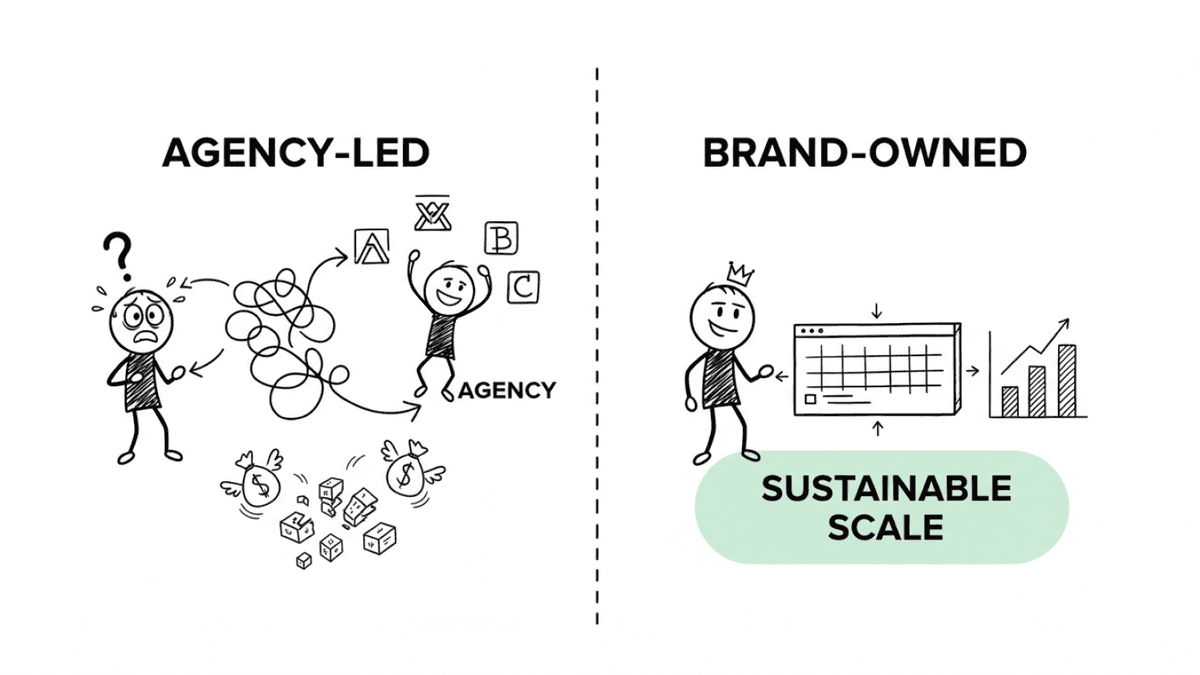
One reason behind Why DTC brands fail to scale is simple: activity scales faster than operating memory.
A brand adds SKUs, channels, emails, ads, creators, landing pages, product pages, seasonal campaigns, and customer segments. Agencies help carry the output load. But each new layer adds coordination.
More output means more briefs.
More briefs mean more reviews.
More reviews mean more dependency on the few people who understand the brand well enough to approve the work.
Over time, the brand creates a bigger machine, but that machine depends on fragile memory.
- Which campaign angle worked last summer?
- Which customer segment ignored discount-led messaging?
- Which creative style looked premium but failed to convert?
- Which product needs education before conversion?
- Which claim creates compliance risk?
- Which founder phrase captures the brand better than any tagline?
Most brands know these things somewhere.
ShopOS makes that knowledge usable everywhere.
The Real Bottleneck Is Context
For years, ecommerce teams assumed the bottleneck was production.
They needed more ads, more emails, more PDP copy, more product visuals, more UGC briefs, more landing pages, more social posts, and more campaign variations.
AI made production faster.
But faster production alone creates another problem: more generic output to review.
A basic AI tool can write ten subject lines. It can create captions. It can draft product descriptions. It can generate creative ideas. But if the tool lacks brand context, the human still has to fix tone, claims, customer psychology, positioning, and visual direction.
The real bottleneck is context.
- What does the brand sound like?
- Which phrases feel wrong?
- Which product claims need care?
- Which campaign failed before?
- Which customer segment responds to proof?
- Which visual style feels cheap?
- Which founder belief should guide the story?
These answers usually live across people and tools.
ShopOS turns them into Brand Memory.
That is what makes an AI agent platform for ecommerce brands different from a prompt tool.
The model matters.
The memory matters more.
ShopOS Turns Brand Knowledge Into Brand Memory
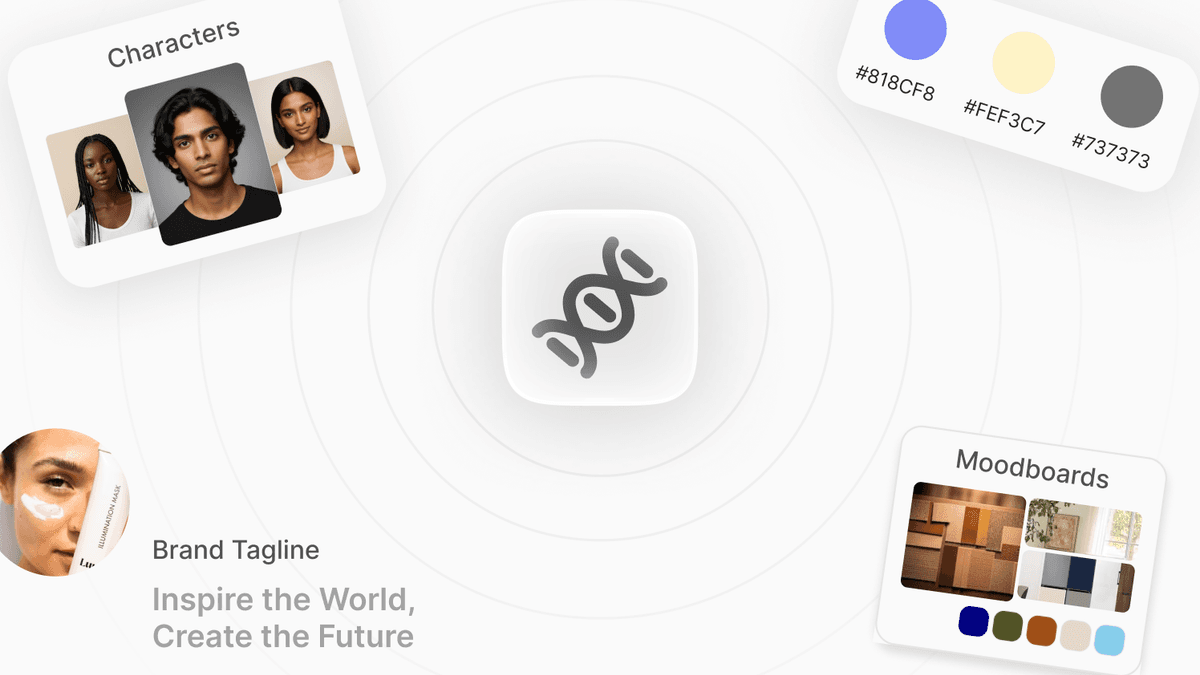
ShopOS is built around one core idea: capture context first, then let specialist agents work with it.
A brand’s knowledge already exists. It lives in campaign history, founder calls, customer reviews, product sheets, creative references, past reports, launch notes, sales patterns, competitor observations, rejected ideas, and team experience.
The problem is that this knowledge is scattered.
ShopOS brings it together inside Brand Memory.
Brand Memory is a living context layer. It stores what the brand has learned and makes that knowledge available across workflows. When an agent drafts a campaign, writes product content, suggests a creative direction, updates SEO, improves email, or flags a store issue, it works with accumulated brand intelligence.
That creates continuity.
The brand stops explaining itself every cycle.
Openclaw: The Intake Process That Builds Brand Memory
Openclaw is the intake process that helps ShopOS build Brand Memory.
Instead of asking a founder to fill out endless forms, Openclaw captures the brand through structured sessions. The team brings in the product catalog, past campaigns, customer segments, brand language, visual references, performance data, community signals, founder perspective, and operating rules.
The result is a structured memory system that agents can use.
This matters because Brand Memory should feel practical, rather than conceptual. It gives ShopOS a real starting point.
Before the agents execute, the system learns the brand.
Ambient Capture: How ShopOS Keeps Context Alive
Brands change every day.
A launch date moves. A supplier update affects inventory. A founder changes the direction of a campaign. A customer insight comes up during a call. A product claim needs to be softened. A creative idea gets rejected in a meeting.
In agency workflows, these signals often arrive late.
ShopOS is built to keep brand context alive through ambient capture. Key decisions and updates can be captured, structured, and routed back into the system so agents work with current context.
That means the creative plan reflects launch changes. Email planning reflects product availability. Store recommendations reflect customer behavior. Performance suggestions reflect real campaign signals.
The system keeps learning while the brand keeps moving.
Overnight Batches: Wake Up to a Review Queue
One of the clearest ways to understand ShopOS is the overnight batch.
Instead of starting the day with a blank page, the team starts with a review queue.
Product descriptions may be refreshed against brand tone. Email variants may be drafted for the next campaign. Creative hooks may be prepared for testing. SEO recommendations may be ready for review. Store improvements may be flagged. Performance summaries may highlight where attention is needed.
The human team reviews, approves, rejects, edits, or escalates.
Every decision teaches the system.
That is the difference between automation and amplification.
Automation tries to remove the human.
ShopOS gives the human better leverage.
How ShopOS Works as an AI Marketing Platform for Ecommerce Teams
ShopOS works as an AI marketing platform for ecommerce teams by connecting five layers that are usually scattered: memory, agents, workflows, feedback, and live data.
Brand Memory
Brand Memory stores the brand’s voice, product logic, visual identity, campaign history, customer signals, creative rules, approved examples, rejected ideas, and performance patterns.
It is the foundation of the system.
AI Agents
ShopOS uses specialist AI agents across ecommerce functions.
Monica supports creative direction. She helps turn product images, campaign needs, and brand references into creative outputs that feel ready for ecommerce channels.
Gavin supports performance marketing. He reads campaign signals, tests, and growth patterns so teams can move beyond guesswork.
Russ supports finance and growth. He connects commercial thinking with brand execution so the team can see where marketing activity meets margin, spend, and scale.
Dinesh supports email and CRM. He helps turn customer segments, campaign timing, product priorities, and retention goals into sharper CRM workflows.
Erlich supports social and content. He helps brands move faster across social formats while keeping the tone connected to Brand Memory.
Richard supports Shopify store management. He helps with store workflows, product pages, catalog updates, and conversion-related improvements.
Big Head supports GEO and SEO. He helps ecommerce teams build visibility across search, answer engines, and AI-led discovery.
Jian-Yang supports brand intelligence. He helps identify market signals, customer patterns, brand gaps, and competitive opportunities.
Each agent works with Brand Memory, which means the system can carry knowledge across functions.
Specialist knowledge lives in a shared, persistent layer.
That is the difference.
Spaces
Spaces are structured workflows.
A product launch, campaign refresh, SEO update, email flow, seasonal drop, creative test, catalog update, or store improvement can run through a repeatable Space.
Think of a Space as a workflow your brand runs again and again.
The first run gives output.
The tenth run gives precision.
A Campaign Launch Space, for example, may take a brief, product, target audience, offer, inventory note, and budget. Monica prepares creative directions. Gavin looks at performance logic. Dinesh drafts email support. Erlich builds social angles. Richard checks store readiness. Big Head looks at discoverability. Jian-Yang adds brand intelligence.
Every run feeds Brand Memory with what worked, what was edited, what was approved, what was rejected, and what performed.
The output of a campaign launch is not just the campaign.
It is also richer Brand Memory for the next campaign.
Every execution becomes an investment.
Loops
Loops turn execution into learning.
Simulate
Before a campaign goes live, the system can model possible outcomes using Brand Memory, past campaign data, and current context.
Listen
During a campaign, the system can watch performance signals, flag weak spots, identify patterns, and surface opportunities.
Test
The system can support structured testing across hooks, offers, audiences, formats, product angles, and creative directions. Results feed back into Brand Memory.
That is how execution becomes intelligence.
Agencies run campaigns. The results go into a report. The report gets shared in a review call. Someone takes notes. Some notes get actioned. Many get lost.
ShopOS runs campaigns. The results route back into the intelligence layer.
Next campaign starts smarter.
Connectors
Connectors bring live business signals into ShopOS.
For ecommerce brands, this may include Shopify, Meta, Google, TikTok, Klaviyo, catalog data, ERP systems, 3PL signals, and campaign performance.
This keeps the agents close to real business movement.
For example, if returns spike by 40% on a specific SKU, that signal should not wait for a quarterly review. It should influence product positioning, campaign messaging, email segmentation, social content, and store experience.
Richard may flag the product page.
Gavin may question the campaign promise.
Dinesh may adjust CRM messaging for buyers of that SKU.
Erlich may pause or shift social content around that product.
Jian-Yang may surface whether the issue is product expectation, price perception, fit, quality, or audience mismatch.
That is where compounding gets real.
Your brand in January is rarely the same brand in November. Inventory shifts. Return patterns change. Customer behavior moves. Product priorities evolve. Campaign performance signals surface.
With Connectors, those signals can route into Brand Memory. The system stays current by architecture.
Agency Model vs ShopOS Model
| Area | Traditional Agency Model | ShopOS Model |
| Knowledge storage | People, decks, calls, handovers | Brand Memory |
| Execution | Retainer-led delivery | Agent-led workflows |
| Learning cycle | Reports and scattered notes | Loops that feed memory |
| Context transfer | Repeated briefing | Persistent context |
| Brand consistency | Depends on assigned team | Guided by shared memory |
| Workflow speed | Slows with approvals | Improves through Spaces |
| Feedback | Reviewed manually | Routed into the system |
| Cost curve | More output means more cost | More memory improves leverage |
| Switching cost | Vendor transition | Context depth |
| Best use | Senior strategy and taste | Scalable execution and AI-powered brand management |
The point is practical.
Agencies may still support high-level strategy, partnerships, or specialist judgment.
ShopOS becomes the operating layer for repeatable brand execution.
The Permission Shift: When AI Moves From Advising to Operating
The next phase of ecommerce AI is about permission.
Most AI tools advise.
They suggest ideas. They write drafts. They generate options. They help a human move faster.
That is useful, but limited.
The larger shift happens when a brand trusts AI systems to operate inside real workflows. Write product copy. Build campaign assets. Prepare email sequences. Flag store issues. Route approvals. Suggest tests. Watch performance. Push learning back into memory.
Before that boundary, the agent advises.
After that boundary, the agent operates.
For DTC brands, this is brand permission.
Allowing an AI system to work inside the brand’s real voice, product logic, approval rules, and commercial context requires trust. That trust comes from Brand Memory.
A generic AI tool cannot earn that permission easily because it lacks the brand’s history.
ShopOS earns that permission by learning the brand over time as an AI agent platform for ecommerce brands built around memory, workflow, and controlled execution.
That is why the AI operating model for D2C brands matters. It moves AI from isolated content generation to connected brand execution.
Auto Mode: When Routine Execution Stops Waiting for Approval
The clearest version of the permission shift is Auto Mode.
Most AI tools still require approval for every action. They create drafts, ideas, and suggestions. Then a human reviews every step, moves work between tools, schedules the output, and updates the system.
That keeps AI trapped in assistant mode.
ShopOS Auto Mode is different.
It allows routine tasks to move through approved workflows without waiting for human approval at every single step. The system can prepare the work, route it, schedule it, update it, or flag it based on the rules already stored in Brand Memory.
For example, if a seasonal campaign is already approved, Dinesh can prepare the email sequence, Erlich can prepare the social content, Monica can generate creative variants, Richard can check product page readiness, and Gavin can flag the testing plan.
The human still sets the direction.
The system handles the repeatable movement.
This matters because speed compounds too.
The brands that give AI controlled permission earlier will move faster than brands still using AI as a draft machine. This is where an AI agent platform for ecommerce brands becomes valuable: it does not only suggest what to do, it helps approved workflows move.
The Software Moat Behind ShopOS
Strong software businesses often create value through a familiar pattern.
First, they build a capability.
Then that capability creates complexity.
Then they build the layer that manages the complexity.
That layer becomes the moat.
ShopOS has a similar advantage, but with one important difference.
Brand Memory is both the capability and the governance layer.
The same system that helps execute campaigns also stores brand knowledge, applies brand standards, captures decisions, and improves future execution.
That makes it structurally sticky.
The more a brand uses ShopOS, the more specific the system becomes. It contains campaign learnings, approved language, rejected creative paths, product nuances, seasonal patterns, customer responses, performance benchmarks, and founder preferences.
Switching away means losing that accumulated context.
The switching cost is not just software migration.
The switching cost is memory.
That is a different kind of moat.
For an AI agent platform for ecommerce brands, this memory layer is the real moat because it makes the system more brand-specific every month.
A Year Without ShopOS vs A Year With ShopOS
A year without ShopOS often looks familiar.
January begins with planning calls across agencies. Each partner brings a different view of the business. The founder spends days aligning people.
Spring campaign planning takes longer than expected. Creative teams need context. Email teams need product clarity. Paid teams need new assets. The founder explains the brand again.
A campaign goes live. A creative hook performs well. The team notices late. A new batch takes weeks.
Inventory shifts. Launch timelines move. Some partners hear early. Some hear late. Planning gets redone.
Peak season arrives. The founder spends the week in approval threads, calls, report reviews, and urgent decisions.
By year-end, the brand has produced a lot of work. Much of the learning remains buried in reports, calls, dashboards, and memory.
A year with ShopOS looks different.
The brand starts with Openclaw. Brand Memory gets built. Agents understand the catalog, voice, customer segments, creative patterns, and past performance.
Campaign workflows run through Spaces. Overnight batches create review queues. Loops watch performance and route learning back into the system. Connectors keep ShopOS close to live data.
The founder spends less time repeating context and more time making strategic decisions.
By year-end, the brand has produced campaigns and built a stronger operating memory.
That is the compounding advantage of an AI agent platform for ecommerce brands that learns from real execution instead of resetting after every campaign cycle.
The Agency Cost Curve vs The ShopOS Compound Curve
Agencies have a linear cost curve.
More output needs more people. More people means more cost. More cost means higher retainers, larger teams, longer reviews, and more coordination.
The cost-to-output ratio stays heavy.
ShopOS works on a different curve.
The first stage requires setup. Brand Memory has to be built. Spaces have to be configured. Agents have to be calibrated. Workflows need to learn the brand.
Then the curve starts to shift.
By month six, agents carry months of Brand Memory. They understand approved language, rejected directions, customer behavior, product nuance, and workflow patterns. Outputs need fewer corrections. Spaces run faster. Loops create better signals.
By month twelve, the system has a year of brand intelligence.
A campaign that took 3,000 credits to produce in month one may take 900 credits in month twelve because agents are no longer rediscovering context from scratch. They already know the brand’s tone, catalog, creative logic, claims, past edits, approval rules, and performance signals.
The brand has more than completed tasks.
It has an asset.
This is the compound curve.
The agency gets paid every month to execute.
ShopOS gets stronger every month while it executes as an AI agent platform for ecommerce brands designed to turn repeated workflows into accumulated brand intelligence.
What Agencies Will Tell You
Agencies will say AI lacks human judgment.
That is partly true when AI works without context. But judgment becomes more useful when it is captured. Every editorial call, rejected direction, approved phrase, founder preference, and legal correction can become part of Brand Memory.
AI should not replace judgment.
It should store judgment.
Agencies will say brands need creative bravery.
That is also true. But bravery without memory becomes randomness. Monica can push creative direction within the brand’s real boundaries because she works with approved references, rejected ideas, customer behavior, and past campaign signals. The system can create range without losing the brand.
Agencies will say relationships matter.
They do.
Senior creative partners, media relationships, production access, and strategic advisors can still be valuable.
But that does not mean a brand should pay agency retainers for repetitive execution forever.
The smarter model is simple.
Keep the senior relationships that create strategic value.
Move repeatable execution into ShopOS.
Let Brand Memory become the operating layer.
Why AI-Powered Brand Management Compounds Over Time
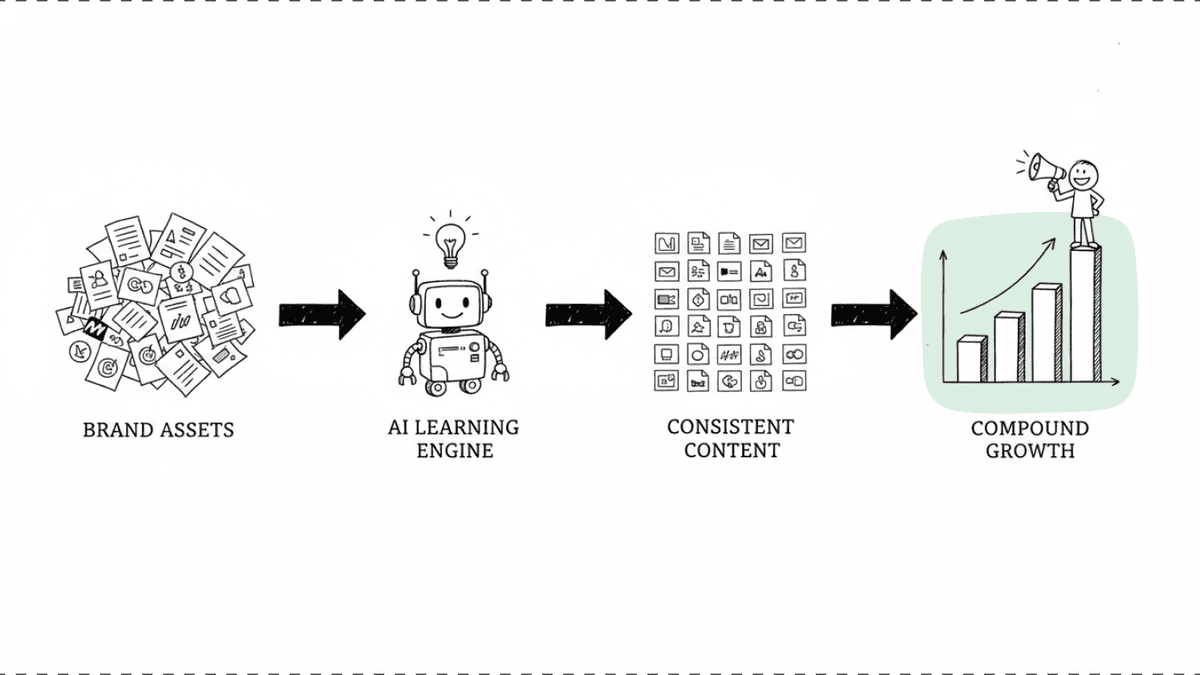
AI-powered brand management becomes valuable when the system remembers more than any one person can carry.
A founder may remember the emotional core of the brand. A marketer may remember campaign performance. An ops lead may remember product issues. A creative lead may remember visual patterns. A customer support team may remember recurring complaints.
But growth multiplies detail.
More SKUs. More audiences. More channels. More offers. More campaigns. More regions. More decisions.
At some point, human memory and scattered documents can hold only part of the truth.
ShopOS makes brand knowledge structured and reusable.
A rejected idea teaches the system. An approved tone example improves future copy. A winning hook informs the next campaign. A product page insight supports the next PDP refresh. A seasonal pattern returns when the next sale period begins.
The longer the brand runs on ShopOS, the stronger the system becomes.
That is why ShopOS should be understood as an AI operating model for D2C brands, rather than a single-use AI tool.
The CEO Moves From Coordinator to Architect
In an agency-heavy model, the CEO often becomes a coordinator.
They align vendors. They approve work. They explain the brand. They resolve reporting gaps. They answer questions only they can answer.
That is a poor use of founder judgment.
In the ShopOS model, the CEO becomes the architect.
They define what the system should optimize for. They set the strategic direction. They make the few decisions each month that truly require taste, risk, instinct, and accountability.
This changes the founder’s calendar.
More time goes to product vision, customer insight, category bets, partnerships, hiring, capital, and culture.
That is where founder energy creates the greatest value.
What Still Needs Human Judgment
ShopOS keeps human judgment where it belongs.
Monica can generate creative directions, but a human still knows which one feels right. Dinesh can draft CRM flows, but a marketer still decides how the brand should speak to loyal customers. Gavin can surface performance patterns, but a growth lead still decides which risk is worth taking. Richard can support store workflows, but a human still balances margin, experience, and conversion.
Agents amplify what exists.
They do not create the soul of a brand out of thin air.
The strongest brands still need taste, point of view, leadership, and customer empathy.
ShopOS protects that judgment by turning it into memory.
The human gives the signal.
The system remembers it.
The next output gets sharper.
Summary: Agencies Rent Execution. ShopOS Builds Memory.
The old agency model made sense when brands needed human teams to produce everything manually.
But ecommerce now moves faster than traditional agency workflows.
DTC brands need systems that remember, learn, and improve with every campaign. They need execution that carries brand context forward. They need feedback loops that make the next campaign sharper. They need a system where customer signals, creative decisions, product updates, and performance data work together.
That is where ShopOS changes the model.
As an AI agent platform for ecommerce brands, ShopOS helps teams move beyond rented execution and build owned intelligence. Openclaw captures the brand. Brand Memory stores the context. Agents execute with that memory. Spaces make workflows repeatable. Loops turn campaigns into learning. Connectors bring live business signals into the system. Auto Mode helps routine execution move faster inside approved boundaries.
The next phase of DTC will split brands into two groups.
Some brands will keep rebuilding context every time an agency team changes.
Others will build operating memory that compounds every quarter.
ShopOS is built for the second group.
If your ecommerce team is tired of briefing agencies, chasing revisions, and rebuilding brand context every campaign cycle, ShopOS gives you a stronger operating layer. Build Brand Memory once, let specialist AI agents execute with context, and turn every campaign into intelligence your brand owns.
Explore ShopOS for DTC and Shopify brands: Enterprise
Agencies rent you intelligence.
ShopOS builds you memory.
One of these has a monthly invoice.
The other has a curve that only goes one direction.
Stop Paying to Rebuild the Same Context
Your next campaign should not begin with another discovery call, another brand download, and another round of explaining what your team already learned.
Keep the knowledge. Compound the learning. Let ShopOS handle repeatable execution with your brand context already built in.
Build Your Brand’s Operating Memory: Book a Demo
FAQs
What is an AI agent platform for ecommerce brands?
An AI agent platform for ecommerce brands is a system where specialist AI agents support commerce workflows such as creative direction, product content, email, CRM, SEO, social, store operations, campaign planning, performance analysis, and brand management. The key value is context. A platform like ShopOS uses Brand Memory so agents can work with the brand’s tone, catalog, customer behavior, visual identity, campaign history, and performance learnings.
How is ShopOS different from an ecommerce agency?
ShopOS is different because it stores and compounds brand knowledge over time. A traditional agency works through people, briefs, reports, and handovers. ShopOS works through Brand Memory, AI agents, Spaces, Loops, Connectors, and Auto Mode. This makes execution more consistent, faster, and more context-aware.
Can ShopOS replace an agency completely?
ShopOS can replace many repeatable agency execution tasks, including product content, campaign workflows, creative variations, email support, SEO workflows, store updates, and performance feedback loops. Some brands may still use senior agency partners for strategic direction, partnerships, or specialist judgment. ShopOS becomes the operating layer that carries execution and memory.
Why do DTC brands struggle to scale with traditional agencies?
DTC brands often struggle with traditional agencies because brand knowledge gets scattered across people, tools, reports, and calls. As the brand grows, there are more products, channels, customer segments, campaigns, and performance signals to manage. If that knowledge does not live in one system, execution slows and brand consistency weakens.
How does Brand Memory improve ecommerce marketing over time?
Brand Memory improves ecommerce marketing by capturing approved outputs, rejected ideas, campaign learnings, product context, customer signals, tone rules, visual preferences, and performance patterns. Every workflow adds more context to the system. Future outputs become sharper, more aligned, and more specific to the brand.
Is ShopOS useful for Shopify brands?
Yes. ShopOS is useful for Shopify brands that need faster product content, stronger campaign execution, better creative workflows, consistent brand messaging, and smarter ecommerce operations. With Brand Memory and specialist AI agents, Shopify brands can reduce repetitive briefing and build a more connected system for content, catalog, campaigns, and growth.


