

 ChatGPT
 Perplexity
 Claude
 Gemini
 Grok
Grok
GEO Ranking Factors. A shopper asks ChatGPT, “Which SPF 50 sunscreen works for oily skin and leaves zero white cast?”
Your product fits. Reviews prove it. The price works. The ingredients match the need. Still, the AI answer names another brand.
That missed answer did not only cost visibility. It may have cost a sale.
AI shopping has changed how buyers discover products. Shoppers now ask full questions, compare products inside AI answers, and shortlist brands before they even reach a website. This means e-commerce visibility no longer depends only on Google rankings, marketplace listings, or paid ads.
AI-generated answers are becoming the new discovery layer.
For many growing stores, Generative Engine Optimization for D2C Brands is now becoming as important as traditional SEO because shoppers are discovering products through AI answers before they visit a website.
That is why GEO ranking factors matter. They influence which brands AI engines understand, trust, cite, and recommend when shoppers ask buying questions.
For e-commerce brands, this means your store must be easy for AI systems to crawl, understand, compare, verify, and cite. Product pages need clear details. Category pages need buyer-led answers. Reviews need to support real product claims. Your brand also needs trusted mentions outside your own website.
This blog explains the GEO ranking factors that matter most for e-commerce brands, how to apply generative engine optimization best practices, which content and technical gaps reduce AI visibility, and how ShopOS Big Head helps brands find missed AI answers before competitors own them.
What Are GEO Ranking Factors for E-commerce Brands?
GEO ranking factors are the content, technical, authority, off-site, and crawler-access signals that help AI engines understand, trust, cite, and recommend an e-commerce brand. For online stores, these include crawlable product pages, structured product data, reviews, FAQs, comparison content, third-party mentions, fresh information, clear headings, schema markup, and AI-friendly page architecture.
In simple words, AI needs enough clarity and proof to choose your product confidently.
A page that only says “premium quality” gives AI very little to work with. A page that explains who the product is for, what problem it solves, how it compares, how buyers use it, and what reviews say gives AI a stronger reason to mention it.
For e-commerce brands, these signals usually fall into five areas:
Content signals include product descriptions, FAQs, comparison pages, buying guides, review-led proof, and direct answers to shopper questions.
Technical signals include crawlability, page speed, schema markup, heading structure, internal links, sitemaps, and clean indexing.
Authority signals include expert input, updated content, author details, trusted claims, backlinks, brand mentions, reviews, and third-party validation.
Off-site visibility signals include Reddit discussions, YouTube mentions, LinkedIn content, product review sites, niche publications, and “best of” list articles.
Crawler-access signals include robots.txt settings, sitemap access, index coverage, and AI bot accessibility.
Together, these signals help AI engines decide if your brand deserves space inside an answer.
Why AI Answers Are Becoming the New Shelf Space for E-commerce Brands

In retail, shelf space used to decide which brands got noticed. In AI search, the answer box now plays that role.
A shopper may no longer open ten tabs to compare products. Instead, they may ask an AI tool for the best sunscreen, running shoes, protein powder, podi, baby skincare product, or office bag. The AI answer then becomes their first shortlist.
That changes how e-commerce brands should think about visibility.
A product may rank well on Google and still miss AI-generated recommendations. A product may have strong reviews and still be ignored if the product page lacks clear buyer-fit details. A brand may be popular on Instagram and still remain invisible inside ChatGPT, Gemini, Claude, Perplexity, or Google AI experiences.
AI-led discovery rewards brands that make product understanding easy.
If your category page does not answer real buyer questions, AI has little reason to select it. If your product page misses ingredients, use cases, delivery information, comparison points, warranty details, size guidance, or review-backed proof, another brand may look easier to recommend.
This is where GEO ranking factors become commercial. They are not only about visibility. They influence which brands enter the buyer’s decision set.
What the AI Visibility Index Reveals About E-commerce Brands
AI visibility can be measured. The AI Visibility Index tracks how often ecommerce brands appear in AI-generated shopping answers and how prominently they are positioned. For example, Parcel Perform’s AI Visibility Index measures visibility, LLM ranking, and brand trust across AI shopping experiences.
| Brand | Category | Visibility |
|---|---|---|
| Levi’s | Apparel & Fashion | 77.8% |
| Calvin Klein | Apparel & Fashion | 55.6% |
| Old Navy | Apparel & Fashion | 55.6% |
| CeraVe | Beauty & Cosmetics | 44.5% |
| Neutrogena | Beauty & Cosmetics | 33.4% |
| L’Oréal Paris | Beauty & Cosmetics | 33.4% |
These figures show that AI visibility can vary significantly between brands, even within the same ecommerce category. Visibility also differs from ranking position, meaning that being mentioned by an AI system does not necessarily mean appearing as one of its most prominent recommendations.
The Core GEO Ranking Factors AI Engines Trust
AI engines reward useful specificity. They need clear information that can be retrieved, summarized, compared, and cited.
The strongest GEO ranking factors for e-commerce brands include:
- Clear product data
- Crawlable and indexable pages
- Structured schema markup
- Helpful category content
- Review-led proof
- Comparison pages
- FAQ sections
- Fresh product information
- Third-party mentions
- Internal linking
- Topical authority
- Fast page experience
- Clean heading hierarchy
- Citation-ready answer blocks
These are not random SEO tasks. They are the foundation of generative AI search engine optimization.
Google’s AI search guidance explains that AI experiences can use query fan-out, where the system explores related questions to build a richer answer. For e-commerce brands, that means a shopper’s one question may trigger several related product, comparison, review, and category-level searches.
So your store should not only answer the main query. It should also answer the surrounding questions.
For example, if someone asks, “Which SPF 50 sunscreen is good for oily skin?” AI may also look for:
- Does it leave a white cast?
- Is it non-comedogenic?
- Is it suitable under makeup?
- Does it suit humid weather?
- What do reviews say?
- How does it compare with another sunscreen?
- Is it available in the shopper’s market?
The more clearly your content answers these connected questions, the better your chance of being understood and recommended.
Product Pages Need Buyer Intelligence, Not Generic Copy
Most e-commerce pages lose AI visibility at the product level.
A line like “premium cotton dress for all-day comfort” may sound fine to a shopper, but AI gets very little useful information from it. It cannot easily understand who the dress suits, how the fabric feels, how it compares with linen or rayon, which season it works for, or what buyer question it should answer.
A stronger product page gives answer-ready details.
For fashion, add fabric GSM, fit type, body shape suitability, occasion, season, wash care, size guidance, and styling suggestions.
For beauty, add skin type, active ingredients, texture, finish, usage timing, ingredient warnings, concerns addressed, and compatibility with other products.
For food, add spice level, ingredients, allergens, shelf life, recipe usage, storage instructions, serving ideas, and taste profile.
For electronics, add dimensions, warranty, compatibility, battery life, use cases, setup details, and comparison points.
These generative engine optimization techniques help AI connect your product to real shopper prompts.
A page that answers “Who is this right for?” will usually perform better in AI-led discovery than a page that only says “high quality.”
Content Structure Matters for AEO and GEO
Answer-first structure improves both AEO and GEO because it gives search engines and AI systems a clean summary before the deeper explanation.
Each important section should open with a direct answer. This is often called a BLUF structure, which means “bottom line up front.”
For e-commerce content, this can look like:
Best for oily skin: This sunscreen suits oily and combination skin because it has a lightweight gel texture, no heavy fragrance, and a matte finish.
Best for beginners: This protein powder suits first-time users because it has simple ingredients, clear serving instructions, and mild flavor options.
Best for gifting: This coffee sampler works well for gifting because it includes multiple roast profiles, clear tasting notes, and premium packaging.
This format helps humans skim faster. It also helps AI extract the answer cleanly.
The same approach should be used across product pages, collection pages, buying guides, comparison pages, and FAQs.
Authority Can Beat Brand Size
AI visibility does not always belong to the biggest brand. It often belongs to the brand with stronger topical authority and clearer proof.
That is good news for D2C and niche e-commerce brands.
A smaller skincare brand can own “barrier repair cream for oily acne-prone skin” if its content, reviews, ingredients, expert guidance, and third-party mentions support that topic well.
A food brand can own “authentic podi for ghee dosa at home” if its product page, recipe content, reviews, regional context, and off-site mentions all support that association.
A fitness brand can own “running shoes for flat feet and long walks” if it explains arch support, cushioning, foot type, walking distance, buyer reviews, and comparison points clearly.
This is where top generative engine optimization strategies for AI visibility become practical.
The goal is not to publish more content for the sake of content. The goal is to build enough depth around the buying questions your brand deserves to answer.
Question-Based Queries Are the Revenue Layer
Question-based queries sit close to purchase because shoppers usually ask them when they are comparing, narrowing, or trying to reduce risk.
Examples include:
- Which running shoes are good for flat feet?
- What serum is safe with vitamin C?
- Which protein powder is best for beginners?
- Which podi tastes best with ghee dosa?
- Which handbag works for office and travel?
- Which baby lotion is safe for dry skin?
These are not casual searches. They are decision-making prompts.
For a Shopify store cited by ChatGPT, these question-based prompts can become powerful discovery moments because the brand appears while the buyer is still comparing options.
That is why GEO ranking factors improve when your content answers these questions directly.
Use these generative engine optimization best practices:
- Add “best for” blocks on product pages
- Create comparison pages for close product choices
- Add objection-led FAQs beside product details
- Use review language to support claims
- Write category guides around buyer use cases
- Add short answer sections that can stand alone
- Keep pricing, stock, delivery, and product claims updated
- Add internal links between product pages, guides, and comparison pages
This makes your content easier for AI engines to understand and easier for buyers to trust.
The GEO Checklist Every E-commerce Team Should Use
A strong GEO plan connects content, technical SEO, product data, authority, and off-site proof.
Here is a step-by-step GEO playbook e-commerce teams can use to turn GEO ranking factors into a practical visibility system.
Content GEO Checklist
- Add direct answers under important sections.
- Rewrite generic product copy into buyer-specific product information.
- Add FAQs based on real shopper objections.
- Create comparison pages for products buyers commonly compare.
- Add “best for” sections on product and category pages.
- Use real review language to support claims.
- Update old content with fresh product details, availability, and pricing.
- Add original insights, not copied category-level advice.
Technical GEO Checklist
- Make product and category pages crawlable and indexable.
- Add Product schema, Review schema, FAQ Page schema, Breadcrumb schema,
- Organization schema, and Article schema where relevant.
- Use clean H1, H2, and H3 structures.
- Improve page speed and Core Web Vitals.
- Submit updated XML sitemaps.
- Use internal links between related products, guides, and collections.
- Avoid hiding important product content inside scripts that crawlers cannot easily read.
Authority GEO Checklist
- Add author or reviewer details for guides and educational content.
- Add publish dates and last updated dates.
- Support claims with credible sources.
- Use expert input where possible.
- Add customer reviews that mention real use cases, objections, and outcomes.
- Build backlinks and mentions from relevant third-party websites.
Off-Site GEO Checklist
- Track whether your brand appears in Reddit discussions.
- Build credible LinkedIn content around category expertise.
- Earn mentions in niche publications and product review sites.
- Appear in “best of” and comparison articles.
- Encourage creator-led product explainers on YouTube and social platforms.
- Monitor brand mentions across AI search engines.
Crawler-Access GEO Checklist
- Review robots.txt settings.
- Check if important pages are blocked.
- Confirm Googlebot and relevant crawlers can access key pages.
- Review Bing index coverage because some AI search experiences may rely on Bing-based discovery.
- Keep sitemaps clean and updated.
- Consider llms.txt as an optional emerging AI-comprehension file, but do not treat it as a Google requirement.
This checklist turns generative AI search engine optimization into a repeatable process instead of a one-time content rewrite.
For brands working on Generative Engine Optimization for D2C Brands, the next step is not only knowing the ranking factors but also tracking how those factors affect AI visibility across platforms.
How ShopOS Big Head Turns GEO Ranking Factors Into Action
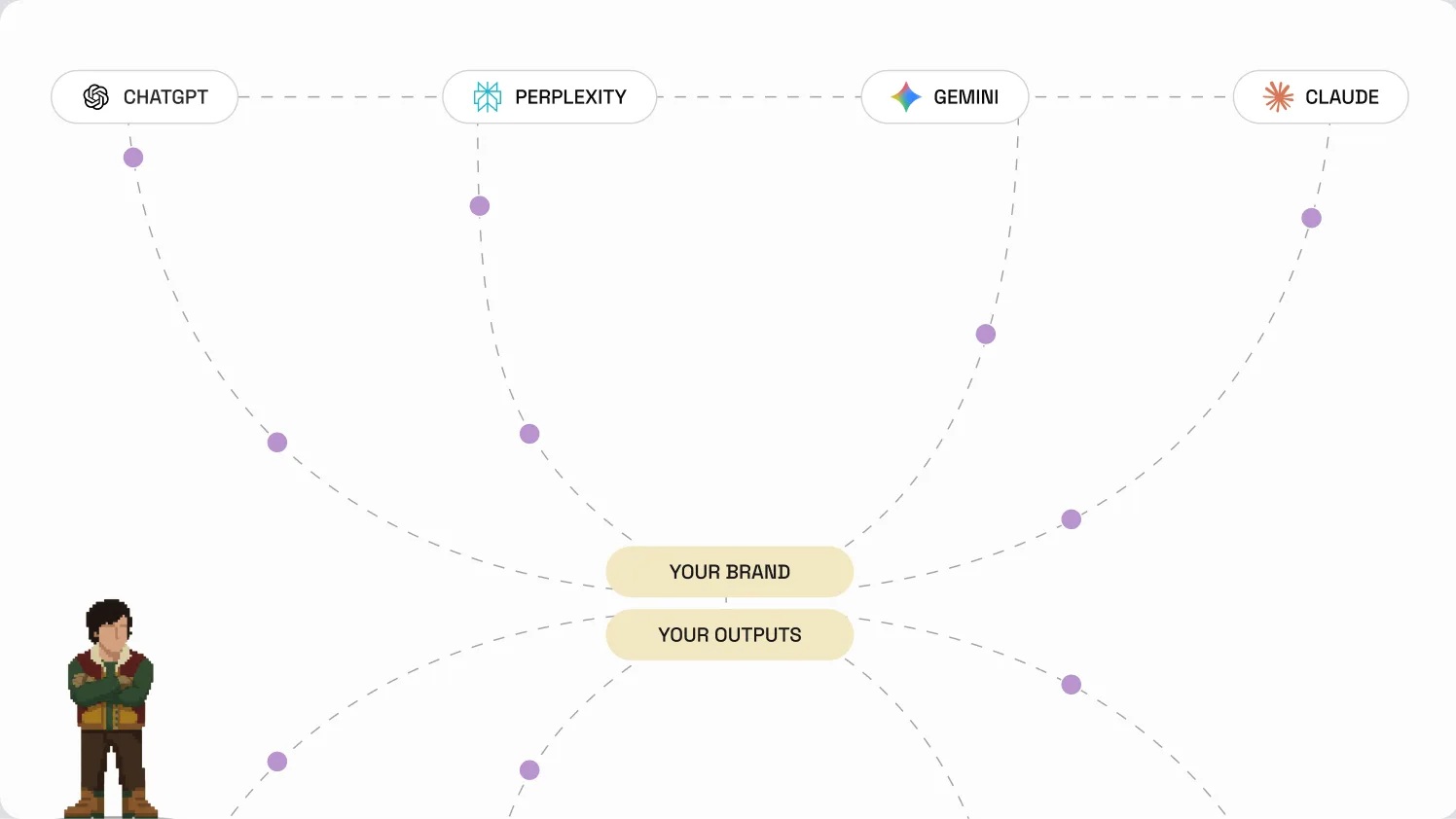
It scores AI visibility across platforms such as ChatGPT, Perplexity, Gemini, and Claude. Big Head helps teams find missed shopping prompts, track citations, check AI crawlability, identify brand mention gaps, and create citable content around high-intent buyer questions.
That matters because GEO ranking factors behave differently across AI engines. One engine may cite a category page. Another may prefer a review site. Another may ignore the store if crawler access is weak. Another may skip the product if the page lacks comparison points, product clarity, or third-party proof.
Big Head helps teams move away from guessing and focus on the actions most likely to improve AI visibility.
ShopOS Big Head Helps Teams
Find missed shopping prompts: Identify real buyer questions where your products should appear but are currently missing from AI-generated answers.
Spot products missing inside AI answers: See which products are not being recommended across ChatGPT, Perplexity, Gemini, and Claude, even when they match the shopper’s intent.
Check crawlability and citation gaps: Understand whether AI engines can access your product pages, read important details, and cite your content clearly.
Identify weak product and category pages: Find pages that lack buyer-fit details, FAQs, comparison points, review proof, or structured product information.
Create content around high-intent buyer questions: Turn missed AI prompts into answer-ready product, category, FAQ, and comparison content.
Track brand mention growth across AI engines: Monitor where your brand appears, how often it gets cited, and which AI platforms are improving over time.
Prioritize actions that improve AI visibility: Focus on the SEO, content, technical, and authority fixes that can improve AI visibility faster.
For e-commerce teams, this matters because AI visibility is not a vanity metric. It is connected to how shoppers discover, compare, and shortlist products.
Use ShopOS Big Head as your GEO AI agent for ecommerce to find missed shopping prompts with big head and see where your products should already be showing up in AI-generated answers.
Your Products May Be Ready for AI Search. But Can AI Actually Find Them?
Big Head shows you exactly where visibility breaks, from missed buyer prompts and weak citations to crawlability issues and competitor wins.
Stop guessing what GEO needs next.
See What Big Head Finds: Book a demo
Final Takeaway
GEO ranking factors reward clarity, proof, and usefulness.
AI does not recommend the prettiest product copy. It recommends brands it can understand, verify, compare, and explain.
For e-commerce teams, this means product pages need deeper buyer intelligence. Category pages need clearer answers. Reviews need to support real objections. Technical access needs to stay clean. Brand mentions need to exist beyond the website.
Clear product data, buyer-led pages, credible mentions, helpful reviews, structured information, fresh content, and prompt-based answers all shape what AI says about your brand.
Brands that fix these signals early will have a better chance of becoming the answer before shoppers ever click.
FAQs: GEO Ranking Factors for E-commerce Brands
What are GEO ranking factors?
GEO ranking factors are signals that influence how AI engines mention, cite, or recommend a brand. For e-commerce brands, they include crawlability, product data, topical authority, reviews, freshness, trusted mentions, structured data, and prompt relevance.
Why do GEO ranking factors matter for e-commerce brands?
GEO ranking factors matter because shoppers now use AI tools to research, compare, and shortlist products. If your brand is absent inside AI-generated answers, your store may lose demand before shoppers visit your website.
What should online stores fix first for GEO?
Online stores should first fix crawlability, product page clarity, structured data, FAQs, comparison content, review-led proof, and internal linking. These generative engine optimization best practices make the store easier for AI engines to understand and cite.
Which generative engine optimization techniques should a Shopify brand start with?
A Shopify brand should start with product page rewrites, FAQ sections, Product schema, Review schema, comparison pages, buyer-led category content, crawlability checks, and prompt tracking. These generative engine optimization techniques address common AI visibility gaps.
What are the top generative engine optimization strategies for AI visibility?
The top generative engine optimization strategies for AI visibility include building topical authority, answering buyer questions directly, earning credible third-party mentions, improving product data, tracking AI citations, and creating content that AI can cite clearly.
Is generative AI search engine optimization different from SEO?
Generative AI search engine optimization is not a replacement for SEO. It builds on SEO fundamentals such as crawlability, helpful content, structured data, internal linking, and authority, but adapts them for AI-generated answers and conversational product discovery.
How does ShopOS Big Head help with GEO?
Big Head by ShopOS helps e-commerce brands audit AI visibility across ChatGPT, Perplexity, Gemini, and Claude. It identifies missed shopping prompts, checks crawlability, tracks citations, finds brand mention gaps, and prioritizes actions that can improve AI-generated product recommendations.