
 ChatGPT
 Perplexity
 Claude
 Gemini
 Grok
Grok
A creative director once helped build the kind of campaign every ecommerce brand wants. The drop sold out in four hours. The Reels felt native to Instagram. The product shots had the right tension between polish and platform behavior. The copy did not sound like a brand trying too hard. The timing worked. The audience responded. Everyone remembered it as the campaign that clicked.
Six months later, the team tried to recreate it.
Same product category. Similar hooks. Same photographer. Similar creative direction. The result was flat.
The problem was not talent. It did not taste good. It was not even an execution. The original brief was gone. The person who shaped the strategy had left. The Slack thread was buried. The Figma file sat behind an old account. The performance notes were never connected back to the creative decisions. The logic behind the campaign had disappeared.
That is the real problem most ecommerce brands face.
They do not only lose files. They lose intelligence.
What disappears is not just the asset. It is the context around the asset. The brief, the rejected routes, the campaign logic, the audience insight, the product angle, the founder’s feedback, the performance reason, and the customer response. That missing context is why teams can technically have every file and still lose the brand’s memory.
An AI asset library for ecommerce brands should solve that problem. It should not behave like a prettier folder system. It should work like a living filesystem where every product image, campaign brief, customer phrase, creative decision, and performance signal becomes a usable context for the next decision.
Most asset libraries know where things are. The next generation needs to know what those things mean.
The Company as a Filesystem, Reimagined for Ecommerce Brands
The idea of a company as a filesystem is powerful because it changes how teams think about knowledge. Instead of treating business information as scattered data across apps, documents, dashboards, and conversations, it asks a simpler question: what if the company’s intelligence lived in one shared structure that AI agents could read, understand, and write back to?
In technical or legal environments, this idea is easier to see. Cases can live in /cases. Billing logs can live in /billing. Contracts can live in structured folders with version history and permissions. An AI agent can move across those files, connect information, and help the organization work with less friction.
But ecommerce brands need a different kind of filesystem.
A brand is not only made of documents, invoices, or contracts. It is made of decisions, campaign history, customer language, creative judgment, product context, audience behavior, and performance signals. The files are not only files. They are proof of how the brand thinks, sells, sounds, and evolves.
That is where an AI asset library for ecommerce brands becomes more than storage. It becomes the brand’s operating memory. It gives AI agents the context they need to work with the brand instead of only producing more assets for the brand.
The Real Problem Is Not Storage. It Is Lost Brand Intelligence
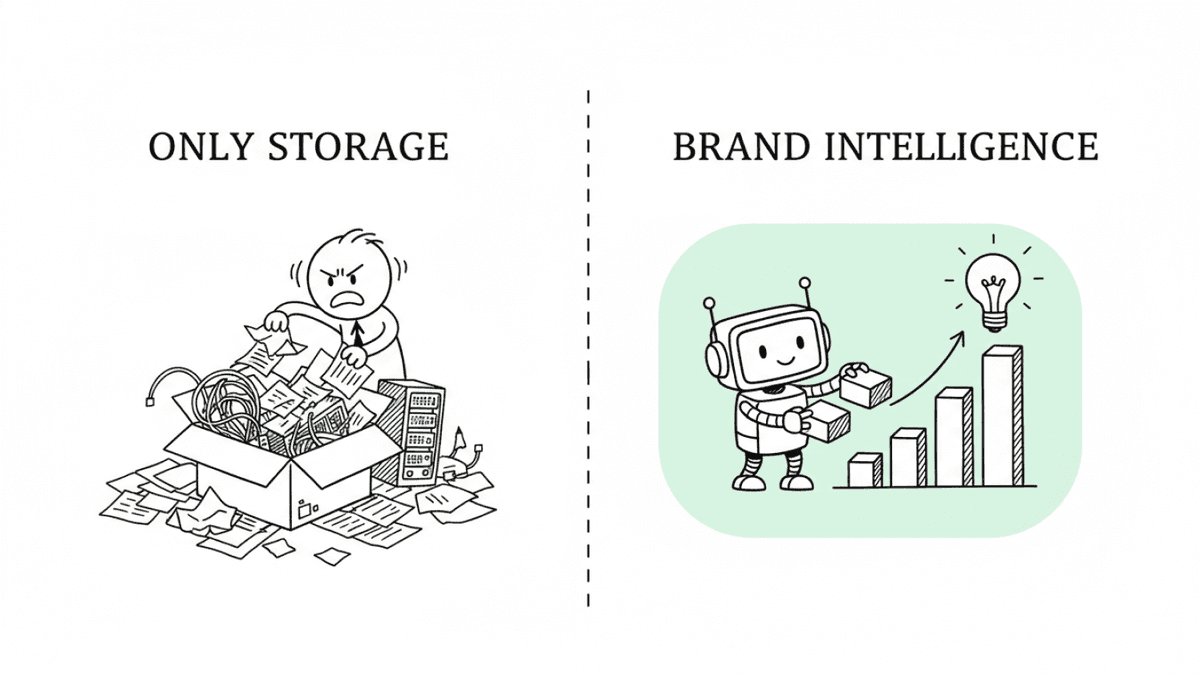
Most ecommerce teams already have storage. They have Google Drive folders, Dropbox links, Figma files, Canva exports, Shopify media libraries, Meta ad creatives, Notion briefs, Slack threads, and spreadsheets full of campaign notes. On paper, nothing is missing.
In practice, everything is scattered.
The campaign team knows why a launch worked. The performance team knows which creative drove ROAS. The founder knows which words make the brand sound wrong. The product team knows why a SKU was created. Customer support knows how buyers describe the product in real life. The agency knows which concepts were killed before the final campaign went live.
But that knowledge rarely lives in one place.
Traditional brand asset management for ecommerce often focuses on storing final assets. It can help teams find the approved logo, the latest product image, or the correct banner size. That is useful, but it does not solve the bigger issue. Ecommerce brands do not only need access to assets. They need access to the thinking behind those assets.
A static asset library can tell you where the summer campaign folder is. A smarter system should tell you why last summer’s lifestyle-led creative outperformed studio shots, which audience segment responded, what the original brief said, what product promise worked, and which version later became the winning paid social asset.
That is the shift.
Digital Asset Management for E-commerce should no longer mean file storage alone. It should mean brand intelligence infrastructure.
What Actually Belongs Inside an AI Asset Library for Ecommerce Brands
A brand is not just a logo, a color palette, and a tone of voice document. Those things matter, but they are only the visible layer. The real brand lives in patterns, decisions, experiments, audience reactions, and performance signals built over time.
An AI asset library for ecommerce brands needs to capture that full context. Otherwise, it becomes a polished archive that still forces teams to start every brief from memory.
Tone of Voice as a Pattern
A tone of voice document can explain how the brand should sound, but the real tone lives somewhere else.
It lives in the email subject lines that consistently get opened. It lives in the Instagram captions people save. It lives in product descriptions customers repeat in reviews. It lives in the words the founder removes because they sound too generic. It lives in the phrases buyers use when they explain why the product finally made sense to them.
That is why an AI asset library for ecommerce brands should not treat tone as a static PDF. It should treat tone as a pattern built through years of customer response, creative testing, and brand judgment.
Visual Identity as a Decision Trail
Visual identity is not only a logo, color palette, or font system. Those are the visible outputs.
The deeper identity lives in the decisions behind them. Which images were killed before launch? Which product shots worked better than polished studio visuals? Which visual route made the brand feel premium instead of cold? Which style was rejected because it made the brand look like every competitor in the category?
An ecommerce creative asset library should preserve those decisions. Otherwise, every new designer, agency, or campaign team starts by guessing what the brand has already learned.
Campaign History
Every campaign carries intelligence. What it said. What it showed. Which channel it ran on. Which product it supported. Which audience it targeted. What performed. What failed. Why the campaign existed at that moment.
This includes seasonal context, competitive pressure, category timing, founder instinct, merchandising priorities, and creative constraints. A campaign is not only a folder of final files. It is a record of decisions.
When campaign history is structured properly, the next campaign does not start cold. The team can see what worked before, what should not be repeated, and what has changed since.
Customer Language
Your customers often describe your product better than your internal team does.
Their words live in reviews, support tickets, DMs, comments, post-purchase surveys, WhatsApp conversations, and product feedback. They reveal the real before-and-after. They show what buyers care about, what confused them, what convinced them, and what made them hesitate.
Most ecommerce brands collect this language but do not feed it back into creative work. An ecommerce creative asset library should make customer language searchable and usable. A team building a product launch should be able to find the exact words customers use for that product, not rely only on polished internal messaging.
Product Catalog Context
A product catalog is not only SKUs, prices, images, and descriptions. Each product has a reason to exist.
Who was it designed for? What problem does it solve? Which customer segment buys it? How does it relate to other products in the range? What has already been said about it publicly? Which claims are approved? Which angles have been overused? Which visuals are missing?
AI-powered asset management becomes valuable when the product catalog is connected to creative context. The system should know that one SKU has enough studio shots but no lifestyle assets, while another has strong UGC but weak marketplace-ready images.
Competitive Landscape
Brands do not operate in isolation. Every campaign exists inside a category conversation.
An effective creative intelligence library should store what adjacent brands are saying, how they show products, which visual conventions dominate the category, and where there is white space. The point is not to copy competitors. The point is to understand what the category expects, so the brand can decide when to follow, sharpen, or break the pattern.
Audience Segments
Demographics are not enough.
A brand’s audience context should include behaviors, motivations, objections, content preferences, buying triggers, save-worthy formats, questions before purchase, and reasons for drop-off. The most valuable segmentation for creative teams is not only who the buyer is. It is how that buyer thinks, shops, compares, and responds.
An AI asset library for ecommerce brands becomes more powerful when every asset can be connected to the segment it was designed for and the outcome it produced.
Brand Decisions Over Time
The decisions that did not make it to the final campaign matter too.
The influencer partnership that was rejected. The campaign route that was killed. The rebrand that was paused. The product claim that legal did not approve. The visual style that tested poorly. The phrase the founder never wants to use again.
This negative space shapes the brand as much as the final output. If those decisions are not stored, the same debates keep returning. Teams waste time rediscovering what the brand already learned.
Performance Data With Creative Context
ROAS, CTR, conversion rate, CAC, and engagement matter. But they only become useful when they are connected to the creative that generated them.
A 4.2x ROAS on a static lifestyle image with a direct product-benefit headline means something different from a 4.2x ROAS on a UGC-style video with a pain-point hook. The number alone is not the insight. The creative context makes the number useful.
This is where AI-Powered Digital Asset Management becomes more than storage. It connects performance data to creative variables so teams can understand what actually moves the audience.
Why Brand Asset Management for Ecommerce Needs More Than Folders
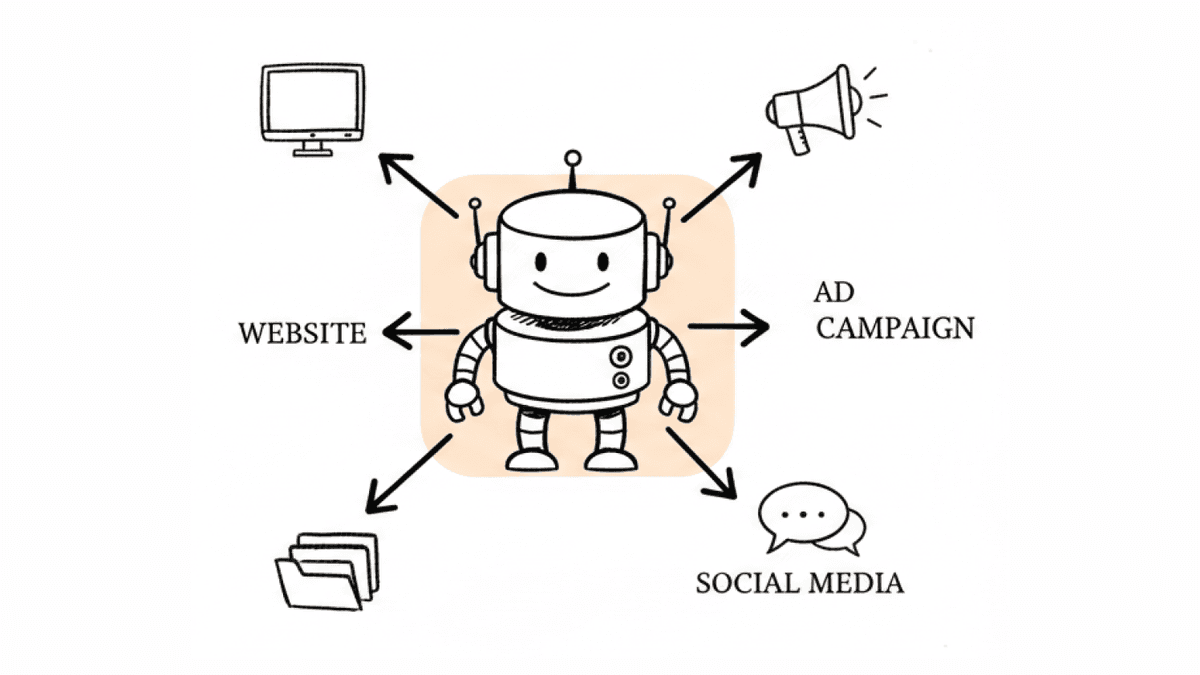
Folders are useful when assets are simple. Ecommerce brand assets are not simple.
A single product image might belong to a SKU, a campaign, a season, an ad set, a marketplace listing, a landing page, an influencer brief, and a performance test. It might have three edited versions, two rejected versions, one winning crop, and one format that worked only on Instagram Stories.
A folder cannot carry all of that meaning.
This is why brand asset management for ecommerce has to move beyond folder hierarchy. The system needs relationships. It needs tags, context, performance signals, version history, channel usage, audience mapping, and approval logic.
A normal folder says:
“Here is the asset.”
A true ecommerce creative asset library says:
“Here is the asset, the SKU it belongs to, the campaign it came from, the audience it targeted, the creative route it represented, the channels where it ran, the performance it delivered, the versions that came before it, and the gaps it reveals.”
That is the difference between storage and intelligence.
Why Brand Context Graphs Are Different From Coding or Legal Filesystems
A codebase has dependencies. A function calls another function. A legal archive has references. A contract points to a clause. A case cites a precedent. Those relationships can often be traced clearly.
Brand relationships are harder. A campaign connects to another campaign because they share a positioning belief. A caption connects to a customer review because both use the same emotional language. A product photo connects to performance because one visual choice changed how buyers understood value. These relationships need interpretation, not just indexing.
The idea of a company as a filesystem works well in technical and legal contexts. Code has dependencies. Legal files have cases, clauses, contracts, and references. The relationships are often easier to trace.
Brands work differently.
Brand data is relational, temporal, emotional, and outcome-weighted. It does not always fit neatly into rows and columns. A brand filesystem has to respect that complexity.
Brand Data Requires Interpretation
There is no single objective reading of a brand’s tone. A line of copy may feel confident to one person and arrogant to another. A visual may feel premium in one category and cold in another.
That is why AI-Powered Digital Asset Management needs more than tags and file names. It needs interpreted context. It has to understand that two campaigns are connected not because one file links to another, but because they share a positioning strategy, an audience tension, a creative belief, or a repeated customer response.
This is where a brand context graph becomes important. It helps the system understand relationships that a normal folder structure would completely miss.
Brand Data Is Temporal in Both Directions
In code, version two often replaces version one. In brand building, old context keeps mattering.
A brand may have used aspirational lifestyle campaigns in 2021, shifted to performance-heavy product campaigns in 2022, then returned to brand-led storytelling in 2024 because the category became crowded. That history explains the current strategy.
An AI system that only reads the current guideline misses the arc. It sees the latest file but not the reason behind it.
Brand Context Is Weighted by Outcome
In a normal folder structure, hierarchy tells you what matters. In a brand filesystem, outcome often matters more than folder depth.
A customer review that perfectly captures the product’s value may be more useful than a formal messaging document. A paid ad that reshaped audience perception may matter more than a polished brand deck. A rejected campaign route may prevent months of wasted work later.
Signal strength should influence weight.
That is why AI-powered asset management needs to account for performance, context, and time. The best asset library does not only store what exists. It helps teams understand what matters.
The Silo Problem Is Worse for Ecommerce Brand Teams
Brand teams do not only suffer from technical silos. They suffer from organizational silos.
Performance marketing owns attribution data. Brand owns creative strategy. The agency owns production memory. The founder owns instinct. Product owns SKU logic. Customer support owns buyer language. Ecommerce owns PDP performance. Social owns platform-native learnings.
These signals should compound. Instead, they often stay separated.
That is why every new campaign brief starts with too much guesswork. A creative lead references the campaigns she remembers. A performance marketer pulls numbers from ad platforms. A designer checks old files. An agency asks for context. A founder adds feedback based on instinct. Everyone has a piece of the truth, but no one has the full filesystem.
When one person leaves, the brand loses part of its memory.
When an agency contract ends, the brand loses production intelligence.
When a founder steps back, the brand loses unwritten judgment.
An AI asset library for ecommerce brands should make that knowledge durable. It should keep campaign decisions, asset performance, product context, customer language, and creative rationale inside the system, not trapped inside people’s heads.
What Becomes Possible With an Ecommerce Creative Asset Library That Learns
Once assets, context, and outcomes live together, the asset library becomes an operating layer for the brand.
This changes how teams brief, create, review, learn, and scale.
Briefs That Know What the Brand Already Knows
A good brief should not require the team to rediscover old lessons.
If July campaigns consistently perform better with lifestyle imagery, the brief should know. If scarcity messaging works in email but underperforms in paid social, the brief should know. If the premium tier needs a different promise than the entry tier, the brief should know.
A traditional brief starts with memory. A brief generated from a living filesystem starts with accumulated intelligence.
Cross-Team Intelligence Without More Meetings
Meetings often exist because systems do not carry enough context.
When the performance marketer, brand designer, product manager, and agency all work from the same ecommerce creative asset library, context moves without another sync. The marketer can see why creative decisions were made. The designer can see which formats performed. The product team can attach SKU logic. The agency can understand what has already been tried.
The work becomes more connected because the data is connected.
Live Brand Governance Instead of Static Guidelines
Brand guidelines usually age badly. They are written once, shared during onboarding, and opened only when something goes wrong.
A living brand filesystem keeps governance current. Every campaign, creative choice, customer insight, and performance signal updates the system. When an AI agent reviews a new asset, it is not checking against a PDF from 18 months ago. It is checking against the brand’s full history.
This helps protect consistency without slowing production.
That is where AI-Powered Brand Consistency becomes practical. It gives teams a way to keep creative output aligned with the brand’s voice, visual direction, product truth, and past learnings while still moving fast across channels.
Agency Onboarding in Hours, Not Weeks
The hardest part of agency onboarding is not access. It is context.
Agencies need to understand what the brand sounds like, what it avoids, what has worked, what has failed, which audience matters, what the founder cares about, and where performance patterns exist.
A strong AI asset library makes onboarding a read operation. The agency does not need six weeks of scattered context. It can read the brand filesystem, understand the campaign history, and add new creative work back into the system.
New Hires Who Start With Context
New creative leaders often spend months reconstructing the brand through old decks, Slack searches, campaign folders, and informal conversations.
A living filesystem shortens that learning curve. A new hire can see campaign history, customer language, decision logs, creative tests, performance patterns, product context, and brand rules in one place.
They do not only see what the brand looks like. They understand how the brand became what it is.
What Coworking Looks Like When the Brand Becomes a Filesystem
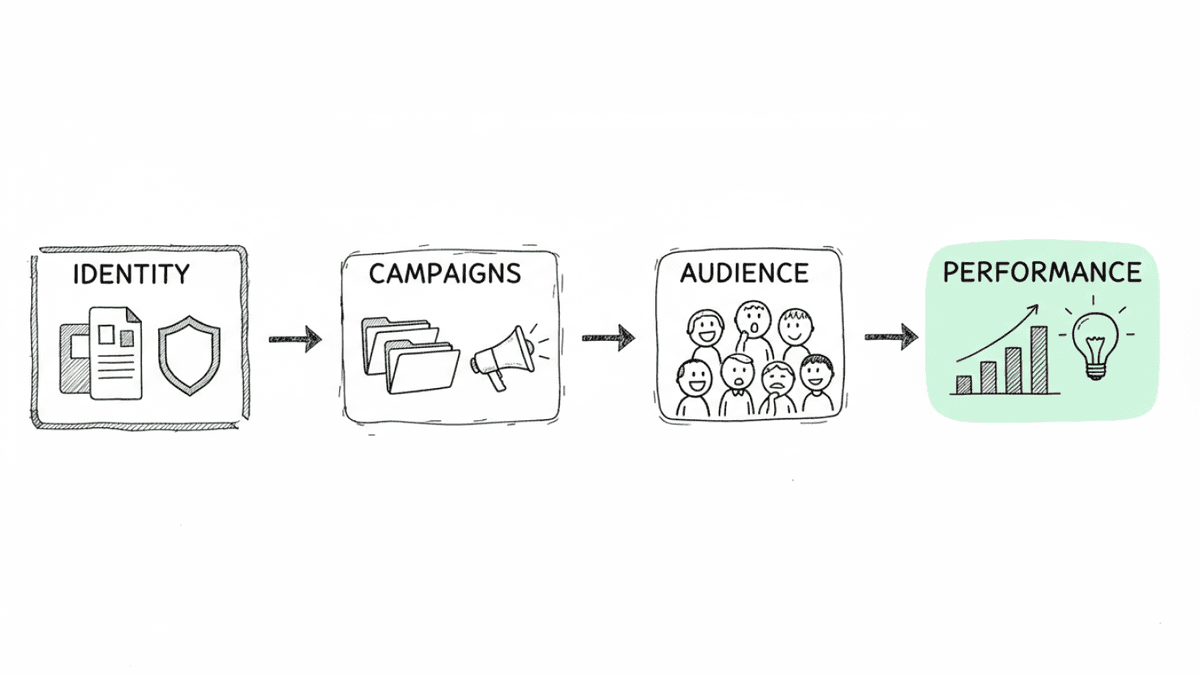
A brand filesystem becomes practical when it is organized around how teams actually work.
Four core directories make the idea easier to understand.
/identity
This holds the elements that define the brand: visual guidelines, tone of voice, positioning, founding story, product philosophy, key messages, approved claims, rejected patterns, and decision history. Anyone on the team can read this layer. Writing to it should require brand leadership approval because identity decisions need human judgment. AI agents can use /identity to generate on-brand assets, review copy, and flag drift. But they should not update the brand’s core voice or positioning without human review.
/campaigns
This holds past, current, and planned campaigns. Each campaign includes the brief, creative routes, assets, copy variations, audience segment, channel plan, product focus, campaign rationale, approval notes, and post-campaign learnings. An AI agent building a new campaign should read from /campaigns before generating anything. It should understand what the brand has already tried before suggesting what comes next.
/audience
This holds everything the brand knows about customers. That includes reviews, support tickets, DMs, comments, survey responses, qualitative research, media insights, first-party behavior, objections, segment notes, and buyer language. This layer helps teams write copy that reflects how customers actually think and speak.
/performance
This holds performance data attached to creative context. It should connect each asset to campaign results, channel behavior, audience segment, timing, product category, and creative variables. This is the layer that makes creative intuition checkable. Instead of saying “lifestyle imagery works better,” the team can ask the system where, when, for which SKU, for which audience, and compared to what.
Here is what this could look like in practice.
A performance marketer is planning a summer collection launch. Instead of asking the brand team for old examples, she opens /campaigns and filters past summer launches in the same product category. She sees which formats worked, which audience segments responded, which products needed stronger education, and which channels produced better full-price conversions.
At the same time, the brand designer opens the same system. She pulls tone guidance from /identity, real customer objections from /audience, and format-level performance data from /performance. She creates three visual routes, each connected to a campaign objective and audience segment.
An AI agent then reviews both pieces of work against the brand filesystem. It flags where the copy feels off, where the visuals repeat an old mistake, where the concept matches a past winner, and where the campaign needs stronger product context.
The designer and marketer may not need another long briefing meeting. The filesystem carries the context for both of them.
Why Brand Context Compounds Differently From Code Context
Then add this at the start of that section:
Code context is useful, but it does not compound in the same way brand context does. A larger codebase gives an AI agent more surface area, but many relationships are still structural. One function depends on another. One module connects to another.
Brand context grows differently.
Every campaign adds evidence. Every customer review adds language. Every creative test adds learning. Every rejected concept adds a boundary. Every performance result gives the system a stronger sense of what works for this brand, with this audience, in this category.
That is why the 200th asset in a smart brand filesystem should be better informed than the first. The system is not only storing more. It is learning more.
Most AI tools do not compound this way. They generate more output, but the next output is not automatically wiser because the system does not retain the brand’s learning loop.
An AI asset library for ecommerce brands changes the unit of improvement. The brand does not only produce faster. It learns faster.
What New AI Agent Behaviors This Enables
A normal AI tool can create assets. A connected AI asset library can understand the brand before it is created.
This is where the system starts behaving less like a content tool and more like an AI agent platform for ecommerce brands. The agents do not only generate. They read past campaigns, understand product context, review brand patterns, and help teams make better creative decisions with the memory already inside the system.
That difference changes the role of AI agents. They are no longer only content generators. They can become reviewers, memory keepers, pattern spotters, brief builders, and governance assistants. The quality of their work depends on the depth of the brand filesystem they can access.
Brand Drift Detection
Every brand drifts slowly. Copy becomes less specific. Visuals become more generic. Positioning starts sounding like the category. Different teams introduce small inconsistencies until the brand feels diluted.
An AI agent connected to the brand filesystem can flag this early. It can compare new assets against the living brand graph and identify when copy, visuals, or messaging move too far away from established patterns.
Cross-Channel Coherence
Ecommerce brands often show up differently across email, paid social, organic social, SMS, PDPs, landing pages, and marketplace listings.
Sometimes that flexibility is intentional. Often, it is accidental.
A connected creative intelligence library can help teams spot channel-level drift. It can show when email sounds like one brand, paid social looks like another, and PDP copy follows a third logic.
Cross-channel consistency becomes easier when every asset can be checked against the same brand memory.
Historically-Constrained Brief Generation
A campaign brief should be shaped by history, not only by a new prompt.
With an AI asset library, a team can ask for a summer launch brief that draws from past summer campaigns, current audience insights, product catalog gaps, winning creative formats, and recent competitive signals.
The output becomes sharper because it is not generated in isolation. It is built from the brand’s accumulated intelligence.
Closed Post-Campaign Learning Loops
Many brands run campaigns, review numbers, and move on. The learning rarely returns to the next brief in a structured way.
A living filesystem can close that loop.
After a campaign runs, the AI system can write performance back to the campaign file, connect the results to creative variables, compare outcomes against historical benchmarks, and summarize what the campaign taught the brand.
The next campaign can then build from that learning automatically.
What Stays Human
AI can read the brand. Humans still need to evolve it.
That distinction matters.
An AI agent can generate on-brand content, search past campaigns, identify gaps, compare creative performance, flag brand drift, and help build briefs. But it should not reposition the brand, rewrite the core voice, or change the identity layer without human approval.
Brand decisions involve judgment. They require tradeoffs between short-term performance and long-term positioning, current customers and future customers, consistency and evolution, founder instinct and market pressure.
That is not only a data problem.
A well-designed AI asset library makes the boundary clear. Agents can read broadly. They can write to performance and campaign learning layers. But changes to identity, positioning, and core messaging need human sign-off.
The result is not AI replacing brand leadership. The result is AI giving brand leadership better memory.
Where ShopOS Files Fits In
This is where ShopOS Files fits naturally into the argument.
If the future of brand asset management for ecommerce is not just storage but intelligence, then ecommerce teams need a system that understands assets in relation to products, campaigns, channels, customers, and outcomes.
ShopOS Files is built around that shift. It treats creative files as part of a larger brand memory, not as static exports sitting inside folders. Product images, campaign assets, versions, channel usage, content gaps, quality signals, and performance data can all become part of one connected system.
This makes ShopOS Files useful for AI-powered brand management, where creative assets, campaign history, product context, and performance signals work together instead of sitting in separate tools.
For ecommerce teams, this matters because creative volume keeps rising. Brands need more product visuals, more PDP assets, more ad variations, more marketplace-ready images, more social formats, and more campaign iterations. Without a smart asset layer, that volume becomes chaos.
With ShopOS Files, the asset library becomes part of the operating system for the brand. It supports faster creative workflows, stronger asset governance, smarter reuse, better campaign learning, and more consistent execution across teams and channels.
That is the real promise of AI-Powered Digital Asset Management. Not just storage. Not just search. Not just automation.
A brand memory that keeps getting more useful every time the brand creates.
Summary
An ecommerce brand does not lose only files when people leave, agencies change, or campaigns move on. It loses the thinking behind the work.
That is why the future of brand asset management for ecommerce is not a larger folder system. It is an AI asset library for ecommerce brands that connects creative assets with product context, campaign history, audience language, performance data, and human decision-making.
A normal archive stores what the brand made. A brand filesystem remembers why it was made, how it performed, what it taught the team, and what should happen next.
When the brand works this way, every campaign adds signal. Every asset becomes easier to understand. Every performance result becomes reusable. Every new brief starts with what the brand already knows.
ShopOS Files fits into that shift by turning ecommerce asset management into a living creative intelligence layer. It helps brands move faster without losing consistency, scale output without losing context, and build a brand memory that improves with every campaign.
The creative director who lost her best campaign did not need another storage folder. She needed a system where brand intelligence survived the people, platforms, and projects that created it.
That is what an AI asset library for ecommerce brands should become.
Your Next Campaign Should Remember the Last One
Campaign briefs, rejected ideas, customer language, winning creatives, product context, and performance learnings should not disappear into folders after every launch.
ShopOS Files turns that history into usable brand intelligence, so every new campaign can start with what your brand already knows.
See How ShopOS Files Builds Brand Memory: Book a Demo
FAQ
What is an AI asset library for ecommerce brands?
An AI asset library for ecommerce brands is a smart system that stores, organizes, searches, scores, and connects creative assets with product, campaign, audience, and performance context. Unlike a normal folder or static DAM, it helps teams understand what each asset is, where it was used, how it performed, and what it means for future creative decisions.
How is an AI asset library different from traditional Digital Asset Management for E-commerce?
Traditional Digital Asset Management for E-commerce mainly focuses on storing and organizing files. An AI asset library goes further by adding intelligence. It can tag assets automatically, connect assets to SKUs and campaigns, track performance, identify missing content, compare versions, and help AI agents use brand context when generating or reviewing creative work.
Why do ecommerce brands need brand asset management?
Ecommerce brands need brand asset management because creative volume increases as the brand scales. More SKUs, campaigns, markets, channels, agencies, and content formats create asset chaos. A strong system helps teams maintain consistency, avoid duplicated work, reuse winning assets, preserve brand memory, and connect creative output to performance.
How does an ecommerce creative asset library improve campaign performance?
An ecommerce creative asset library improves campaign performance by making past learning easier to reuse. Teams can see which assets worked, which audience responded, which product angles converted, which formats performed by channel, and which creative routes failed. This helps future briefs start from evidence instead of guesswork.
Can AI-powered asset management replace human creative judgment?
AI-powered asset management should not replace human creative judgment. It should support it. AI can organize assets, surface patterns, flag issues, track performance, and suggest creative directions based on historical context. Human teams should still make decisions about brand identity, positioning, voice, and major creative direction.
What kind of assets should ecommerce brands store in an AI asset library?
Ecommerce brands should store product images, lifestyle shots, campaign creatives, ad variations, PDP visuals, videos, UGC assets, copy variants, briefs, performance reports, customer language, product context, brand guidelines, approved claims, rejected concepts, and version history. The more context the system has, the more useful it becomes.
How does ShopOS Files support ecommerce creative teams?
ShopOS Files supports ecommerce creative teams by helping them organize assets automatically, search using natural language, track performance, score quality, compare versions, and identify missing content across the catalog. It helps ecommerce brands move from scattered creative storage to a smarter asset system that supports brand consistency and campaign learning.


