

 ChatGPT
 Perplexity
 Claude
 Gemini
 Grok
Grok
Search is no longer only a list of links. It is becoming a layer of answers, summaries, comparisons, product suggestions, and AI-led recommendations.
This shift is exactly why generative engine optimization trends matter in 2026. Brands are no longer competing only for page-one rankings. They are competing to become the source AI engines understand, trust, cite, summarize, and recommend when users ask real questions.
A shopper may not search “best skincare brand” anymore. They may ask, “Which moisturizer is best for oily skin under $25?” A D2C founder may not search “SEO tips” anymore. They may ask, “How can my brand appear when shoppers ask AI engines for product recommendations?”
These new search behaviors are changing brand discovery.
This blog explains the five generative engine optimization trends reshaping search in 2026, how they affect ecommerce and D2C brands, and what businesses should do to improve AI visibility.
What Is Changing in GEO in 2026?
Generative engine optimization trends in 2026 show that search is moving away from only ranking pages and toward AI-led visibility. Brands now need clear entity signals, structured answers, product-level depth, review context, third-party mentions, and measurable visibility across ChatGPT, Gemini, Perplexity, Claude, and Google AI search.
In simple terms:
| Search Layer | Main Goal | What Brands Need |
| SEO | Rank in search results | Keywords, backlinks, technical health, useful content |
| AEO | Answer questions directly | FAQs, short answers, definitions, structured sections |
| GEO | Appear in AI-generated answers | Entity clarity, citations, proof, prompt visibility, trust signals |
SEO helps users find your page. AEO helps your content answer questions. GEO helps AI engines understand, cite, and recommend your brand.
What Is Generative Engine Optimization?
Generative Engine Optimization, or GEO, is the process of improving how a brand, product, service, or page appears inside AI-generated answers.
Traditional SEO asks, “Can this page rank?” GEO asks, “Can an AI engine understand this brand, verify its claims, and use it in a helpful answer?”
This is where generative engine optimization strategies become important. A brand needs consistent messaging across its website, product pages, FAQs, reviews, social profiles, marketplace listings, PR mentions, schema markup, and expert content.
AI engines do not look at one page in isolation. They connect signals. They look for repeated patterns, category relevance, source credibility, review language, structured data, and clear explanations. The brands that make this information easy to interpret will have a stronger advantage in AI search optimization.
Why Generative Engine Optimization Trends Matter Now
Generative engine optimization trends matter because user behavior has changed.
People are searching with longer, more specific, conversational prompts. They want direct answers, not only links. They want comparisons, recommendations, pros and cons, product fit, and trusted summaries.
For ecommerce brands, this changes the discovery journey. A customer may ask an AI engine which product suits their skin type, budget, diet, location, age group, or lifestyle. The answer may shape the shortlist before the customer visits a website.
For service brands, the same shift is happening. Users may ask which platform, agency, tool, consultant, or solution fits a specific problem.
This makes AI search optimization a brand visibility priority, not only a content task.
Trend 1: AI Search Will Reward Understandable Brands
The first major shift in generative engine optimization trends is entity clarity.
AI engines need to understand what your brand sells, who it serves, what category it belongs to, what makes it credible, and where that information can be verified.
A brand with scattered messaging creates confusion. One page says “premium skincare.” Another says “clean beauty.” Social content talks about “self-care.” Product pages focus only on ingredients. AI systems may struggle to form a clear brand picture.
A strong brand entity has repeated, consistent signals across the web.
For better brand visibility in AI search, brands should clearly define:
- Product category
- Target audience
- Use cases
- Benefits
- Differentiators
- Customer proof
- Founder or expert credibility
- Review context
A small D2C haircare brand, for example, should not only say it sells shampoo. It should clarify hair type, scalp concern, ingredient role, usage frequency, expected outcome, and customer profile.
The clearer the brand, the easier it becomes for AI engines to use it in answers.
Trend 2: Product Discovery Will Start Before the Click
The second major shift in generative engine optimization trends is product discovery before the website visit.
In traditional search, users often clicked multiple links, compared pages, and then decided. In AI search, the comparison may happen inside the answer itself.
A user may ask:
- “Which clean-label snack brands are good for school tiffins?”
- “Which D2C skincare brands are suitable for sensitive skin?”
- “Which Shopify brands sell sustainable activewear with reliable reviews?”
In these moments, AI may influence which brands enter the buyer’s consideration set.
This is important for GEO for ecommerce brands. Product pages, category pages, review sections, FAQs, comparison content, and schema markup all become part of the AI-readable brand system.
GEO for ecommerce brands should focus on product-level clarity. Brands need to explain materials, ingredients, use cases, sizing, suitability, delivery, returns, reviews, and comparisons in a way both users and AI systems can understand.
This is where generative engine optimization strategies must move beyond blogs. A blog can support discovery, but product and category pages often carry the buying context AI engines need.
Trend 3: GEO Measurement Will Become the New Ranking Report
One of the most practical generative engine optimization trends is measurement.
For years, marketers tracked keyword rankings, organic traffic, backlinks, impressions, and click-through rates. Those metrics still matter. But they do not show how a brand appears inside AI answers.
A brand may rank on Google but still be missing when users ask AI engines for recommendations. Another brand may have fewer traditional rankings but stronger AI mentions across niche prompts.
This is where generative engine optimization tools become essential.
Brands need to know:
- Which prompts mention their brand?
- Which competitors appear more often?
- Which pages are cited?
- How AI describes the brand?
- What sentiment appears in AI answers?
- Which product claims are misunderstood?
- Where the brand is missing?
- Which content gaps reduce AI visibility?
Generative engine optimization tools help teams move from guesswork to visibility tracking. They can monitor prompt visibility, citation patterns, competitor mentions, AI answer sentiment, and inaccurate summaries.
In 2026, prompt tracking will become as important as keyword tracking.
Trend 4: Trust Signals Will Decide Which Brands Get Cited
The fourth major shift in generative engine optimization trends is proof.
AI engines need information they can verify. Vague claims, thin category pages, copied product descriptions, and generic marketing lines will struggle.
This is where generative engine optimization best practices become practical.
Brands should support important claims with reviews, expert input, comparison tables, original insights, certifications, customer examples, schema markup, and third-party mentions.
For example, a D2C cookware brand should not only say “safe for daily cooking.” It should explain coating type, material safety, heat tolerance, cleaning method, warranty, certifications, and customer feedback.
Trust also needs to exist beyond the website. AI engines may consider repeated brand mentions across publications, creator reviews, Reddit discussions, YouTube videos, listicles, review platforms, and marketplace pages.
For stronger brand visibility in AI search, brands must create a wider evidence layer around their products and expertise.
Trend 5: Small D2C Brands Will Win Through Specificity
The fifth and most exciting part of generative engine optimization trends is the opportunity for small brands.
Traditional search and paid media often favor large brands with bigger budgets. GEO changes part of that equation. AI engines respond strongly to clarity, relevance, proof, and context.
This is why GEO for D2C brands can become powerful.
- A small skincare brand may not win for “best skincare brand.” But it can compete for “fragrance-free moisturizer for oily skin under $25.”
- A small snack brand may not win for “healthy snacks.” But it can compete for “clean-label snacks for kids with simple ingredients.”
- A small apparel brand may not win for “best clothing brand.” But it can compete for “organic cotton nightwear for toddlers with soft fabric.”
This is where AI search for D2C brands becomes a practical growth channel. Specific prompts reward specific brands. A smaller brand with strong niche clarity can become more visible in high-intent AI answers.
Does GEO Level the Playing Field for Small D2C Brands?

Yes, GEO can level the playing field for small D2C brands, but only when those brands build strong digital evidence.
GEO for D2C brands works best when the brand has a clear niche, detailed product language, strong FAQs, helpful reviews, consistent messaging, and third-party validation.
Small brands should focus on the questions real buyers ask before purchasing:
- Is this product right for my use case?
- What makes it different?
- Is it safe, reliable, or certified?
- Who is it best suited for?
- What do customers say?
- How does it compare with alternatives?
This is where SEO vs GEO vs AEO becomes important. SEO helps small brands get discovered through search rankings. AEO helps their content answer buyer questions clearly. GEO helps AI engines understand, cite, and recommend the brand inside AI-generated answers.
AI search for D2C brands rewards this level of specificity. The goal is not to publish more content for volume. The goal is to make every product, review, FAQ, and mention easier for AI engines to understand.
This is how smaller brands can improve brand visibility in AI search without depending only on ad spend.
Practical Actions for 2026
The best generative engine optimization strategies connect content, technical SEO, product clarity, and trust signals.
Build Content Around Real Prompts
Brands should create content around natural questions users ask AI engines. These include comparison questions, buying concerns, problem-led searches, and product-fit queries.
Improve Product and Category Pages
GEO for ecommerce brands should start with product-level depth. Add use cases, FAQs, schema, review summaries, suitability notes, ingredients, materials, size details, and comparison points.
Use AI Visibility Tracking
Generative engine optimization tools can help monitor prompts, citations, competitor mentions, missing answers, and incorrect brand summaries.
Strengthen Third-Party Proof
Creator reviews, expert mentions, interviews, listicles, community discussions, and publication features can all support AI search optimization.
Keep Brand Language Consistent
A brand should describe itself in the same clear wy across its website, social profiles, marketplaces, review sites, and PR mentions.
Generative Engine Optimization Best Practices for Better AI Visibility
The strongest generative engine optimization best practices are clear, practical, and user-first.
Make every important page easy to understand, easy to verify, and easy to cite. Avoid vague claims. Add proof, structured data, updated details, direct answers, expert context, and consistent brand language.
Technical health also matters. Pages should load properly, be crawlable, connect through clean internal links, and use schema markup where relevant.
In 2026, generative engine optimization best practices will reward brands that make trust easy for both users and AI engines.
Where ShopOS Big Head Fits Into the Future of GEO
As generative engine optimization trends reshape search in 2026, ecommerce and D2C brands need more than content updates. They need a system to understand how their brand appears across AI answers, shopping prompts, competitor comparisons, and product recommendations.
This is where ShopOS Big Head fits in.
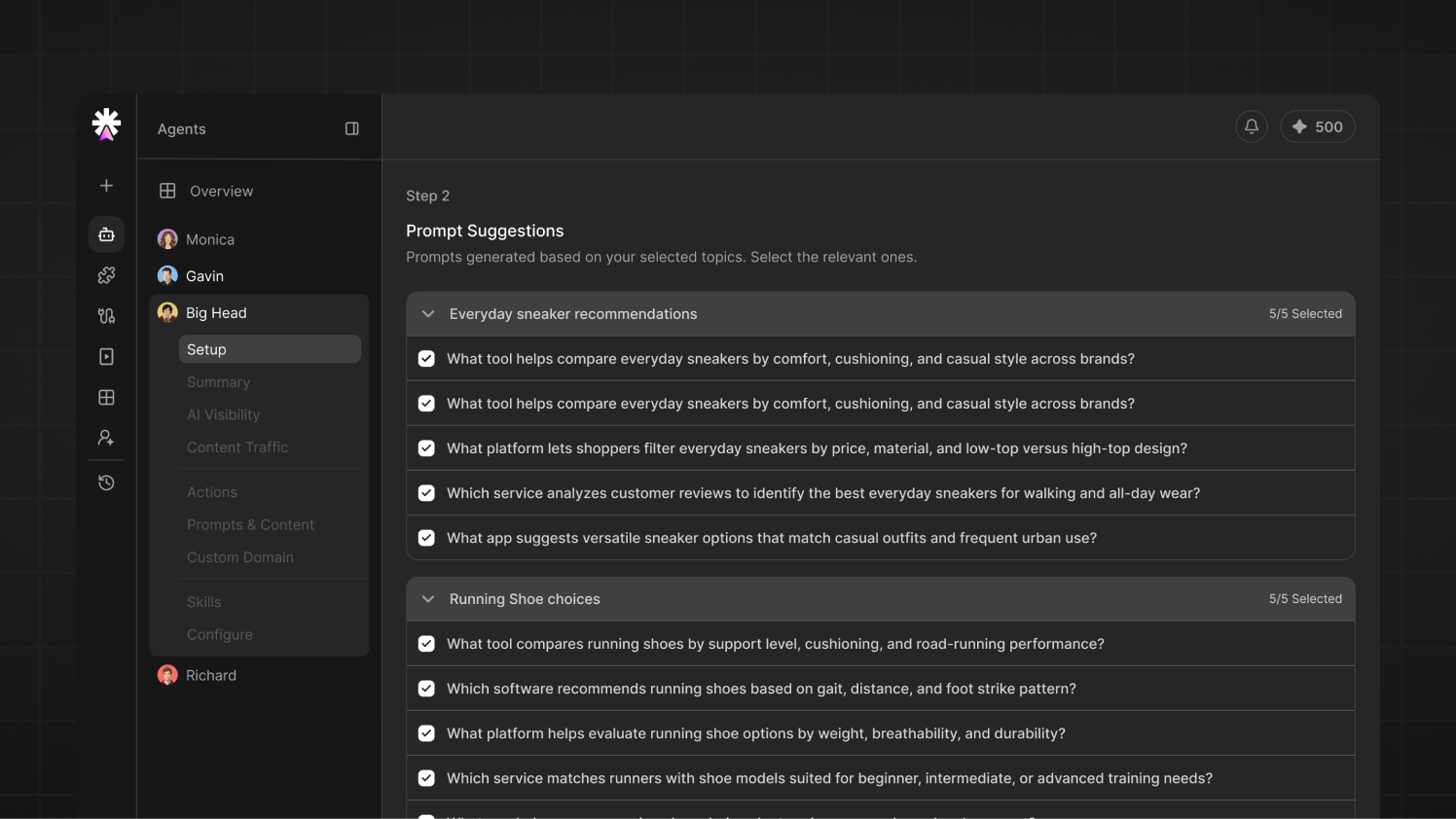
Big Head is the GEO AI agent for ecommerce brands inside ShopOS. It helps teams track where their brand appears in AI search, which prompts competitors are winning, how products are being described, and which content gaps are reducing visibility.
For brands working on AI search optimization, this matters because AI engines need clear, consistent, and verifiable signals across product pages, FAQs, reviews, category content, and third-party mentions.
Big Head makes generative engine optimization tools more practical by turning AI visibility into something ecommerce teams can monitor and improve. For small brands, it can support stronger GEO for D2C brands by helping teams build clearer product content, sharper FAQs, and prompt-ready brand messaging.
As AI search for D2C brands becomes more competitive, ShopOS Big Head helps brands see where they are missing, where competitors are appearing, and what needs to be fixed before buyers ask their next AI-powered shopping question.
Conclusion
Generative engine optimization trends show that AI search optimization is now part of brand strategy, not only search strategy.
The future of search will belong to brands that are easy to understand, easy to verify, and useful enough to recommend.
The five generative engine optimization trends reshaping 2026 search are clear: AI engines will reward understandable brands, product discovery will begin before the click, GEO measurement will become essential, trust signals will shape citations, and small D2C brands will gain new ways to compete through specificity.
For ecommerce teams, GEO for ecommerce brands means improving every product, category, review, FAQ, and comparison asset. For smaller brands, GEO for D2C brands creates a chance to win niche prompts with clarity and proof.
The brands that act now will build visibility across AI answers, citations, recommendations, and buyer decisions.
Don’t Just Optimize for Search. See Where AI Is Leaving You Out.
Big Head helps ecommerce brands track the prompts that matter, see where competitors are being recommended, uncover visibility gaps, and identify what needs to improve across content, citations, and crawlability.
Turn AI search visibility from guesswork into a measurable growth channel.
Book a Demo to See Big Head in Action
FAQs
What are generative engine optimization trends?
Generative engine optimization trends are the changes shaping how brands appear inside AI-generated search answers. They include entity clarity, AI citations, prompt visibility, structured content, trust signals, product-level depth, and AI-led discovery.
Why does GEO matter in 2026?
GEO matters in 2026 because users are asking AI engines for answers, recommendations, and comparisons. Brands need visibility inside AI-generated responses, not only traditional search results.
What are the best generative engine optimization strategies?
The best generative engine optimization strategies include prompt-based content, strong entity signals, product-page depth, FAQs, schema markup, third-party mentions, review context, and AI visibility tracking.
What are generative engine optimization tools?
Generative engine optimization tools help brands monitor AI mentions, prompt visibility, citations, competitor appearances, sentiment, missing prompts, and inaccurate descriptions across AI search platforms.
What is AI search optimization?
AI search optimization is the process of improving content, structure, and brand signals so AI-powered search engines can understand, summarize, cite, and recommend a brand accurately.
How can small D2C brands improve GEO?
Small D2C brands can improve GEO by owning specific buyer questions, creating detailed product pages, adding strong FAQs, earning reviews, keeping messaging consistent, and building third-party proof around their niche.