
 ChatGPT
 Perplexity
 Claude
 Gemini
 Grok

Key takeaways
- Compare product photography services by price per delivered image, because a day rate hides how many usable shots you really get.
- Studio guides put cheap basic shots at $20 to $50 an image and premium work from about $100, so check every quote against that range and trust the math.
- Consistency across hundreds of SKUs is the hard part, so ask how lighting, framing, and angles stay fixed.
- AI cuts the cost and wait for catalog work, but a person must check every image for product accuracy. Fast but wrong costs sales.
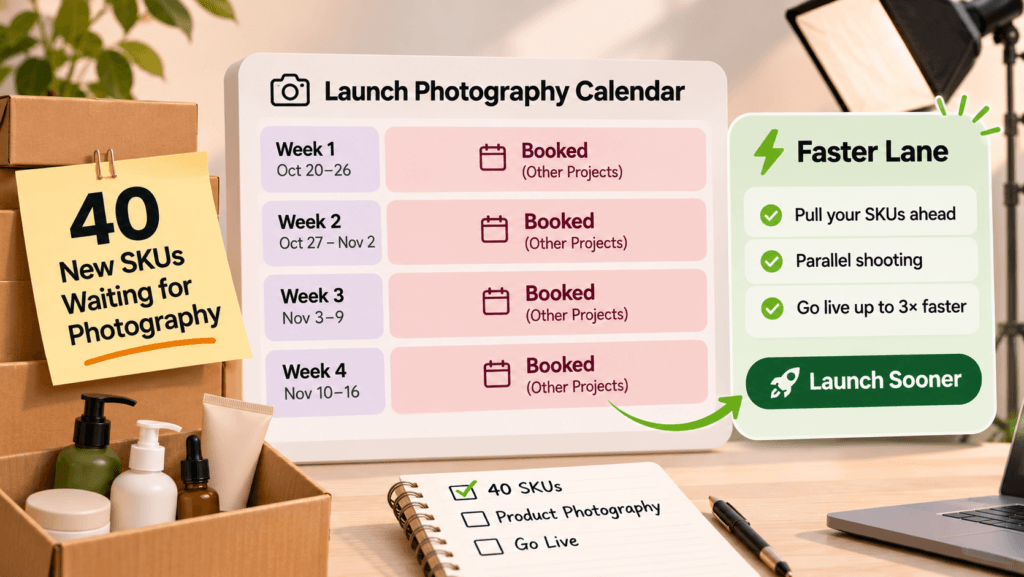
Picture a tense, stressful launch week. Forty new products land on Monday, the photographer is booked until the 20th, and the listings sit empty. Every blank day, sales walk away, and the panic builds.
That tension is familiar, and it is solvable. The right product photography services close the gap quickly, but only if you know the scope, the price, and the rights before the first invoice lands.
What do product photography services include?
Product photography services shoot, edit, and deliver the images that sell your products online: clean catalog shots, angles and details, lifestyle scenes, and on-model photos. The best providers also match each file to its channel, so one shoot feeds your store, your marketplaces, and your ads. The weak ones sell studio time and hope.
Four clear buckets cover most of the work:
- Catalog stills: clean, consistent shots of every SKU, with no messy gaps.
- Detail and angle shots: the close views that calm buyer doubts.
- Lifestyle scenes: bold images that show the product in use.
- On-model photos: fit and scale, the hard part of fashion.
Miss one bucket, and the catalog feels thin.
ShopOS offers this as its catalog service: on-model and lifestyle photos for every SKU, fashion or not, as fast as you list them. The Celio case study shows the range, from clean catalog images with standardized lighting to bold lifestyle visuals for marketplace listings.
How much do product photography services cost?
Studio guides put budget work at $20 to $50 per image, mid-range work at $50 to $95, and premium work from about $100, according to Squareshot’s 2025 pricing guide. Clothing, beauty, and accessories start near $50. Jewelry and watches start near $95. Squareshot has since closed, so treat these as a rough, honest benchmark, never a promise.
Studio days cost real money too, and bad photos cost real sales. The same guide lists a full day at about $2,950. Rush delivery, heavy retouching, and extra models raise the bill, and hidden extras sting.
Do the math before you sign. A $2,950 day that yields 30 usable images costs about $98 an image. If it yields 12, that jumps to about $246, and that hurts. Low quotes can hide costly gaps, and bargain shots often look cheap.
Do product photography services charge per image, per day, or per SKU?
Pay per image when you want safe, predictable costs, per day when you have a long shot list and a tight brief, and per SKU when your catalog is big and repeatable. Each model hides a different, costly risk. Per-image pricing can bury retouching fees, and day rates reward slow work.
Per-SKU pricing is the clean, safe choice for large catalogs because you buy a fixed set of shots for each product. Ask what the set includes and what a re-shoot costs, because surprises hurt. Honest quotes feel calm.
Newer platforms price differently, and the claims are bold. Soona lists $39 per photo plus editing and compares it with $5,000 to $10,000 for a traditional shoot. Those are vendor claims, so check them against your own quotes, trust the math, and stay careful. Bold claims need honest proof.
ShopOS scopes catalog work after the first call, so no hidden fees sting later. Clear scope feels calm, and fuzzy scope feels risky. Ask any provider for a quote in finished images, not in hours, and challenge vague answers.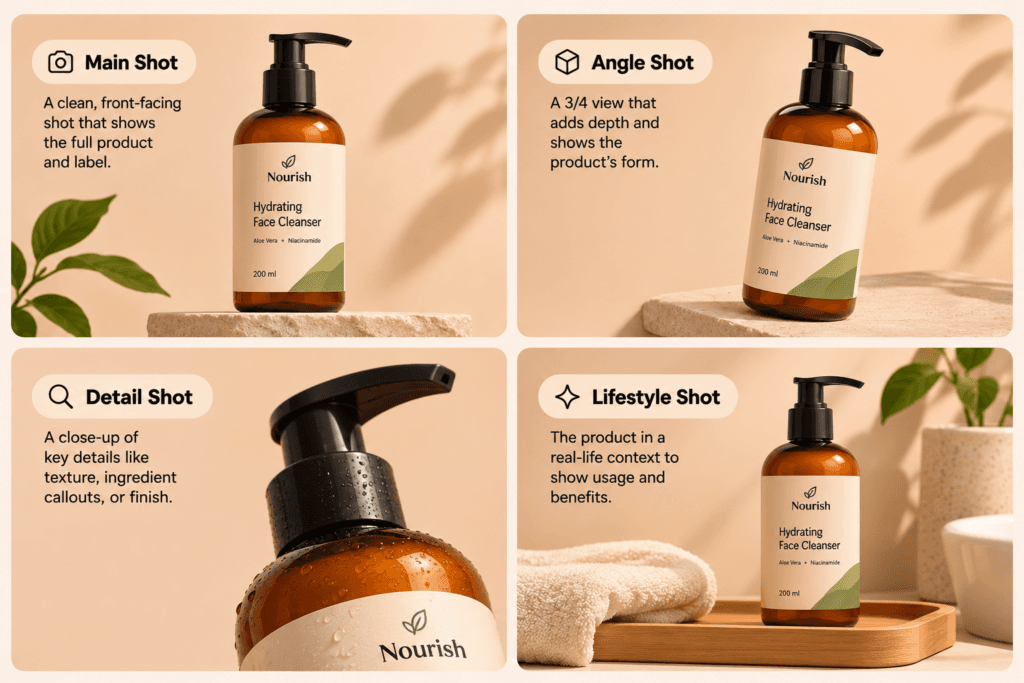
What should product photography services deliver for every SKU?
Ask for a clear, written shot list per SKU: a main image, two or three angles, one detail, and one lifestyle or on-model shot where it fits. A provider that cannot name the shots cannot promise the price. Fuzzy scope breeds painful surprises, and clear shot lists calm every launch.
Check the specs for your channels, or risk a rejected feed. Google Merchant Center wants a clean, unobstructed main image, with no watermarks or promo overlays, and recommends 1500 by 1500 pixels or more. It also asks the product to fill 75% to 90% of the frame, with no sloppy crops.
Those rules are strict, and a rejected image can stall a launch and waste a week. Ask your product photography services provider to deliver clean files that pass them the first time, with no messy re-edits. Rework hurts the budget, and tired teams make mistakes.
How fast should product photography services deliver?
Standard turnaround runs about 6 to 8 business days, according to Squareshot, and rush delivery costs extra. Vendor claims run much faster: Soona says edits take 24 to 72 hours, against 2 to 6 weeks for a traditional shoot. Treat those as claims, not guarantees, and write your own deadline into the contract.
Slow turnaround hurts most at scale, and it is painful to watch. SHEIN’s case shows why: traditional catalog shoots scale headcount and shoot days directly with SKU count, so turnaround stretches to painful weeks. Today ShopOS catalogs 5,000+ SKUs a month for SHEIN, and go-live is about 50% faster, as the SHEIN case study reports.
Ask for dates, not hope. Fix a date for the first batch, allow one round of notes, and set a final deadline. The launch stays calm. Late photos are lost sales, and waiting is stressful.
How do product photography services keep hundreds of SKUs consistent?
Consistency comes from a written style guide: lighting, background, framing, crop, and shadow rules, plus a clear reference image for each product type. Without it, your catalog drifts and looks sloppy, and shoppers feel the mismatch even when they cannot name it. Ask the provider to show the guide before the first shot, and walk away from vague answers.
Celio is a good example. ShopOS automated product photo creation while standardizing lighting, framing, and output consistency, per the Celio results. Consistency is dull work, and it is what makes a catalog look trustworthy and safe to buy from. Strong catalogs build quiet trust.
Consistent does not mean copied. SHEIN gets five unique images per SKU with zero templating. Aim for one clear look and no lazy, repeated shots. Great shots earn clicks, and tired repeats lose them.
Who owns the photos from product photography services?
Who owns the shots is decided by the contract, not by who paid, and silence is risky. A handshake is no protection. The work-made-for-hire rule in 17 U.S.C. § 101 applies to commissioned photos in listed categories only, and both sides must sign a written agreement.
Treat that as a general guide, so ask counsel to confirm with care. Outside those categories, get an assignment or license on paper. Put four clear lines in the contract, because vague terms hurt later: ownership of final images, access to the editable files, rights for models and props, and whether the photos are safe to run in paid ads.
A gap in the paperwork is where ugly disputes start. Vague scope is a risky start.
Should product photography services use a studio, AI, or both?
Use a studio when texture, reflections, or fine detail are the real product, such as jewelry or glass. Use AI when the job is volume, fast: more SKUs, more angles, more channel crops. A blend usually works best: a human-led hero shot, then AI-made variants. Ask for each path to be priced honestly.
SHEIN’s numbers show the upside. A year ago it needed about 17 slow tries to land one usable image. Today the figure is about two, an 88% drop, a huge gain in speed and a big cut in waste, per the SHEIN results.
AI has limits. Generated images can drift on color, logos, and small details, and one error copied across a catalog is a real, costly risk. A person must check every image before it goes live. Wrong images erode trust quickly and hurt sales.
When are product photography services the wrong choice?
Product photography services are the wrong choice when you have a handful of simple products and a steady phone camera. A clean background and a good light box can carry a small catalog. It is also wrong if your products change shape every month and nothing is final yet. Fix the product first, because messy launches waste photos.
A smart, simple setup can win, and it feels calm. Need bold brand films, social posts, and ad stills as well? See the content creation agency guide. To turn clean catalog images into ads that win, read the performance creative agency guide and avoid a costly mismatch.
Still unsure? Book a call. Bring your most stressful launch and your messy catalog, and ShopOS will talk through how to fix both.
FAQ
What do product photography services include?
Product photography services shoot, edit, and deliver the images that sell your products online, from clean catalog shots to detail, lifestyle, and on-model photos. Strong providers match each file to its channel. Ask which steps happen in house and which are subcontracted.
How much do product photography services cost?
Studio guides put basic work at $20 to $50 per image, mid-range at $50 to $95, and premium from about $100. A full day runs near $2,950. Divide any quote by the good images delivered, because a low rate may cover very little.
What are the three types of product photography?
The three common types are catalog shots on clean backgrounds, lifestyle shots that show the product in use, and on-model photos that show fit and scale. Most stores need all three, and the right mix is the best way to win trust.
How long does product photography take?
Standard studio turnaround runs about 6 to 8 business days, and rush work costs extra. Platform vendors claim 24 to 72 hours for edits. Write your own deadline into the contract, and never trust a verbal promise.
Who owns the photos from product photography services?
The contract decides, and silence is risky. If the photos fall outside the work-made-for-hire categories, you need an assignment or license on paper. Confirm models, props, and editable files before the shoot, because hidden gaps hurt.
Can AI replace product photography services?
AI can replace much of the shooting time for catalog work, not the direction. Speed without checks ships costly errors, so someone must set the style guide and check each image. A good setup puts a person in charge of the style guide and the final check, with AI doing the repetitive shots, which cuts waste and earns trust.


