

 ChatGPT
 Perplexity
 Claude
 Gemini
 Grok

Key takeaways
- A Google Partner badge needs a 70% optimization score, $10,000 of spend over 90 days, and certifications, so it proves the basics, not a strong fit.
- Premier Partner means the top 3% of participating companies in a country, assessed each year.
- Google says moving from Standard Shopping to Performance Max lifted conversion value 25% on average at a similar ROAS.
- You should own the ad account, and the agency should work through managed access. A clean exit feels safe.
Picture a tense Thursday check-in. The agency says Performance Max is still learning, the feed has some issues, and results will improve soon. You nod, but you cannot tell what changed, what it cost, or what happens next, and the worry grows. The worry builds.
That risky fog is why a good Google Ads agency earns its fee in the first month, not the sixth. This guide shows what to ask, what the badges mean, and how to keep honest control of your own account.
What does a Google Ads agency do?
A Google Ads agency builds, runs, and tunes your campaigns across Google Search, Shopping, Performance Max, and YouTube, and shows what they earn. It handles tracking, fixes the broken product feed, writes the ads, and adjusts bids and budgets fast to hit a profit target. The weak ones set things up once and walk away.
The job breaks into four parts:
- Tracking: conversions and values counted right, since bad data is costly.
- Feed: clean product data and strong images.
- Campaigns: Search, Shopping, and Performance Max, built to one goal.
- Tuning: bids, budgets, and assets, adjusted fast.
Fast, honest tuning is the job.
Google campaigns sit inside the ShopOS performance marketing service, next to Meta, run by media buyers who report on revenue. The service is built for consumer brands, so B2B lead-gen teams may want a different specialist, and that honesty saves time. For the wider picture, read the PPC guide and skip a costly mismatch.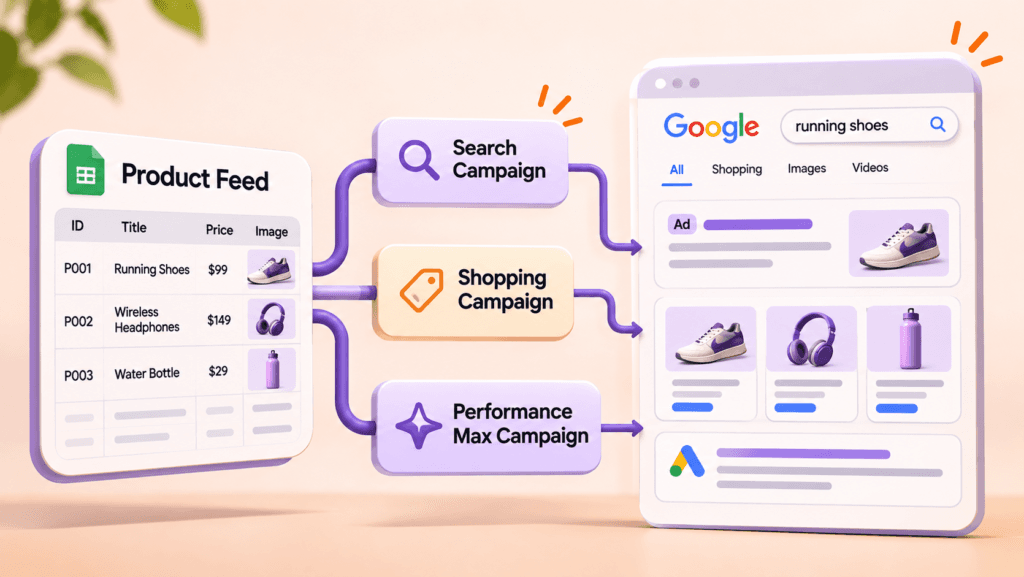
Does a partner badge make a Google Ads agency better?
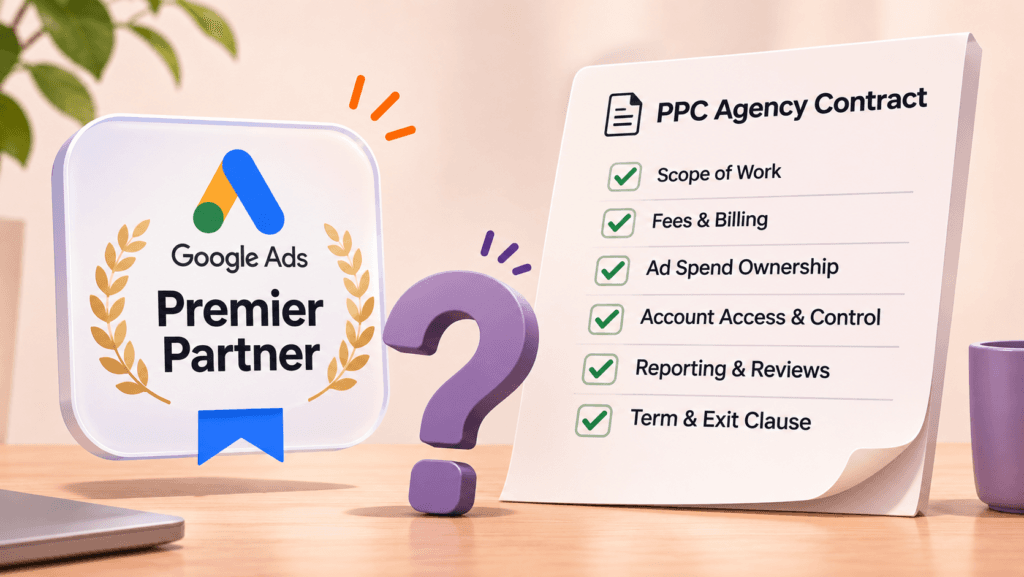
A badge shows an agency meets Google’s rules, not that it will treat you well or honestly. Per Google’s partner help page, the rules are fair but basic. The requirements are a 70% optimization score, $10,000 of ad spend across managed accounts over 90 days, and certifications for at least half of account strategists.
Premier Partner goes further. A company must meet those rules and rank in the top 3% of participating companies within a given country, assessed annually. Premier status may not be offered in every country, so read any “top 3% worldwide” claim with care. Hype is cheap, and proof is rare.
Badges are a fair filter, not a verdict, and a weak agency can still hold one. Optimization scores can be gamed, and spend thresholds favor big agencies, which feels unfair to small, good ones. Ask for account-level proof, a real reference, and a named person who will run your account. Trust proof over polish.
How much does a Google Ads agency charge?
Fees follow the same models as any paid media work: a percentage of spend, a flat retainer, or a hybrid. The PPC agency guide compares them with real numbers, so check every quote against that first. The hard part is vague scope, not the rate. Low quotes can hide thin scope.
Ask what the fee covers. Setup, feed work, creative, and reporting can each sit outside it, and hidden extras sting, so get the fine print early. Also ask about hard minimums: some agencies pitch audits only for accounts spending $5,000 or more a month, per KlientBoost’s service page.
ShopOS scopes this work after the first call. Ask any Google Ads agency for a quote in writing, never a vague range, so hidden fees cannot sting later. A clear scope feels calm.
Which Google Ads campaign types should an ecommerce brand run?
Most ecommerce brands need three: Search for buyers who know the product name, Shopping for buyers comparing products, and Performance Max to stretch your feed across Google’s surfaces. Skip one, and you may lose sales to a rival. A smart mix wins. A good Google Ads agency decides the mix from your margins and catalog, not from a template.
Per Google’s retailer guide, advertisers that moved from Standard Shopping to Performance Max gained 25% more conversion value on average, at a similar ROAS. Treat the figure as Google’s own claim, not your result.
Performance Max is automated, which makes inputs matter more and mistakes more costly. Weak feeds, thin assets, and wrong conversion values all steer the machine the wrong way. Bad inputs breed costly losses.
How does a Google Ads agency use your product feed?
The feed is the engine behind Shopping and Performance Max, so a Google Ads agency should audit it first, before any real spend. Google advises uploading rich product descriptions and images, keeping prices and availability current, and using the Product Issues column to find missing attributes. Messy feeds waste spend before an ad even runs, and that stings.
Images matter more than most teams expect, and bad ones cost clicks. Google Merchant Center wants a clean main image of the item, with no watermarks or promo text, with 1500 by 1500 pixels or more preferred. A product should fill 75% to 90% of the frame.
Weak photos can stall a listing and lose the click. Pair the agency with strong, solid product photography services, and the feed gets stronger at the source. Great feeds win quietly.
How should a Google Ads agency set targets and bidding?
Set targets from profit, not from hope. Google’s retailer guide recommends Maximize conversion value bidding, with a ROAS target built from profit after cost of goods and customer lifetime value, not from a round number. A Google Ads agency that skips margin is tuning the wrong number.
Conversion values matter too. Google strongly recommends passing transaction-specific values when customers buy items at different prices. Without them, a $20 order and a $200 order look equal, and the machine learns the wrong lesson fast.
Start with a safe target you can defend, then move it in small steps. Big swings confuse the system and hurt learning, and rushed changes waste data. Calm, steady tuning wins.
What should a Google Ads agency report each month?
A Google Ads agency should report revenue, profit after ad cost, and what it changed, not just clicks. Ask for the search terms that wasted money, the assets that won, and the next tests. A report that cannot explain a drop is a red flag and a risk. Clicks can flatter, but profit tells the truth.
Track four honest numbers:
- Profit after ad cost: the real test.
- Wasted spend: search terms and placements that burned budget.
- Winning assets: the headlines, images, and videos that earned the click.
- Next tests: what changes this month, and why.
Every lost dollar matters, and clicks alone can lie.
Creative moves these numbers. Google reports an average 12% lift in total conversions for Performance Max advertisers who add at least one video. Ask to see one anonymized account review before you sign, and read it with care. Hope is not a plan.
Who should own the account at a Google Ads agency?
Your Google Ads agency should work inside an account you truly own. Keep it in your own name, with your payment method, and give the agency managed access. Many agency pages promise ownership from day one, but a promise is not a clause, and trust needs paper. Get it in the contract, with a clear right to remove access fast.
Put four clear lines in writing, as the PPC contract checklist also advises: account ownership, your admin access at all times, the return of data and assets on exit, and a notice period. Leaving should be easy, never a nightmare, and a clear exit feels safe. Control is safe, and surprises are not.
Raise it before the first invoice, not after the fight.
When is a Google Ads agency the wrong choice?
A Google Ads agency is the wrong choice when your site converts poorly, your tracking is broken, or your budget is too small to learn from. Great campaigns on a weak page still lose. Skip it, too, if a strong in-house marketer already runs the account. Fix the basics first, because a smart start saves money.
If you need strong ads that work on every channel, read the performance creative agency guide. Derby Jeans saw ROAS rise 114% once creative moved to ShopOS (see the Derby case study). Strong creative wins, and tired creative drags.
Not sure the account is working? Book a call. Bring one month of reports, and ShopOS will show you where the money leaks.
FAQ
What does a Google Ads agency do?
A Google Ads agency builds, runs, and tunes campaigns across Search, Shopping, Performance Max, and YouTube, and shows what they earn. It handles tracking, fixes the feed, writes ads, and adjusts bids and budgets. Ask who builds the campaigns and who only reviews them.
What is a Google Premier Partner agency?
A Premier Partner meets Google’s Partner rules and ranks in the top 3% of participating companies within a country, assessed annually. It is a useful filter, not a guarantee, so never trust a badge alone. Ask for account-level proof and a named person who will run your account.
How much does a Google Ads agency charge?
Most agencies charge a percentage of spend, a flat retainer, or a hybrid, and on-boarding can cost extra and sting. Compare quotes with the PPC guide, and ask what the fee covers, because vague answers are risky. Hidden extras sting, so get every fee in writing.
Should I own my Google Ads account?
Yes, and silence is risky, so never trust a handshake. Keep the account in your own name with your payment method, and give the agency managed access only. Never let an agency open it under its own name, because leaving could mean starting from zero, a painful reset. Get ownership and data return in the contract.
Is a Google Ads agency worth it?
It pays off when your account needs daily care you cannot give and the numbers justify the fee. It is a poor fit when the budget is tiny or tracking is broken, and it hurts when you pay for the wrong fix. Run the math on profit after fees, because hidden costs sting, and fix the basics first.
Can AI replace a Google Ads agency?
AI already runs much of Google’s bidding, which makes human judgment about targets, feeds, and creative more important and more valuable. Automation amplifies errors, so someone must set the profit target and check the inputs, because a costly mistake repeats fast. People should own the targets and the inputs, and the platform can handle the rest.


